Hikari vs Juntetsu: Convex Edge Inventor vs Pure Steel Philosophy
This is a comparison between two very different philosophies of what a professional scissor should be.
Hikari holds the original 1961 patent for convex blade scissors. They limit production to approximately 1,000 pairs per month. Their prices start where most brands’ prices end. They are, by any objective measure, one of the most important scissor makers in history.
Juntetsu took a different path. Named 純鉄 – “Purest Steel” – they built a brand around the idea that premium performance should not require premium exclusivity. Their range covers entry professional to genuine premium, with more handle options and wider availability than almost any competing Japanese brand.
Both are Japanese. Both use convex edge geometry. Both make excellent scissors. The question is which philosophy matches your hands, your clients, and your budget.
The Quick Answer
If you want the short version: Hikari is the Rolex. Juntetsu is the Grand Seiko. Both are world-class. Hikari has more heritage and cachet. Juntetsu delivers comparable performance with better accessibility, more options, and significantly lower prices. Most working stylists will get more value from Juntetsu. Collectors and purists will gravitate toward Hikari.
Now here is why.
Heritage: The Patent Holder vs The Steel Purist
Hikari: The Brand That Changed Everything
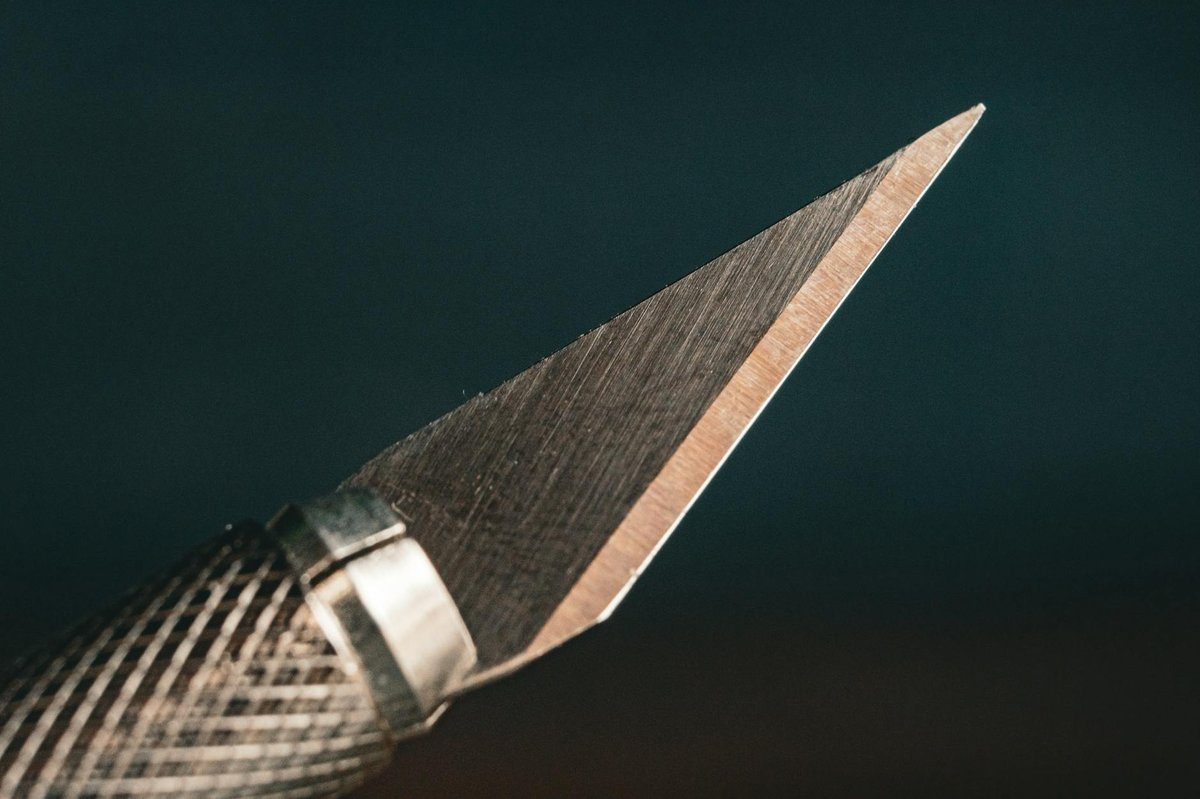
In 1961, Hikari’s founder developed and patented the convex blade – the curved edge geometry that enables the smooth, effortless slide cutting that defines modern Japanese hairdressing. Before Hikari, all scissors used beveled edges. After Hikari, the entire industry shifted.
That is not hyperbole. Every convex-edge scissor made by every brand in every country traces its lineage back to Hikari’s original patent. When you pick up a pair of scissors from any manufacturer and they glide through hair without pushing it, you are using technology that Hikari invented.
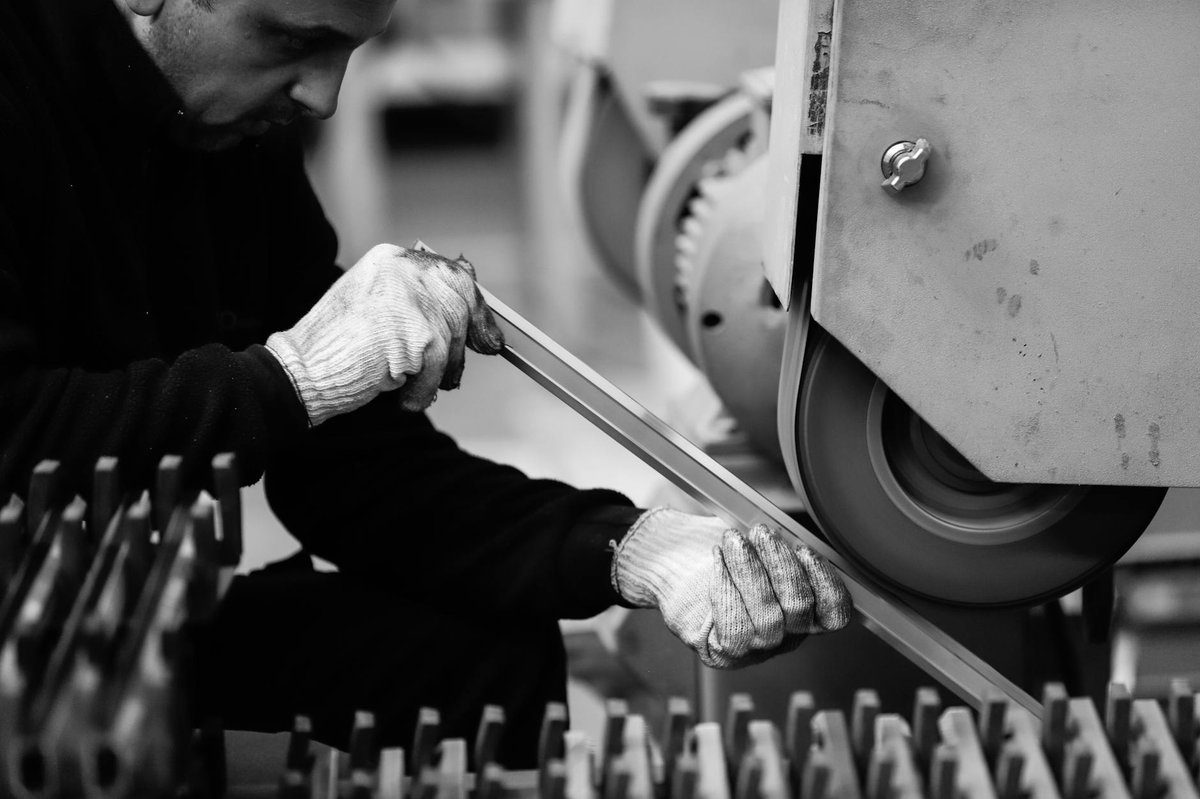
Today, Hikari operates from Itabashi-ku in Tokyo with a deliberately limited production of roughly 1,000 pairs per month. Their master craftsmen – some of whom have been finishing scissors for 30 or 40 years – hand-set every edge. The waiting list for certain models can stretch to months.
For a deeper look at their story, see our full Hikari profile.
Juntetsu: Performance Without the Gatekeeping
Juntetsu emerged from a different question: what if you could deliver genuinely premium Japanese steel and ergonomics without the scarcity model?
The brand’s name – 純鉄, “Purest Steel” – signals its philosophy. Rather than leaning on heritage or limited production as differentiators, Juntetsu focused on material quality, lightweight construction, and ergonomic range. They offer VG-10 and cobalt alloy steel across offset, crane, and swivel handle configurations, covering a price range from about $250 to $700.
That range is significant. It means a single brand can take a stylist from their first serious professional scissors all the way to premium cobalt alloy without switching manufacturers. The learning curve stays consistent. The feel in the hand evolves rather than resets.
Head-to-Head Comparison
| Factor | Hikari | Juntetsu |
|---|---|---|
| Founded | 1967 (convex patent 1961) | 2000s |
| Headquarters | Tokyo, Japan | Japan |
| Production volume | ~1,000 pairs/month | Wider availability |
| Steel options | Proprietary high-carbon, cobalt | VG-10, Cobalt Alloy |
| Handle types | Offset, Crane, Swivel | Offset, Crane, Swivel |
| Price range | $700 to $2,000+ | $250 to $700 |
| Best for | Purists, collectors, elite performance | Working professionals, value-conscious buyers |
| Availability | Limited, often waitlisted | Widely distributed (US, UK, AU, CA, NZ) |
| Blade type | Convex (original patent holder) | Convex, Semi-Convex |
Steel and Performance
Hikari’s Approach
Hikari uses proprietary steel formulations that they do not fully disclose. What is known is that their blades achieve exceptional hardness ratings while maintaining enough flexibility to avoid brittleness. The specifics are guarded like trade secrets, because that is exactly what they are.
The result is an edge that Hikari users describe as “self-sharpening” – not literally, of course, but the edge retention is so superior that the scissors seem to maintain their bite for remarkably long periods. Professional sharpeners report that Hikari blades need less material removed during service, which extends the total lifespan of each pair.
Juntetsu’s Approach
Juntetsu is transparent about their steel: VG-10 and cobalt alloy, sourced from established Japanese mills. VG-10 achieves approximately 60 to 62 HRC hardness, while their cobalt alloy models push higher with improved edge retention.
What Juntetsu does exceptionally well is optimise these known steel grades. Their heat treatment and tempering processes – informed by the broader Japanese manufacturing ecosystem in which they operate – extract performance from VG-10 and cobalt that approaches what some brands achieve with more exotic (and expensive) formulations.
The practical difference? A Hikari will hold its edge roughly 20 to 30 percent longer than a Juntetsu cobalt model between sharpenings. Whether that justifies double or triple the price depends entirely on your perspective and your client volume.
The verdict on steel: Hikari wins on absolute edge retention. Juntetsu wins on performance per dollar. For most working stylists doing 20 to 40 clients per week, the difference translates to perhaps one extra sharpening per year.
Ergonomics and Handles
Both brands offer offset, crane, and swivel handle configurations, which puts them ahead of many Japanese competitors that limit themselves to offset and crane only.
Hikari’s Ergonomics
Hikari’s scissors are precision-balanced in a way that feels almost weightless during cutting. The pivot point, the blade-to-handle ratio, and the finger rest placement all reflect decades of refinement. Many stylists describe the first time they use a Hikari as a “revelation” – the scissors seem to anticipate what your hand wants to do.
That said, Hikari’s range is narrower. You choose from their available models, which are excellent but limited. If your preferred configuration is not in their catalogue, there is no alternative.
Juntetsu’s Ergonomics
Juntetsu’s standout ergonomic feature is their lightweight construction. Across their range, Juntetsu scissors tend to weigh less than competing models of equivalent size. For stylists doing high-volume days, that weight difference accumulates through every cut.
Their swivel handle option deserves specific mention. Full swivel scissors from Hikari start at $800 or more. Juntetsu offers swivel handles at significantly lower price points, making them one of the most accessible entry points into swivel cutting. For stylists experiencing thumb strain or early signs of repetitive strain injury, this accessibility could be career-extending.
Juntetsu also offers more total configurations across their range. More handle types, more sizes, more coating options. If you know exactly what you want, Juntetsu is more likely to have it in stock and available.
The verdict on ergonomics: Hikari wins on refinement and balance. Juntetsu wins on range, accessibility, and lightweight construction. If you can afford Hikari’s swivel, it is extraordinary. If you cannot, Juntetsu’s swivel is genuinely excellent at half the price.
Price and Accessibility
This is where the comparison becomes most stark.
Hikari’s Pricing
Hikari scissors range from approximately $700 to well over $2,000 for their top models. The limited production of 1,000 pairs per month creates genuine scarcity – this is not artificial. They simply cannot make more without compromising their process.
Buying a Hikari often means going through specialist retailers, potentially waiting for your preferred model, and accepting that there will be no discount. The price is the price.
Juntetsu’s Pricing
Juntetsu covers the $250 to $700 range with genuine depth at every tier.
| Price Tier | What You Get |
|---|---|
| $250 to $350 | VG-10 steel, offset or crane handle, convex edge |
| $350 to $500 | Cobalt alloy options, more handle choices, premium finishes |
| $500 to $700 | Premium cobalt, swivel options, lightest construction |
Juntetsu is widely available through authorised retailers in the US, UK, Australia, Canada, and New Zealand. You can typically order today and receive within days, not weeks or months.
The verdict on price: Juntetsu wins decisively for working professionals. Hikari’s prices are justified by genuine scarcity and handcraft, but Juntetsu delivers professional-grade performance at every price point from $250 up. The Juntetsu cobalt models in the $400 to $600 range are particularly compelling – they compete with scissors from other brands costing $800 or more.
Who Should Buy Which
Buy Hikari If:
- You are an experienced stylist who can genuinely appreciate the difference in edge refinement
- Budget is not a primary concern and you value owning the finest available tools
- You want a scissor with historical significance – the original convex edge maker
- You are willing to wait for availability
- You view your scissors as both tools and investments that hold value
Buy Juntetsu If:
- You want premium Japanese performance without premium exclusivity pricing
- Hand fatigue is a concern and lightweight construction matters
- You want to try swivel handles without the $800+ entry point
- You need wider availability and faster delivery
- You are building or upgrading a full kit and need options across multiple price points
- You want both VG-10 and cobalt alloy options from a single trusted brand
Consider Other Options If:
- Budget under $250: Ichiro offers excellent VG-10 scissors and value-oriented sets starting around $200. Mina covers the entry level from around $100 with genuine Japanese quality
- Want German precision: Jaguar from Solingen offers a different cutting philosophy
- Want the widest heritage brand range: Joewell and Kasho bridge the gap between Juntetsu’s accessibility and Hikari’s prestige
The Bottom Line
Hikari and Juntetsu represent two valid answers to the question of what professional scissors should be.
Hikari says: the finest possible tool, made in the smallest possible numbers, by the most experienced possible hands. The price reflects the reality of that philosophy. For stylists who can afford it and who will genuinely use the performance, a Hikari is a once-in-a-career purchase.
Juntetsu says: premium performance should be accessible. High-purity Japanese steel, expert heat treatment, lightweight construction, and ergonomic variety should not require a $1,000 budget. For the vast majority of working professionals, Juntetsu delivers everything they need at a price that makes sense.
Both are right. The question is which is right for you.
For a broader comparison of Japanese brands and where these two fit in the hierarchy, see our ranking of the best Japanese scissors brands. For country-specific pricing, check our guides for Australia, USA, UK, and Canada.
Where to Buy
Hikari scissors are available through specialist retailers and authorised dealers. Due to limited production, some models may have waiting periods. Juntetsu scissors are widely available through authorised retailers across the US, UK, Australia, Canada, and New Zealand. For verified retailers for both brands, see our authorised dealer guide.