Japanese vs Chinese Scissors: Quality, Price, and What 'Made in Japan' Really Means
Here is a fact that surprises most stylists: the majority of scissors sold worldwide as “Japanese” were not made in Japan.
They may use Japanese steel. They may have Japanese-sounding brand names. They may feature Japanese characters on the blade. But they were manufactured in factories in Guangdong Province, Yangjiang City, or other Chinese manufacturing centres, then exported under brand names that carefully imply Japanese origin without explicitly claiming it.
This is not a scandal. It is simply how the global scissors industry works. But understanding the difference between genuine Japanese manufacturing, Chinese manufacturing using Japanese steel, and Chinese manufacturing using Chinese steel is essential for making informed purchasing decisions.
The Manufacturing Landscape
Japanese Manufacturing
Japan produces approximately 10-15% of the world’s professional hair scissors by volume, but captures a much larger share by value. Japanese production is concentrated in two main regions:
Seki City, Gifu Prefecture – The historical centre of Japanese bladesmithing, home to a cooperative guild system that has been producing cutting tools for over 700 years. Seki City manufacturers include names like Mizutani, Hikari, and multiple smaller workshops that produce scissors under various brand names. The Seki City guild system imposes manufacturing standards on member workshops and provides a form of quality assurance. See our detailed Seki City guide for more on this ecosystem.
Other Japanese regions – Manufacturers like Hayashi in Wakayama Prefecture, Joewell in Iwate Prefecture, and Kikui in Niigata Prefecture operate outside the Seki City system but maintain similarly rigorous standards. These independent makers often specialise in particular steel types or manufacturing techniques.
Japanese manufacturing is characterised by:
- Small-batch or individual production
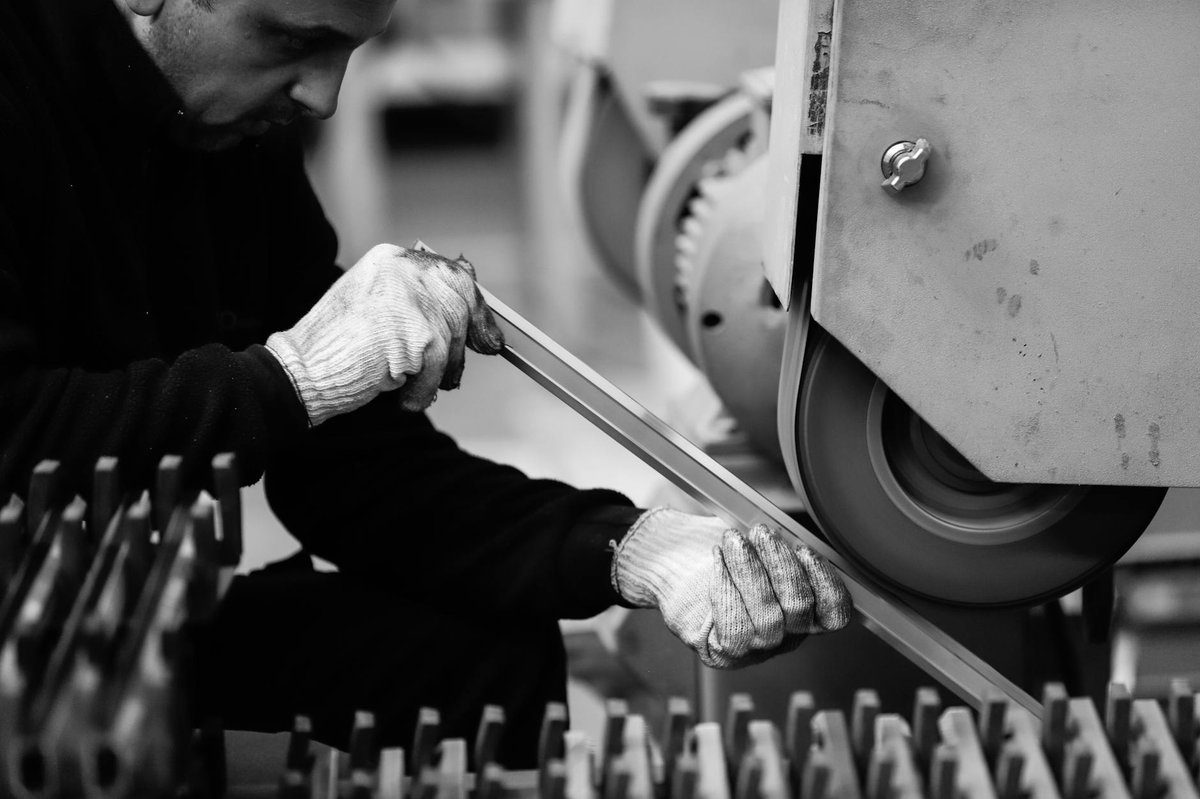
- Extensive hand finishing (often 40-80+ hours per pair)
- The bungyosei system where multiple specialist craftspeople each handle a different stage
- Individual blade inspection and testing
- Higher labour costs reflected in higher retail prices
Chinese Manufacturing
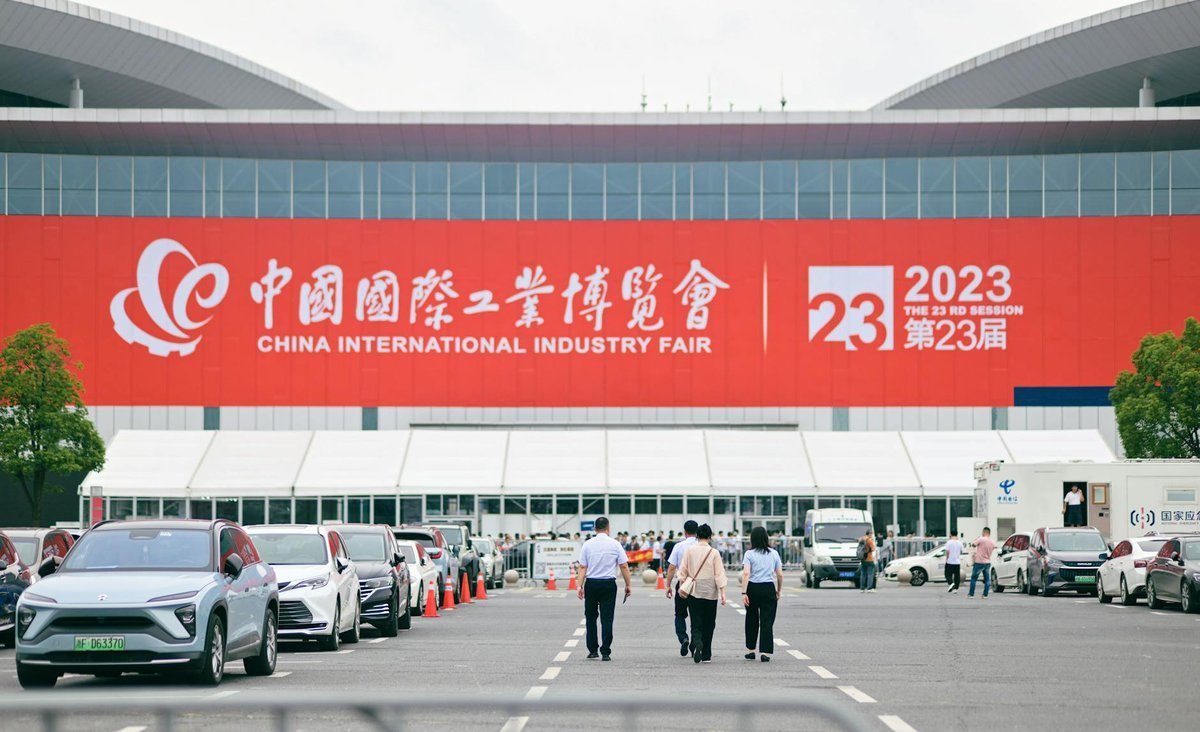
China produces the vast majority of the world’s scissors – professional and consumer – by volume. The quality range is enormous, spanning from mass-produced consumer scissors to professional-grade tools that use genuine Japanese steel and modern precision equipment.
Chinese professional scissor manufacturing is concentrated in:
Yangjiang City, Guangdong Province – The largest scissor manufacturing hub in the world, producing everything from kitchen scissors to professional hair shears. Yangjiang factories range from small workshops to massive facilities producing hundreds of thousands of units per year.
Zhejiang Province – Another major manufacturing centre, particularly for mid-range professional tools.
Chinese manufacturing is characterised by:
- Larger batch sizes and more automated processes
- Lower labour costs enabling lower retail prices
- Wide quality variance between factories
- Significant OEM/white-label production for global brands
The Quality Spectrum
The critical point is that neither “Japanese” nor “Chinese” is a quality designation by itself. The quality spectrum looks like this:
| Tier | Origin | Steel | Finishing | Price Range | Performance |
|---|---|---|---|---|---|
| Ultra-premium | Japan (handcraft) | Proprietary/powdered steel | Full hand finishing, 80+ hours | $800-$2,000+ | Exceptional |
| Premium | Japan | Cobalt alloy/VG-10 | Hand finishing, 40-60 hours | $400-$800 | Excellent |
| Upper mid-range | Japan or China | VG-10/ATS-314 | Semi-hand finishing | $250-$500 | Very good |
| Mid-range | China (top factories) | Genuine VG-10 | Machine + hand finishing | $150-$300 | Good |
| Budget professional | China | 440C or equivalent | Primarily machine | $80-$200 | Adequate |
| Consumer grade | China | Unknown stainless | Machine stamped | Below $80 | Not professional |
The OEM and White-Label Reality
This is the part of the industry that most brands would prefer you did not understand.
What OEM Means
OEM stands for Original Equipment Manufacturer. In the scissors industry, it means a factory produces scissors that are then sold under a different brand’s name. The brand handles marketing, packaging, and customer service. The factory handles manufacturing.
This is extraordinarily common. Our Nina Shears OEM investigation demonstrated how a single Chinese factory can produce scissors for dozens of different brands, each with different branding, packaging, and pricing – but with identical scissors inside the box.
How OEM Works in Practice
A typical OEM arrangement works like this:
- A brand (often based in the US, UK, or Australia) designs or selects a scissor model from a Chinese factory’s catalogue
- The factory produces the scissors with the brand’s logo, engravings, and packaging
- The brand imports the scissors, markets them, and sells them at a markup
- The consumer sees the brand name but has no visibility into the manufacturing origin
Some OEM brands are transparent about Chinese manufacturing and price their products accordingly. Others obscure the origin with Japanese-sounding names, vague claims about “Japanese steel” or “Japanese design,” and premium pricing that implies Japanese manufacture.
The “Japanese Steel” Loophole
The phrase “Japanese steel” is technically accurate for many Chinese-manufactured scissors because they genuinely use steel produced by Japanese mills like Takefu Special Steel (which makes VG-10) or Hitachi Metals (which makes ATS-314 and other grades). Japanese steel is exported globally and is available to any factory willing to pay for it.
But “Japanese steel” and “Made in Japan” are very different claims:
| Claim | What It Actually Means |
|---|---|
| Made in Japan | Manufactured in a Japanese factory |
| Japanese steel | Raw steel sourced from Japan, scissors made anywhere |
| Japanese design | Designed in Japan (or inspired by Japanese design), made anywhere |
| Japanese craftsmanship | Vague – could mean anything |
| Japanese quality | Marketing language with no specific meaning |
Only “Made in Japan” with verifiable manufacturing provenance tells you the scissors were actually produced in Japan. Everything else is a steel sourcing claim or a marketing phrase.
How to Verify Manufacturing Origin
The HSC Certification System
Japan’s scissors industry created the HSC (Hasami Shinbun-sha Certification) system partly in response to the flood of scissors falsely claiming Japanese origin. HSC certification involves physical inspection of the manufacturing facility and verification that the scissors are genuinely produced in Japan. See our detailed HSC guide for how this system works.
Scissors carrying an HSC tag have been verified as Japanese-manufactured. The absence of an HSC tag does not automatically mean the scissors are not Japanese – some legitimate Japanese makers do not participate in the programme – but the presence of the tag is a strong positive signal.
Research the Brand
Genuine Japanese manufacturers have:
- Verifiable factory addresses in Japan
- Manufacturing histories that can be corroborated through industry records
- Presence in Japanese domestic markets (not just export markets)
- Relationships with the Seki City cooperative or other Japanese industry bodies
- Documented craftspeople or workshop leaders
If a brand claims Japanese manufacturing but you cannot find a factory address, any Japanese-language information about the company, or any presence in the Japanese domestic market, treat the claim with scepticism.
The Price Test
Genuine Japanese manufacturing has irreducible costs. Labour in Japan, materials, hand finishing, quality control, and the multi-craftsperson bungyosei system all cost money. As a rough guide:
- Below $150: Almost certainly not manufactured in Japan, regardless of claims
- $150-$250: Possibly Japanese if using simpler manufacturing processes, but verify carefully
- $250-$400: Plausible for Japanese production using standard processes
- Above $400: Expected range for fully hand-finished Japanese scissors
These are not absolute rules, but if a brand claims hand-finished Japanese manufacturing and charges $120, the economics do not support the claim.
What Chinese Manufacturing Does Well
It would be dishonest to frame this as a simple “Japanese good, Chinese bad” comparison. Chinese manufacturing offers genuine advantages:
Value at the Entry Level
For stylists on a budget, Chinese-manufactured scissors using real 440C or VG-10 steel represent the most accessible path to professional-grade tools. A $150 Chinese-made scissor using genuine VG-10 can outperform a $300 scissor from a brand that charges premium prices for mediocre manufacturing.
Consistency at Scale
Top Chinese factories use modern CNC equipment that produces remarkably consistent results across large production runs. While hand finishing introduces individual character (which Japanese makers see as a feature), machine precision eliminates the variation that can occur in hand-finished products.
Innovation Speed
Chinese factories can iterate on designs more quickly than traditional Japanese workshops. New handle designs, tension systems, and ergonomic features often appear first in Chinese-manufactured scissors before being adopted by more conservative Japanese makers.
Accessibility
The lower price point of Chinese-manufactured scissors means more stylists can afford professional-grade tools. A student who cannot afford a $400 Japanese-made pair can start with a $150 Chinese-made pair using the same VG-10 steel and develop their skills on a genuine professional tool.
What Japanese Manufacturing Does Better
Heat Treatment
Heat treatment is arguably the single most important step in scissor manufacturing, and it is where Japanese workshops most consistently outperform Chinese factories. Proper heat treatment – heating the steel to precise temperatures, holding it for exact durations, and cooling it at controlled rates – determines how hard the steel becomes, how fine the grain structure is, and how long the edge will last.
Japanese workshops, particularly those in the Seki City guild system, have refined their heat treatment processes over decades. Many use proprietary temperature curves and cryogenic treatment that are not easily replicated. The result is that two scissors using identical raw steel can perform differently because one was heat-treated better than the other.
Hand Finishing
The final 20-30% of a Japanese scissor’s production is typically done by hand. This includes blade line adjustment, edge honing, and the subtle refinement of blade geometry that machines cannot replicate. This hand finishing is what creates the precise, smooth cutting action that premium Japanese scissors are known for.
Quality Control
In a Seki City workshop, an individual craftsperson inspects and tests each pair before it ships. In a Chinese factory producing thousands of units per week, quality control is necessarily statistical – spot checks on batches rather than individual inspection. This difference means the floor of Japanese quality is typically higher, even when the ceiling is similar.
Longevity
Japanese scissors from established makers tend to last longer because the combination of superior heat treatment, hand finishing, and quality control creates a blade that maintains its geometry through more sharpening cycles. A well-made Japanese pair can last 10-15 years of professional use; a comparable Chinese-made pair using the same steel might last 5-10 years because subtle differences in manufacturing affect long-term durability.
The Practical Buying Guide
Given all of this, here is how to make smart decisions:
If Your Budget Is Under $200
Buy Chinese-manufactured scissors that are transparent about their origin and use verified steel grades. At this price point, you will not find genuine Japanese manufacturing, so do not pay a premium for implied Japanese origin. Look for brands that specify the exact steel type (440C, VG-10) and have verifiable reviews from working professionals.
If Your Budget Is $200-$400
This is the range where both Chinese and Japanese manufacturing coexist. Research the brand thoroughly. If it claims Japanese origin, verify the factory. If it is Chinese-made with good steel, it can be excellent value. Consider established brands like Yasaka or Kasho at the lower end of their ranges, where you get verified Japanese manufacturing at accessible prices.
If Your Budget Is $400+
At this price point, insist on verifiable manufacturing provenance. You are paying enough to expect either genuine Japanese manufacturing with hand finishing or exceptional Chinese manufacturing from a transparent brand. The premium here should reflect demonstrably superior materials, manufacturing processes, and quality control – not just marketing.
Questions to Ask Any Brand
- Where are the scissors physically manufactured? (Factory location, not steel origin)
- What specific steel grade is used? (Not “Japanese steel” – the actual designation)
- What heat treatment process is used?
- Is the finishing hand-done, machine-done, or a combination?
- Can you provide the factory name or address?
Brands that answer these questions clearly and specifically are more trustworthy than brands that deflect with vague claims about “Japanese quality” or “premium materials.”
The Bigger Picture
The Japanese vs Chinese scissors debate often generates more heat than light. The reality is nuanced:
- Japanese manufacturing represents a genuine quality tradition with measurable advantages in heat treatment, hand finishing, and longevity
- Chinese manufacturing provides essential accessibility and value, and the best Chinese factories produce professional-grade tools
- The biggest problem is not Chinese manufacturing itself but the deceptive marketing that obscures manufacturing origins and allows mediocre products to command premium prices
- Transparency is the most reliable quality signal – brands that are honest about where and how their scissors are made tend to be honest about everything else
For more on verifying scissor authenticity, see our guide on spotting counterfeit scissors. For the deep dive on why “Made in Japan” claims became so problematic, see our investigation into why your scissors say Made in Japan but might not be. And for more on the OEM reality, see our Nina Shears OEM manufacturer review.