Hikari Scissors: The Convex Edge Patent Holders Who Limit Production to 1,000 Per Month
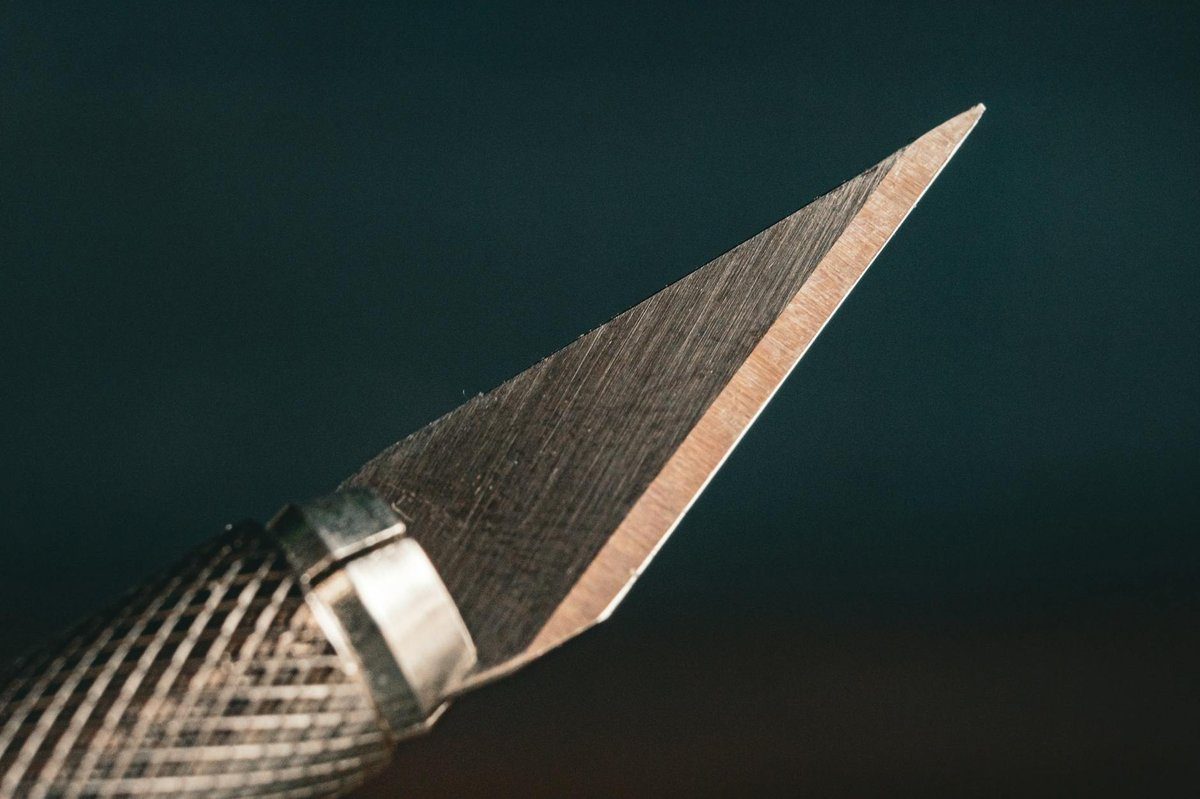
Most scissor companies want to sell as many pairs as possible. Hikari caps production at 1,000 per month.
That is not a supply chain problem. It is not a staffing issue. It is a deliberate decision made by a company that holds patents on the blade geometry nearly every premium Japanese scissor now imitates. Hikari could make more. They choose not to. And when you understand why, you understand something fundamental about what separates a good scissor from a great one.
Fifty Years of Hamaguri-Ba
Hikari has been making scissors for over half a century. In that time, they have built their entire identity around a single concept: 蛤刃 (hamaguri-ba), which translates to “clamshell blade.”
If you have used Japanese scissors, you have almost certainly used a convex edge. That smooth, rounded blade geometry that allows the scissor to glide through hair without pushing or compressing it: that is hamaguri-ba. And Hikari holds patents on the application of this geometry to scissors.
The principle comes directly from Japanese swordmaking. A katana blade is not sharpened to a flat, wedge-shaped edge like a Western knife. Instead, it has a subtle convex curve that distributes cutting force across the blade’s cross-section. This curve (the hamaguri shape, named because it resembles the profile of a clamshell) does several things simultaneously:
- Reduces cutting resistance, so the blade moves through material with less effort
- Distributes stress across a wider area of the blade, reducing micro-chipping
- Creates a self-correcting geometry during cutting, where the blade naturally tracks straight
- Enables the signature Japanese scissor technique of slide-cutting and point-cutting
Hikari did not invent hamaguri-ba for swords. They patented its application to scissors. The 1876 Sword Edict explains how this sword tradition became scissors tradition. That distinction matters, because adapting a sword principle to a two-blade pivoting tool required significant engineering and manufacturing innovation.
35 Series, 109 Models, All Handmade
Here is where the 1,000-per-month number starts to make sense.
Hikari produces 35 different series spanning 109 individual models. These are not variations on a theme with different handle colors. They represent genuinely different blade lengths, curvatures, handle configurations, steel grades, and intended techniques.
Every single one is made entirely by hand.
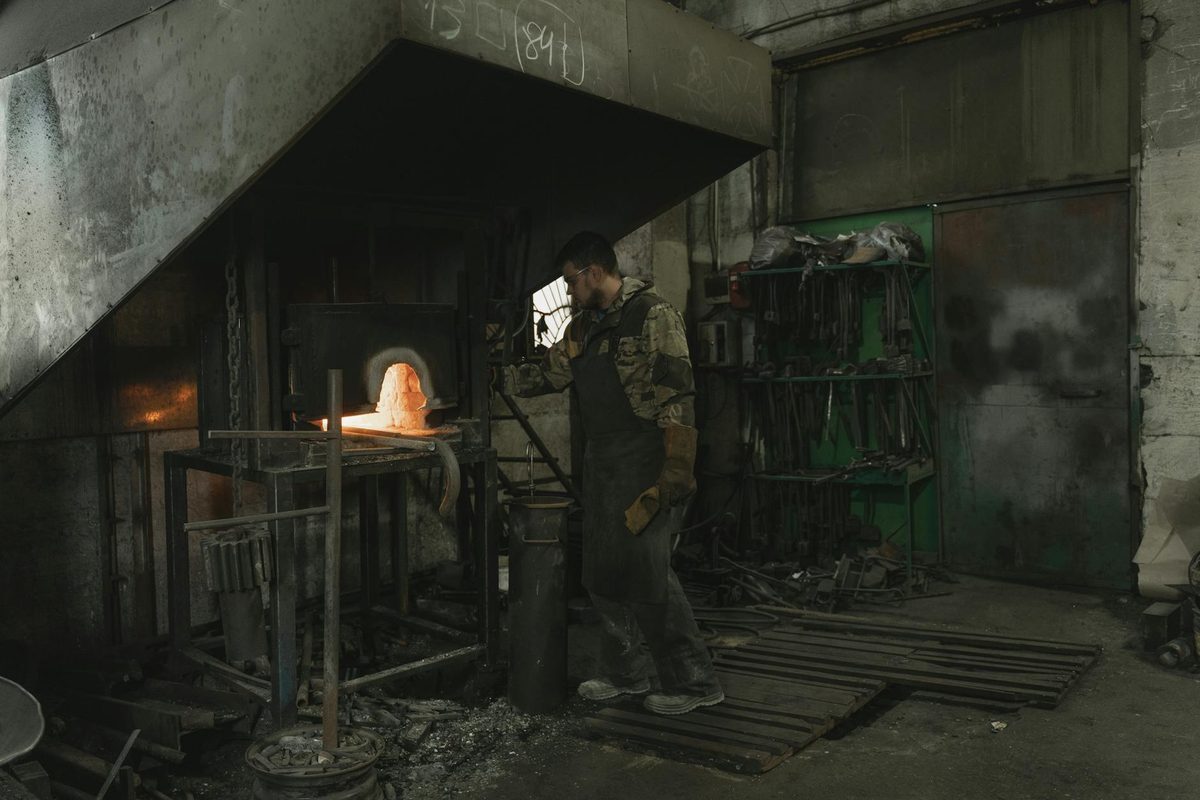
No CNC grinding. No automated assembly. No robotic polishing. Each pair moves through the workshop under the hands of craftspeople who shape, heat-treat, grind, and finish the steel with manual tools and decades of experience.
When you divide 1,000 monthly pairs across 109 models, the math is obvious: some models are produced in batches of fewer than ten per month. At that scale, every pair is essentially a custom piece.
The CEO Who Cuts Hair
One detail that separates Hikari from most manufacturers: their CEO is a former hairdresser.
This is not common. Most scissor company leaders come from engineering, business, or family manufacturing backgrounds. Hikari’s leadership comes from behind the chair. The person making production decisions, approving new models, and setting quality standards has actually stood for eight hours cutting hair with the tools they make.
The impact shows in Hikari’s design priorities. Their scissors are not optimized for manufacturing efficiency or material cost. They are optimized for cutting feel. The weight distribution, the pivot tension, the handle geometry, the way the blade responds during a slide cut: these are not engineering abstractions to someone who has done them ten thousand times.
When a manufacturer says their scissors “feel right,” the claim is only as credible as the person making it. At Hikari, that person held scissors professionally before they held a balance sheet.
The Resharpening Problem (and Hikari’s Warning)
Hikari scissors are designed for 20 or more resharpening cycles. That is an exceptional number. Most premium scissors can handle 5-10 resharpenings before the blade geometry degrades to the point where it no longer performs as designed.
But here is the catch, and Hikari is unusually blunt about it: non-manufacturer sharpening can permanently destroy the hamaguri-ba radius.
Their exact position: “Once the designed radius is removed by a flat hone, it cannot be fully restored.”
This is not a marketing scare tactic to drive sharpening revenue. It is physics. The hamaguri-ba convex curve is not a surface treatment or a coating. It is the three-dimensional geometry of the blade itself, built up through careful hand-grinding. A flat hone, the standard tool used by most scissor sharpeners, removes material evenly across the blade face. That even removal slowly flattens the convex curve, converting a hamaguri-ba blade into a flat-ground blade.
The difference in cutting feel is immediate and irreversible. Our togishi guide explains why this matters.
| Sharpening Method | Effect on Hamaguri-Ba | Reversible? |
|---|---|---|
| Factory / Authorized | Maintains designed radius | N/A (no damage) |
| Skilled third-party (convex-trained) | Minor radius reduction over time | Partially |
| Standard flat hone | Destroys convex geometry | No |
| Mechanical grinding wheel | Destroys geometry + heat damage risk | No |
This is a real problem in the industry, and it is not unique to Hikari. Any scissors with a convex edge (including models from Mizutani, Kasho, and Joewell) face the same risk from improper sharpening. Our post on why your sharpener might be destroying your Japanese shears covers this topic in depth.
Hikari’s solution is the same as Mizutani’s: a factory sharpening service and a network of authorized sharpeners trained specifically on their blade geometry.
The 1,000-Per-Month Philosophy
Back to the central question: why cap production?
The answer is that hamaguri-ba cannot be rushed.
The convex blade geometry that defines Hikari’s scissors requires hand-finishing that no machine can replicate at the tolerances they demand. Each blade must be ground to a specific curvature, checked, adjusted, and verified by a human eye and hand. The margin between a perfect hamaguri-ba and a slightly-off one is measured in hundredths of a millimeter.
At 1,000 pairs per month, Hikari’s craftspeople have the time to get each pair right. At 2,000, they would not. It is that simple.
For context, some of the larger scissor manufacturers in Seki City produce 1,000 pairs per day. Those scissors are good; the Seki manufacturing ecosystem is outstanding. But they are operating on a fundamentally different model, with CNC-assisted grinding and division-of-labor systems that allow much higher throughput.
Hikari’s approach is closer to a watchmaker than a factory. Every piece is touched by hand. Every piece is individually verified. And the company would rather have a waiting list than a quality problem.
How Hikari Compares
Hikari occupies a specific position in the premium Japanese market. Here is how they stack up against comparable manufacturers:
| Factor | Hikari | Mizutani | Kasho |
|---|---|---|---|
| Production model | 1,000/month, handmade | Handmade, 30-step process | Factory + hand finishing |
| Key technology | Patented hamaguri-ba | Nano Powder Metal, Stellite | KAI Group steels |
| Resharpening life | 20+ cycles | Not published | 8-12 typical |
| Price range | $600-$2,000+ | $800-$3,000+ | $400-$1,200 |
| Best for | Slide-cutters, technique purists | Maximum edge life | Versatile premium use |
If you are a stylist whose primary technique involves slide-cutting, point-cutting, or any work where the blade needs to move laterally through hair rather than simply closing, Hikari’s patented convex geometry is specifically designed for you.
If your priority is edge retention in high-volume blunt cutting, Mizutani’s Nano Powder Metal or Stellite lines may be a better match.
If you want premium Japanese quality without committing to ultra-premium pricing, Kasho delivers KAI Group manufacturing consistency at a more accessible price point. And for mid-range options that still deliver genuine Japanese design and steel, Juntetsu and Ichiro are strong choices.
The Sword Principle, Scaled Down
The story of Hikari is really the story of hamaguri-ba: a blade geometry that Japanese swordsmiths perfected over centuries, that one company patented for scissors, and that now defines the entire premium Japanese scissor market.
Every time you pick up a convex-edged scissor from any manufacturer and feel that effortless glide through the hair, you are feeling a principle that Hikari codified and protected. The imitators have done well. Many convex scissors on the market are excellent. But none of them are made by the company that holds the patent.
One thousand pairs per month. Thirty-five series. One hundred and nine models. All by hand, all with the clamshell blade that changed the industry.
If you want the original, you may have to wait. But Hikari’s entire philosophy says that waiting for the right tool is better than settling for the available one.
Sources: Hikari Scissors, Hikari Maintenance Guide