Seki City: Inside the World Capital of Professional Shears

Somewhere in central Japan, in a small city most Americans have never heard of, your shears were probably born.
Seki City (関市) sits in Gifu Prefecture along the Nagara River. The population is around 90,000. There is no bullet train stop. It will not show up on most tourist itineraries.
But if you own Japanese shears, or shears made with Japanese steel, or shears sharpened using Japanese techniques, this city is the reason those tools exist.
1,200 Years of Making Blades
Seki’s bladesmithing tradition dates to the late Kamakura period, around the late 13th century. Swordsmiths settled along the river because the region offered everything they needed: high-quality clay for building forges, pure water from the Nagara River for quenching, and pine charcoal for fuel.
Those swordsmiths made katanas. Their descendants made kitchen knives, medical instruments, razors, and eventually hair shears.
The Japanese phrase for it is 「東の関、西のゾーリンゲン」(higashi no Seki, nishi no Zoringen), which translates to “Seki in the East, Solingen in the West.” These two cities, on opposite sides of the world, are the twin capitals of global blademaking. Seki along with Solingen (Germany) and Sheffield (England) are considered the three great cutlery-producing regions in the world (世界三大刃物産地).
That heritage is not just history. It is the infrastructure, knowledge base, and quality standard that every shear from this region builds on.
99% of Japan’s Hairdressing Shears
Here is the number that matters: Seki City accounts for approximately 99% of Japan’s hairdressing shear production. The total output is valued at approximately 12.45 billion yen.
Over 100 cutlery manufacturers operate in Seki, producing everything from nail clippers to surgical instruments. For professional hair shears specifically, the concentration of expertise is unmatched anywhere else on earth.
Major companies headquartered or manufacturing in the Seki area include the KAI Group (parent company of Kasho), Feather Safety Razor Co., and dozens of specialized producers whose names you may never see on a finished product but whose work is inside shears from brands worldwide.
The Bungyosei System: Why One Company Does Not Make Your Shears
This is the part that surprises most people.
In Seki, shear manufacturing operates on a division-of-labor system called bungyosei (分業制). Different workshops specialize in different manufacturing stages rather than each manufacturer performing all steps under one roof.
Here is how it breaks down:
| Stage | Specialist | What They Do |
|---|---|---|
| Steel procurement | 鋼材商 (kozaisho) | Sources raw steel from Japanese steelmakers |
| Forging/Pressing | 鍛造 (tanzo) | Shapes the blank from steel rod or sheet |
| Grinding/Shaping | 研削 (kensaku) | Rough grinding to establish blade geometry |
| Heat treatment | 熱処理 (netsushori) | Quenching and tempering in specialist furnaces |
| Assembly | 組立 (kumitate) | Joining blades with pivot screws, fitting handles |
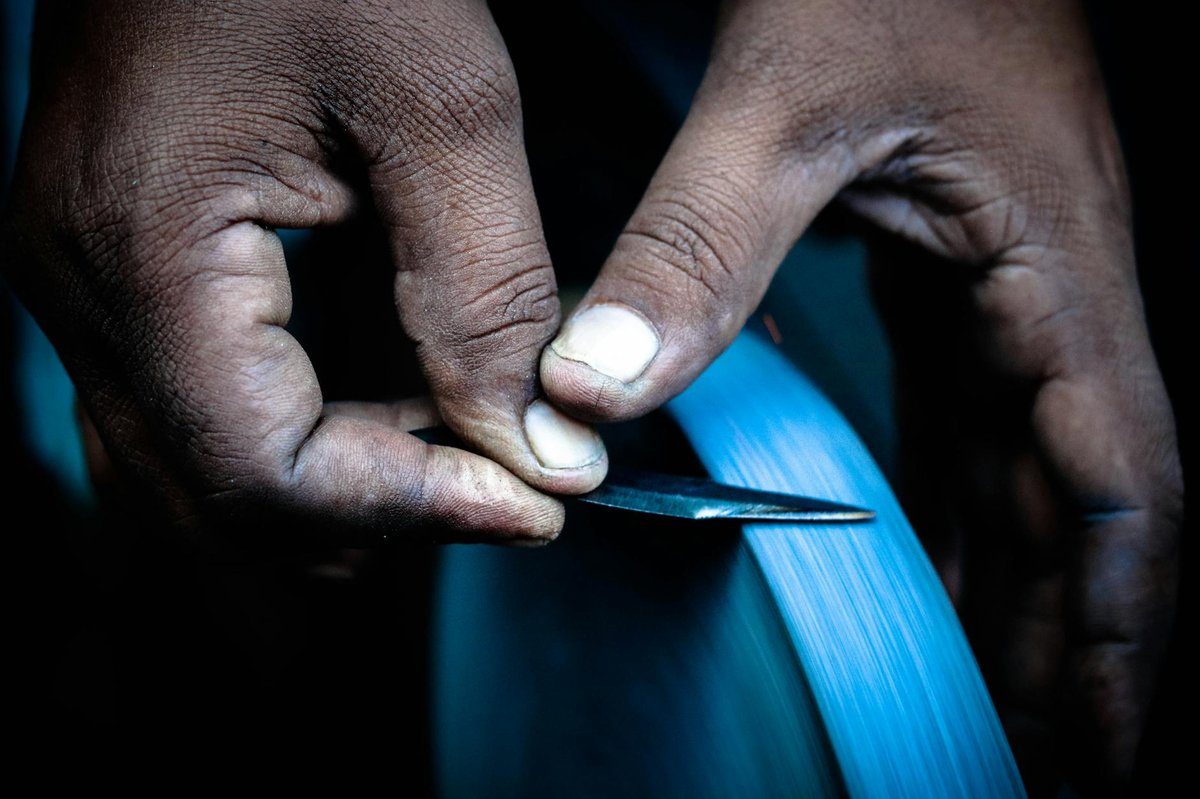
| Sharpening/Finishing | 研ぎ・仕上げ (togi/shiage) | Final hand sharpening and quality control |
| Engraving/Branding | 刻印 (kokuin) | Brand markings, serial numbers, name engraving |
This means the brand name on your shears might represent a company that designed the shear, selected the steel, specified the heat treatment parameters, and performed final quality control, but outsourced the forging to one specialist, the grinding to another, and the heat treatment to a third.
Is that a bad thing? Not at all. It is actually why Seki shears are so consistent. Each specialist workshop does one thing all day, every day, for decades. The heat treatment specialist has done nothing but heat treatment for their entire career. The hand sharpener has spent 20 years mastering one skill.
It also means that multiple branded shear companies may source components or processing from the same specialist workshops. Two shears from different “competing” brands might have been heat-treated in the same furnace by the same technician.
What This Means for OEM and White-Label Shears
The bungyosei system is also how OEM (Original Equipment Manufacturing) production works in the shear industry. A company can create a shear brand without owning a factory by commissioning components from established specialists and performing assembly and branding themselves.
This is not a secret and it is not a scandal. It is the established structure of the industry.
What varies enormously between OEM brands is the level of specification and quality control. A serious brand will specify exact steel grades, hardness targets, blade geometry, and perform their own final inspection. A less serious brand might order the cheapest available option and slap a logo on it.
The steel origin matters here too. Japanese 440C from Hitachi or Takefu is not the same as 440C from other countries. That distinction alone accounts for price differences of five to ten times, according to industry analysis.
The Cutlery Hall: Where You Can See It All
If you ever make it to Seki (and if you care about shears, you should), the Seki Cutlery Hall (関刃物会館, Seki Hamono Kaikan) is the place to visit.
Located at 4-12-6 Heiwadori, Seki, the hall is open daily from 9am to 5pm (closed during year-end holidays). It has parking for about 100 cars.
Inside, approximately 2,000 blade products are on display. That includes professional hair shears from dozens of manufacturers, all available for comparison and purchase. You can hold them, feel the action, compare blade lines and handle styles, and buy at competitive prices.
The hall is operated by the Gifu Prefectural Seki Cutlery Industry Association (岐阜県関刃物産業連合会), which is the main industry body for the region. It is not a tourist trap. It is where professionals and enthusiasts go to access the full range of Seki production in one location.
There is also the Seki Cutlery Museum (関鍛冶伝承館, Seki Kaji Denshokan) for history and craft demonstrations, and the Feather Museum (フェザーミュージアム) at 1-17 Hinodecho, which is dedicated to blade technology.
Every October, Seki hosts the annual Seki Cutlery Festival (関刃物まつり), which draws blade enthusiasts from across Japan.
How Shears Actually Get Sold in Japan
The purchase channels for Japanese stylists are very different from what we are used to in the United States.
Beauty dealers (ディーラー, diira): This is the dominant channel. Sales representatives visit salons with sample cases on a regular schedule. The stylist tries shears in their own environment, with their own hair, and orders through the dealer. This relationship is long-standing and loyalty-based.
Manufacturer showrooms: Major brands operate permanent showrooms. Mizutani, for example, has showrooms in Asakusa, Omotesando, and Osaka where stylists can try 200 or more models before purchasing.
Sharpening specialists (研ぎ師, togishi): Many sharpening craftspeople also sell and customize shears. Because they work on tools from all manufacturers, they have broad knowledge and can advise on purchases from a neutral position.
Factory visits: Some manufacturers in Seki offer factory tours (工場見学, kojo kengaku) by appointment. Seeing the production process firsthand is something most Japanese professionals consider a valuable experience.
The American model of browsing an online catalog and ordering based on photos and specifications would strike most Japanese professionals as insufficient. They want to hold the shear, feel the action, and cut hair with it before committing.
Why Any of This Matters to You
You might never visit Seki. You might never buy directly from a Japanese dealer. But understanding where your tools come from changes how you evaluate them.
When a brand tells you their shears are “Japanese made,” you can now ask: made where in Japan? By whom? Under the bungyosei system, which specialists handled which stages?
When a brand charges a premium for “Japanese quality,” you can evaluate whether that premium reflects genuine Seki-level craftsmanship or just a Japanese-sounding brand name on a product manufactured elsewhere.
When you are deciding between two shears at similar price points, knowing that one comes from a Seki manufacturer with 50 years of specialization and the other comes from a company that started three years ago tells you something meaningful about what you are holding.
The steel matters. The heat treatment matters. The hand sharpening matters. And all of those things trace back, in most cases, to a small city on a river in central Japan that has been making blades since the Kamakura shogunate.
Sources: Seki City production data and industry structure from Gifu Prefectural Seki Cutlery Industry Association documentation. Historical context from Japanese bladesmithing archives. Manufacturer showroom information from company websites. Cutlery Hall visitor information current as of publication.