Degrees Below Zero: The Cryogenic Revolution in Japanese Scissors
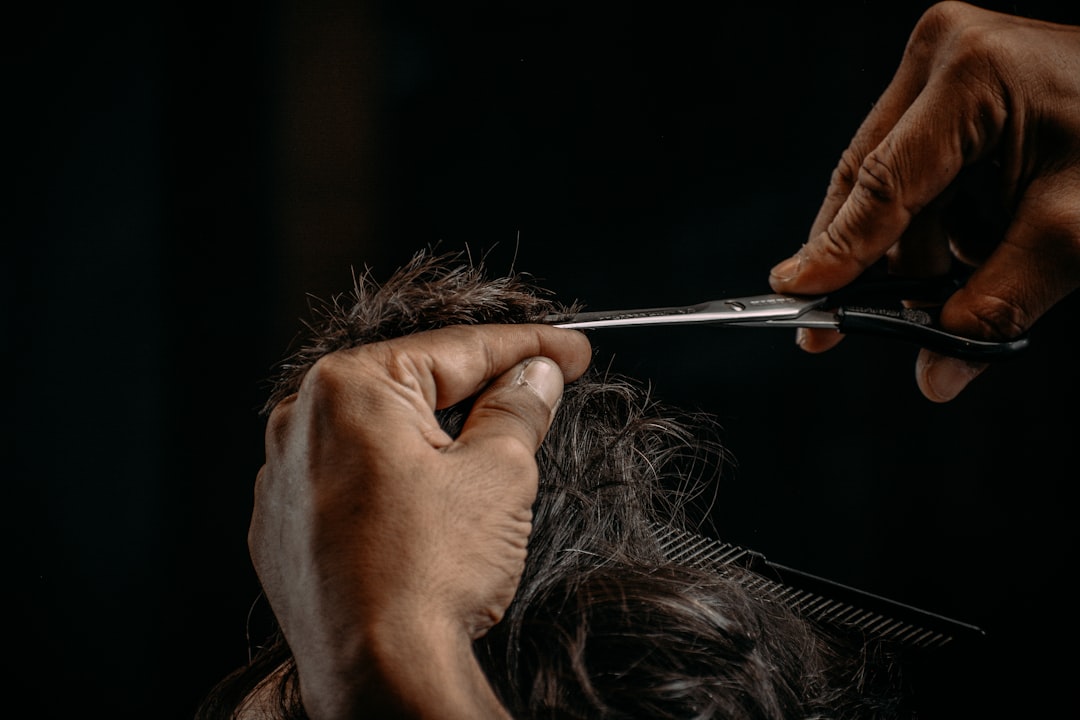
Minus 196 degrees Celsius. That’s the temperature of liquid nitrogen, and it’s increasingly where premium scissors spend time before they reach your hand.
If that sounds extreme, it is. And it works. The science behind cryogenic treatment is not marketing mythology; it’s measurable metallurgy that can improve blade durability by roughly 40 percent. Which raises an obvious question: if it’s that effective, why doesn’t every manufacturer do it?
The answer involves cost, control, and a fundamental disagreement within the Japanese scissors industry about whether the improvement justifies the added complexity. Let’s break it down.
Standard Heat Treatment: The Baseline
Before we go sub-zero, you need to understand what happens at normal temperatures. Every pair of professional scissors undergoes heat treatment (熱処理, netsushori), the process that transforms soft, workable steel into a hard, edge-holding cutting tool.
The standard process has three stages:
Austenitising: The steel is heated to 1,050-1,100 degrees Celsius in a controlled atmosphere (usually a vacuum furnace, to prevent oxidation and surface contamination). At this temperature, the iron crystal structure transforms from body-centred cubic (ferrite) to face-centred cubic (austenite). Carbon and alloying elements dissolve into the austenite matrix.
Quenching: The hot steel is rapidly cooled, typically using pressurised nitrogen gas in a vacuum furnace, or oil in older systems. This rapid cooling traps the dissolved carbon in the iron lattice, creating martensite: a very hard, slightly distorted crystal structure. Martensite is what gives scissors their ability to hold an edge.
Tempering: Raw martensite is too brittle for practical use. Tempering involves reheating the quenched steel to a lower temperature (typically 150-300 degrees Celsius, depending on the steel grade) and holding it there for a controlled period. This relieves internal stresses and slightly reduces hardness in exchange for dramatically improved toughness.
The result: steel with a hardness typically between HRC 58 and HRC 63, depending on the grade and manufacturer’s target specification.
But here’s the problem. The quenching stage doesn’t convert 100% of the austenite to martensite. Some austenite, called “retained austenite”, survives the quench. In most scissors steels, retained austenite can constitute 5-15% of the microstructure after standard treatment.
Retained austenite is softer than martensite. It’s also unstable; it can transform to martensite unpredictably during use, causing dimensional changes and internal stress. In a precision tool like scissors, where blade alignment matters to hundredths of a millimetre, unstable retained austenite is a genuine quality issue.
This is where cryogenic treatment enters the picture.
Going Sub-Zero: サブゼロ処理
Sub-zero treatment (サブゼロ処理, sabu-zero shori) adds a fourth stage after quenching and before tempering: cooling the steel to extreme negative temperatures to convert retained austenite to martensite.
The physics is straightforward. Austenite transforms to martensite below a temperature called the Mf (martensite finish) point. For many scissors steels, the Mf point is below room temperature, sometimes well below. Standard quenching to room temperature stops above Mf, leaving retained austenite. Cooling further pushes more austenite past the transformation threshold.
There are two levels of sub-zero treatment:
Shallow Cryogenic: -80°C
The more common approach. The quenched steel is placed in a chamber cooled by dry ice and alcohol or by mechanical refrigeration to approximately minus 80 degrees Celsius. It’s held at this temperature for one to several hours, then slowly warmed before tempering.
This converts a significant portion of retained austenite, typically reducing it from 10-15% to 3-5%. The practical result is measurably harder, more dimensionally stable steel.
Deep Cryogenic: -196°C
The full treatment. The steel is slowly cooled to minus 196 degrees Celsius using liquid nitrogen, held for 12-24 hours, then gradually warmed. Deep cryogenic treatment converts nearly all retained austenite and, according to some metallurgical research, also promotes the precipitation of very fine carbide particles (eta carbides) throughout the martensite matrix.
These eta carbides are significant. They act as microscopic reinforcement within the steel, improving wear resistance beyond what the martensite transformation alone achieves. This is why deep cryogenic treatment is often cited as providing benefits that exceed simple retained austenite conversion.
Mizutani Extramarise: Two Variants, One Philosophy
Mizutani is the brand most publicly associated with advanced heat treatment in scissors. Their proprietary Extramarise technology incorporates sub-zero processing as part of a comprehensive treatment approach.
What makes Extramarise unusual is that Mizutani offers two distinct variants, each optimised for a different performance characteristic:
Extramarise I: Higher molybdenum content in the alloy, processed with a treatment profile optimised for toughness (粘り, nebari). The result is a blade that resists chipping and deformation even under heavy use. This variant is typically paired with Mizutani’s scissors designed for aggressive cutting techniques and high-volume work.
Extramarise II: Higher vanadium content, processed with a treatment profile optimised for edge retention. The vanadium forms very hard carbides that resist abrasive wear. This variant suits stylists who prioritise long intervals between sharpenings and a refined cutting feel.
Both variants include cobalt in the alloy. Both use sub-zero processing. The difference lies in the balance between toughness and edge retention: a fundamental trade-off in all heat treatment.
Mizutani’s approach is notable for being fully in-house. Their Chiba Prefecture facility controls every aspect of heat treatment, from atmosphere composition in the furnace to the exact cooling curve during sub-zero processing. This level of control is rare in the scissors industry, where heat treatment is typically outsourced to a specialist workshop within the bungyosei (分業制) system.
Joewell Ice-Hardening
Joewell (Tokosha Co., Ltd.) takes a different approach they call “ice-hardening.” Their process heats the steel above 1,000 degrees Celsius, then quenches to minus 80 degrees Celsius: a shallow cryogenic treatment integrated directly into the quenching stage rather than performed as a separate step.
The distinction matters metallurgically. Quenching directly to sub-zero temperatures creates a slightly different martensite morphology than quenching to room temperature and then separately cooling to sub-zero. Joewell’s approach favours rapid, complete transformation in a single thermal cycle.
Joewell has been using this technique across their product line, making it one of the most accessible entry points for stylists who want the benefits of cryogenic treatment without paying ultra-premium prices. Their FX PRO series, which combines SG2 powder metallurgy steel with ice-hardening, represents one of the most advanced steel-plus-treatment combinations available at a price point below Mizutani.
Yae Scissors: Vacuum Heat Treatment Pioneer
Yae Scissors (八重シザー) has built their reputation on vacuum heat treatment (完全真空焼き入れ, kanzen shinkuu yakiire, literally “complete vacuum quenching”). While vacuum furnaces are standard in modern heat treatment, Yae has invested heavily in process control and claims tighter tolerances on temperature uniformity and atmosphere purity than typical production heat treatment.
Yae’s contribution is less about sub-zero treatment specifically and more about demonstrating that heat treatment quality is a legitimate differentiator. Their willingness to make heat treatment process a marketing point has pushed other manufacturers to be more transparent about their own processes.
The Evidence: Does It Actually Work?
The metallurgical literature is clear: cryogenic treatment measurably changes the microstructure and mechanical properties of tool steels. But “measurable” and “meaningful in practice” are not always the same thing.
Here’s what the data supports:
| Property | Standard Treatment | With Sub-Zero (-80°C) | With Deep Cryo (-196°C) |
|---|---|---|---|
| Retained austenite | 5-15% | 2-5% | <1% |
| Hardness increase | Baseline | +0.5-1.0 HRC | +1.0-2.0 HRC |
| Wear resistance | Baseline | +15-25% | +30-45% |
| Dimensional stability | Good | Very good | Excellent |
| Edge retention | Baseline | Moderate improvement | Significant improvement |
| Cost increase | Baseline | +5-10% | +15-25% |
The wear resistance numbers are particularly relevant for scissors. A 40% improvement in wear resistance translates roughly to 40% longer intervals between sharpenings. If you currently sharpen every 6 months, cryogenic treatment could extend that to 8-10 months.
Over a 5-year scissors lifespan, that’s 3-4 fewer sharpening sessions. At $30-80 per professional sharpening, the economic argument is real, especially for premium scissors where the sharpening cost is a small fraction of the purchase price.
The Practical Impact for Stylists
The technical details matter, but what actually changes for you behind the chair?
Longer edge life. This is the headline benefit. Cryogenically treated scissors maintain their cutting quality for longer between sharpenings. The edge degrades more slowly because the harder, more uniform microstructure resists abrasive wear from hair and environmental contaminants.
More consistent cutting feel. Retained austenite creates soft spots in the blade: microscopic regions that wear faster than the surrounding martensite. Cryogenic treatment eliminates these soft spots, resulting in a more uniform edge that degrades evenly rather than developing random rough patches.
Dimensional stability. Scissors blades need to maintain their precise geometry over thousands of cuts. Retained austenite can transform under stress, causing subtle dimensional changes that affect blade alignment. Cryogenically treated scissors hold their factory settings more reliably over time.
Fewer sharpenings means less cumulative material removal. Every sharpening removes a small amount of steel. Over the life of the scissors, fewer sharpenings preserve more of the original blade mass and geometry. This is particularly important for high-end scissors where the blade geometry has been precisely optimised by a master togishi (研ぎ師, sharpening specialist).
Reduced RSI risk. This one is indirect but important. Dull scissors require more force to cut, which increases strain on your hand, wrist, and forearm. If cryogenic treatment means your scissors stay sharp longer, you’re spending less time cutting with sub-optimal edges. For stylists doing 8-10 hours of cutting per day, this cumulative reduction in strain is genuinely significant for career longevity.
The Counter-Arguments
Not everyone in the Japanese scissors industry is a cryogenic convert. The sceptics raise valid points:
Cost efficiency. The improvement is measurable but not dramatic. For entry-level and mid-range scissors where the togishi’s skill is the primary quality determinant, spending extra on cryogenic treatment may not be the best allocation of budget. That money might be better spent on better steel or a better sharpener.
Process sensitivity. Cryogenic treatment done poorly (too fast a cooling rate, incorrect hold time, improper warming) can actually damage the steel by creating thermal shock cracks. The treatment is only beneficial when performed by specialists with proper equipment and process control. In the bungyosei system, not all heat treatment specialists have the equipment or expertise for deep cryogenic work.
Diminishing returns with premium steels. Some powder metallurgy steels like SG2 already have very low retained austenite after standard treatment due to their fine grain structure and optimised alloy composition. Applying deep cryogenic treatment to steel that already has minimal retained austenite produces a smaller incremental improvement.
Marketing inflation. Some brands advertise “cryogenic treatment” without specifying whether they use shallow (-80 degrees Celsius) or deep (-196 degrees Celsius) processing. The difference in cost and effect is significant, but both get marketed under the same appealing “sub-zero” banner.
What to Look For When Buying
If cryogenic treatment matters to you, here’s how to evaluate claims:
-
Ask for specifics. “Sub-zero treated” means nothing without a temperature. -80 degrees Celsius and -196 degrees Celsius are very different processes with different results.
-
Consider the steel grade. Cryogenic treatment adds more value to conventional steels (VG-10, cobalt alloy) than to powder metallurgy steels (SG2, NPM) where retained austenite is already minimal.
-
Check who does the treatment. In-house treatment (Mizutani, Joewell) offers more process control than outsourced treatment in the bungyosei system. This doesn’t mean outsourced treatment is bad (Seki City’s netsushori specialists are excellent), but the brand should be able to name their treatment partner.
-
Weight the total package. Cryogenic treatment on a poorly forged, poorly ground scissor won’t rescue it. The treatment amplifies the quality of the underlying steel and workmanship. It doesn’t replace either.
-
Factor in the togishi. The final hand sharpening (研ぎ/仕上げ, togi/shiage) is still the single most important quality determinant. A master togishi working with standard-treated VG-10 will produce a better cutting tool than a machine edge on deep-cryo SG2.
The cryogenic revolution is real, but it’s an enhancement, not a replacement for the fundamentals that have always made Japanese scissors great. Temperature is a tool. It’s what the craftsman does with it that matters.