Seki City, the World Capital of Scissors: A Visitor's Guide

Every industry has its centre of gravity. For wine, it is Bordeaux. For watches, it is the Jura Valley. For professional hairdressing scissors, it is a small city in Gifu Prefecture, Japan, that most Western stylists have never heard of.
Seki City (関市) produces an estimated 99% of Japan’s professional hairdressing scissors. It is home to over 100 cutlery manufacturers. And it has been making blades for more than 800 years.
If you are a professional stylist who has ever wondered where your tools actually come from, Seki is the answer. And unlike most manufacturing hubs, it actively welcomes visitors.
800 Years of Blades
Seki’s bladesmithing tradition dates to the Kamakura period (1185-1333). Swordsmiths migrated to the region drawn by three natural resources that were essential to their craft:
- High-quality clay for constructing forges and creating the differential heat treatment that gives Japanese swords their distinctive temper line
- Clean water from the Nagara River for quenching heated blades
- Abundant pine charcoal that burned at the temperatures needed for forging
By the Muromachi period (1336-1573), Seki had become one of Japan’s foremost sword-producing regions. When the demand for swords declined in the modern era, the accumulated metallurgical knowledge pivoted to knives, razors, medical instruments, and eventually scissors.
Today Seki is recognized as one of the three great cutlery production centres in the world (世界三大刃物産地), alongside Solingen, Germany and Sheffield, England. The comparison is apt but slightly unfair to Seki, which has a head start of several centuries.
What to Visit
Seki Cutlery Hall (関刃物会館)
Address: 4-12-6 Heiwadori, Seki City, Gifu Prefecture Hours: 9:00 AM - 5:00 PM daily (closed year-end holidays) Parking: 100-car lot
This is the starting point for any visit. The Cutlery Hall is part showroom, part retail operation, stocking approximately 2,000 products from Seki manufacturers. Professional scissors, kitchen knives, razors, nail clippers, gardening tools. If it has a blade and it is made in Seki, it is probably here.
The key draw for professionals is factory-direct pricing. Products are sold at manufacturer-set prices without retail markup. You will not find lower prices anywhere in Japan for the same products. The staff are knowledgeable about the manufacturers and can explain differences between products in a way that most retail shops cannot.
If you are specifically shopping for hairdressing scissors, tell the staff when you arrive. They can direct you to the relevant section and, depending on timing, may be able to arrange a brief visit to a nearby manufacturer.
Seki Cutlery Museum (関鍛冶伝承館 - Seki Kaji Denshokan)
The Denshokan (literally “swordsmith tradition hall”) covers the full history of bladesmithing in Seki. Exhibits trace the progression from Kamakura-era swords through modern industrial production. The museum regularly hosts live craft demonstrations where you can watch smiths working steel using traditional techniques.
For anyone who uses blades professionally, watching a master smith forge steel by hand puts the entire industry in perspective. The precision and patience involved make industrial manufacturing look crude by comparison. You can see the origins of the convex edge technique that defines modern Japanese scissors. It also helps you understand why handmade scissors from traditional craftspeople command the prices they do.
Feather Museum (フェザーミュージアム)
Address: 1-17 Hinodecho, Seki City Admission: Free
Feather Safety Razor Company, one of Japan’s most recognizable blade brands, operates this museum dedicated to blade technology and heritage. It covers the science of cutting at both the macro and micro level, with exhibits on metallurgy, edge geometry (including steels like VG-10 and cobalt alloys), and the industrial history of blade manufacturing.
The museum is modern, well-designed, and free. It is particularly good for understanding the technical side of blade production, from steel composition to heat treatment to grinding. Worth a visit even if razors are not your primary interest.
Seki Cutlery Festival (関刃物まつり)
When: Every October (check specific dates annually)
The annual festival is the best time to visit if you want maximum access. Manufacturers who are normally closed to the public set up direct-sales booths. There are forging demonstrations, sharpening workshops, and factory-direct pricing that can be significantly below normal retail.
The festival draws serious blade enthusiasts from across Japan and increasingly from overseas. If you want to handle products from dozens of Seki manufacturers in a single day, this is your opportunity.
Beyond Seki: Other Blade Centres
Ono City (小野市), Hyogo Prefecture
Known as “the city of scissors” (はさみの町 hasami no machi), Ono has a blade-making heritage stretching back over 250 years. While Seki dominates hairdressing scissors, Ono is historically significant for scissors production more broadly, including tailoring scissors and industrial cutting tools.
Ono is smaller and less tourist-oriented than Seki, but it offers a different perspective on Japanese blade manufacturing. If you are making a blade pilgrimage across Japan, it is worth the detour.
Tokyo Showrooms
Not everyone can get to Gifu Prefecture. Several major scissor manufacturers maintain showrooms in Tokyo:
Mizutani operates showrooms in both Asakusa and Omotesando. Asakusa is the more traditional location, fitting for a company rooted in Seki craftsmanship. Omotesando is the fashion-district showroom, positioned near the hair salons that use their products. Both locations allow you to handle and test scissors before purchasing.
Other manufacturers maintain dealer relationships with Tokyo-based retailers. The concentration of professional beauty supply shops in areas like Shibuya and Shinjuku means you can handle products from multiple manufacturers without leaving the city.
How Buying Works in Japan
The Japanese approach to buying professional scissors is fundamentally different from the Western model, and it is better.
Try Before You Buy
In Japan, trying scissors before purchase is the norm, not the exception. Dealers (ディーラー, diiraa) visit salons with full product lines. Showrooms stock test pairs. The Cutlery Hall in Seki lets you handle products directly.
This is how it should work everywhere. A pair of scissors is a precision tool that you will use thousands of times. The idea that you should buy one from a website photo and a list of specifications is absurd. The balance, the weight, the handle feel, the cutting action – these are things you evaluate with your hands, not your eyes.
The Dealer System
Japan’s professional beauty industry relies heavily on dealers who build long-term relationships with salons. A good dealer knows your cutting style, your hand size, your preferences, and your budget. They bring you scissors that match your needs rather than pushing whatever has the highest margin.
The dealer system also handles sharpening. Your dealer collects your scissors, routes them to the appropriate sharpener (often the manufacturer’s own service), and returns them. This closed loop ensures your scissors are always maintained by people who understand their specific geometry.
Pricing Context
For reference, here is what Japanese stylists typically pay:
| Category | Price Range (JPY) | Approximate USD |
|---|---|---|
| Entry professional | 20,000 - 30,000 | $150 - $225 |
| Mid-range professional | 30,000 - 50,000 | $225 - $375 |
| Premium | 50,000 - 150,000 | $375 - $1,125 |
| High-end / specialist | 150,000 - 500,000 | $1,125 - $3,750 |
| Bespoke | 500,000 - 1,000,000+ | $3,750 - $7,500+ |
Most working stylists in Japan spend in the 30,000 to 50,000 yen range. The idea that you need to spend $1,000+ for professional-quality Japanese scissors is a Western market distortion, not a Japanese reality.
Planning Your Visit
Getting there: Seki City is about 30 minutes by train from Gifu Station, which is on the Tokaido Shinkansen line from Tokyo (about 2 hours) and from Osaka (about 1 hour). From Nagoya, it is approximately 1 hour by local train.
Time needed: A full day is sufficient to visit the Cutlery Hall, the Denshokan, and the Feather Museum. If you are arranging manufacturer visits, plan for two days.
Language: English is limited outside the major tourist areas, but the Cutlery Hall staff are accustomed to international visitors. A translation app will cover most situations. If you are arranging manufacturer visits, having a Japanese-speaking contact or guide is strongly recommended.
Best time to visit: October for the Cutlery Festival. Spring (March-April) and autumn (October-November) for comfortable weather. Avoid Golden Week (late April to early May) and Obon (mid-August) when many businesses close.
What to bring home: Anything you buy at the Cutlery Hall or from a manufacturer can be shipped internationally. Scissors purchased in Japan are legal to carry in checked luggage on flights. Do not put them in carry-on.
Why It Matters
Visiting Seki will not make you a better stylist. But it will make you a more informed one. Seeing where your tools come from, understanding the process and the people behind them, changes how you evaluate products and how you maintain the tools you already own.
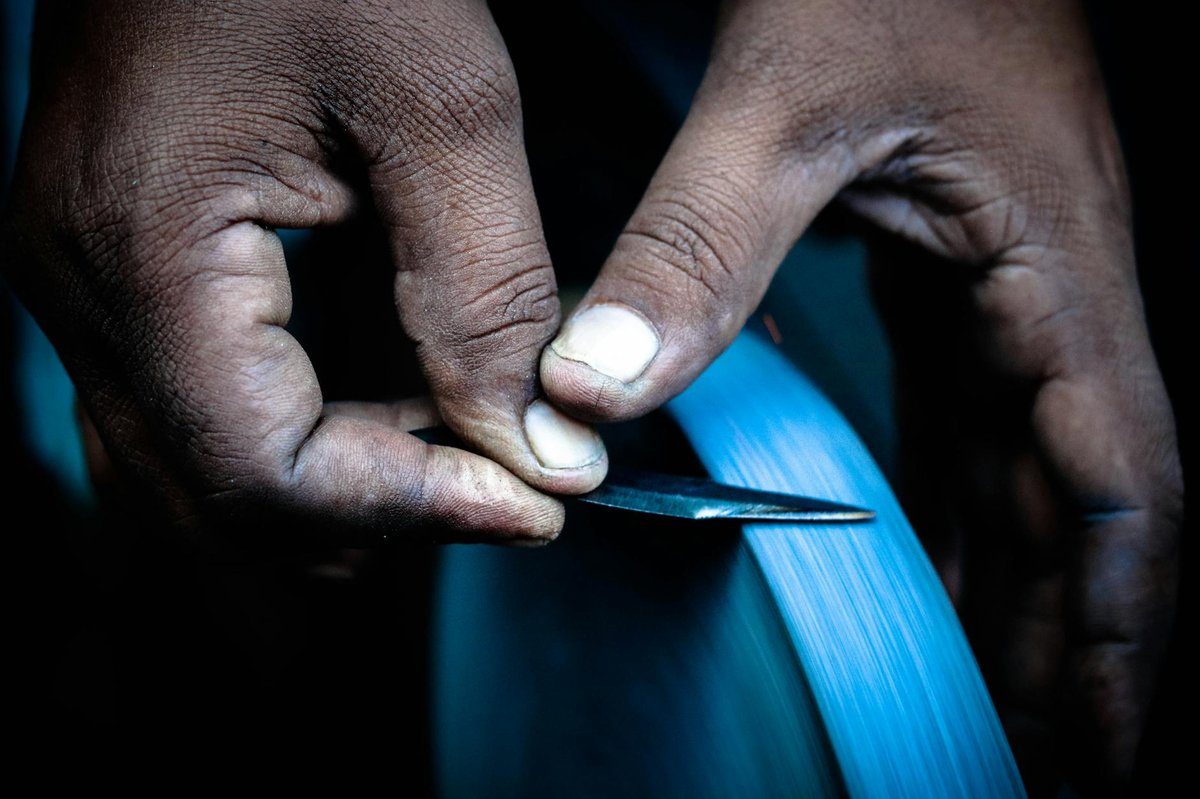
It also inoculates you against marketing nonsense. Once you have seen a master sharpener spend 45 minutes on a single pair of scissors, achieving a precision that is invisible to the naked eye but immediately obvious in the cut, you will never again be impressed by a sales rep who tells you his scissors are “precision crafted” without being able to explain what that means.
Seki is not just where scissors come from. It is where the knowledge lives. And for anyone who takes their tools seriously, that is worth the trip.
Before you go: Read our guide on what makes Japanese scissors different and understand the steel hierarchy so you can shop with confidence.