Mizutani Scissors: 100 Years of Handcraft, from Samurai Swords to Nano Steel

The first worker Mizutani ever hired was a samurai sword maker.
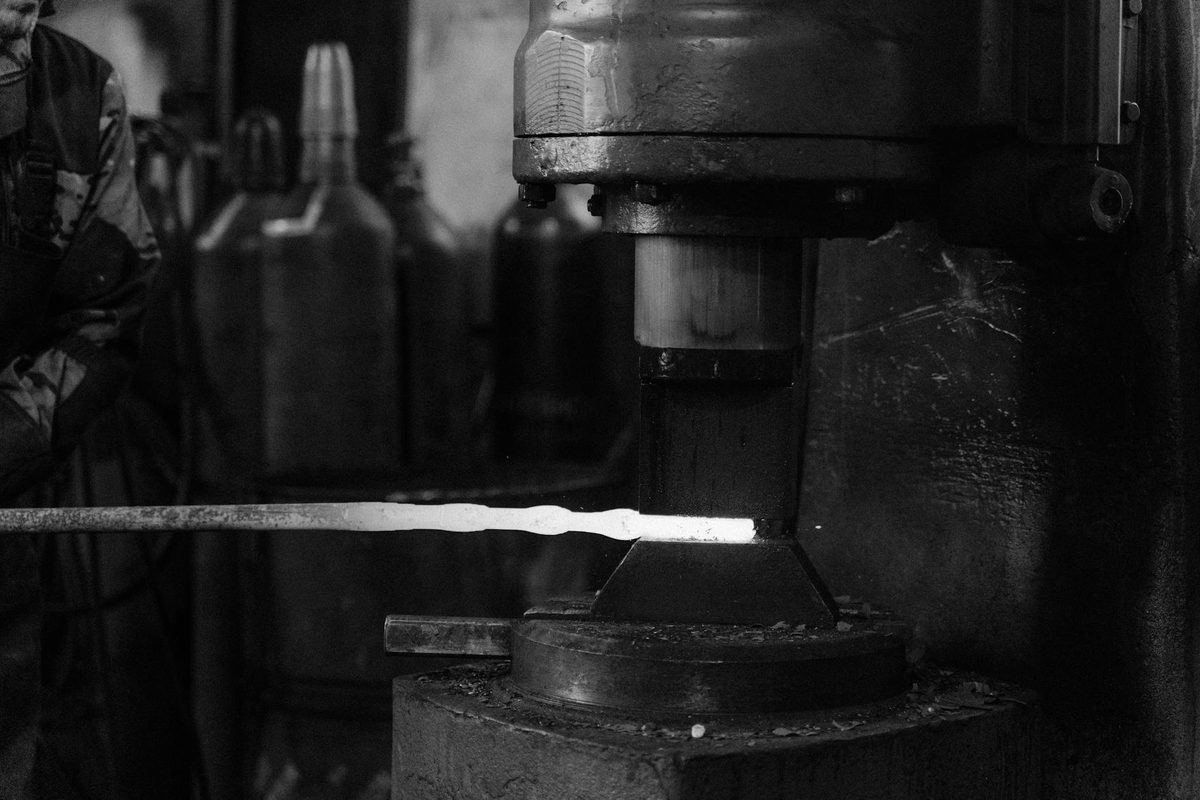
It was 1921, in the Asakusa district of Tokyo. Japan’s modernization was accelerating, but the old crafts had not vanished. A katana craftsman, carrying centuries of metalworking knowledge in his hands, walked into a new scissor workshop and began applying sword-making principles to a completely different tool.
That decision shaped everything Mizutani would become over the next century. And it embedded a philosophy into the company’s DNA that persists to this day: 道具に魂が宿る (dougu ni tamashii ga yadoru): a soul dwells in the tool.
If you have ever held a pair of Mizutani scissors, you have probably felt what that phrase means, even if you could not articulate it. There is a quality to the action, a precision in the pivot, a smoothness in the cut that feels different from anything mass-produced. That difference has a century of history behind it.
The Asakusa Origin: 1921
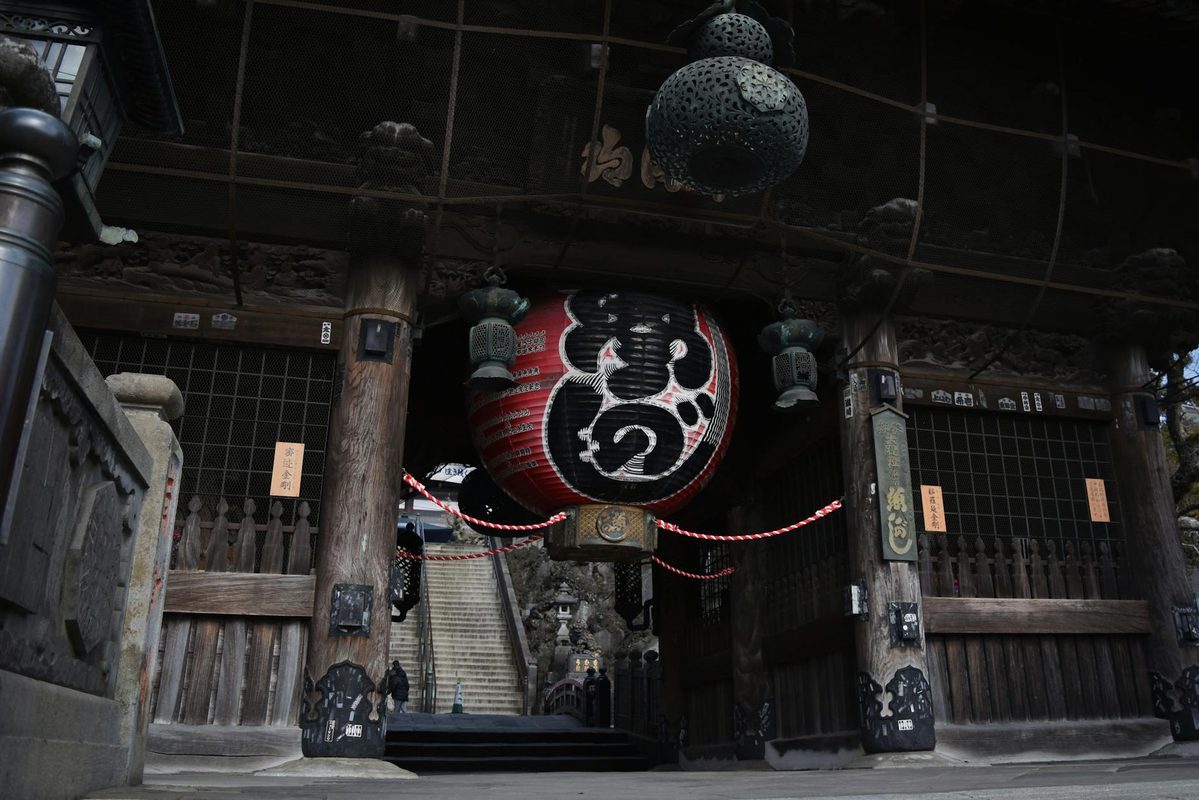
Asakusa was, and remains, one of Tokyo’s most traditional neighborhoods. In the early 20th century, it was a hub of artisan workshops and small-scale manufacturing. This is where Mizutani planted its roots, drawing directly from the katana-making tradition that had defined Japanese metalwork for centuries.
The connection to swordmaking was not metaphorical. The actual techniques of heating, folding, tempering, and sharpening steel that Japanese swordsmiths had refined over 800 years were directly applied to the production of cutting tools. A katana demands absolute precision in edge geometry, flawless heat treatment, and a blade that performs under stress without deformation. A professional styling scissor demands exactly the same things, just at a different scale.
From the beginning, Mizutani committed to handcraft. Not as a marketing strategy, but because their founding craftsman knew no other way to work metal. Over a century later, that commitment has never changed.
The 30-Step Handcraft Process
Every pair of Mizutani scissors goes through 30 distinct manufacturing steps. This is not an assembly line. It is a sequence of hand operations performed by skilled craftspeople at their factory in Chiba, Japan.
To put that in context: most mid-range scissors go through 8-12 steps. Many budget scissors are stamped, ground, assembled, and boxed in under an hour. A pair of Mizutanis takes days.
Each shear receives individual attention at every stage. The grinding is done by hand. The heat treatment is monitored for each piece. The final edge is set by a craftsman who has been sharpening scissors for decades, not by a machine following a program.
This is fundamentally different from the bungyosei (分業制, division-of-labor) system used in Seki City, where specialized workshops each handle a single manufacturing stage. Mizutani keeps the entire process under one roof, under one set of eyes.
The result is consistency at a level that distributed manufacturing struggles to match. When you pick up a Mizutani, the action, the feel, the edge geometry are not approximately right. They are precisely right, because one team controlled every variable.
The Steel Arsenal: Four Proprietary Alloys
This is where Mizutani separates from every other manufacturer on earth. Most scissor companies pick a steel (VG-10, ATS-314, maybe cobalt alloy) and build their line around it. Mizutani developed four proprietary steels, each engineered for a specific cutting need.
Nano Powder Metal
This is the flagship. Mizutani developed Nano Powder Metal in collaboration with a physicist at the University of Tokyo, using a process called Hot Isostatic Pressing (HIP). The name is a registered trademark.
What HIP does is eliminate the microscopic impurities and inconsistencies that exist in conventionally cast steel. Every piece of steel, no matter how carefully made, contains tiny voids and uneven grain structures. HIP subjects the material to extreme temperature and pressure simultaneously, compressing those impurities out of existence.
The result is a steel that is clean at the nanometer level. Blade smoothness measures under 0.0001mm of unevenness. For reference, a human hair is about 0.07mm in diameter. Mizutani’s blade surface inconsistencies are roughly 700 times smaller than that.
What does this mean at the chair? Extraordinary edge retention and a cutting action that feels effortless. Hair does not resist the blade so much as part for it.
CMC Micropowder (Damascus Series)
Mizutani’s Damascus-pattern scissors use CMC micropowder steel, which has a higher molybdenum content than their standard steels. Molybdenum increases toughness and corrosion resistance, making this an excellent choice for stylists who work in humid environments or use chemical treatments frequently.
The Damascus pattern is not just decorative. It is a byproduct of the layering process that creates the steel’s internal structure, and it provides a visual indicator of the blade’s metallurgical quality.
Extramarise I and II
These two steels represent Mizutani’s approach to the classic hardness-versus-toughness tradeoff:
| Steel | Key Addition | Strength | Best For |
|---|---|---|---|
| Extramarise I | Higher Molybdenum | Greater toughness, flexibility | Stylists who slide-cut and need forgiveness in the blade |
| Extramarise II | Higher Vanadium | Sharper edge, longer retention | High-volume cutting where edge life is the priority |
Molybdenum and vanadium are both alloying elements used across the steel industry, but the specific ratios and heat treatment profiles Mizutani uses are proprietary. The two Extramarise variants let stylists choose the performance characteristic that matters most to their technique.
Stellite (50%+ Cobalt)
Mizutani’s Stellite scissors contain over 50% cobalt. This puts them in a completely different material category from cobalt-added stainless steels, which typically contain 1-5% cobalt.
The Stellite line delivers what Mizutani describes as a “soft yet firm” cutting feel. Cobalt alloys behave differently from stainless steel under stress. They are extremely abrasion-resistant but have a different kind of feedback through the hand. Stylists who have used both stainless and cobalt often describe cobalt as feeling “alive” in a way that is hard to quantify but immediately noticeable.
For more on cobalt alloys across the industry, see our cobalt alloy reference.
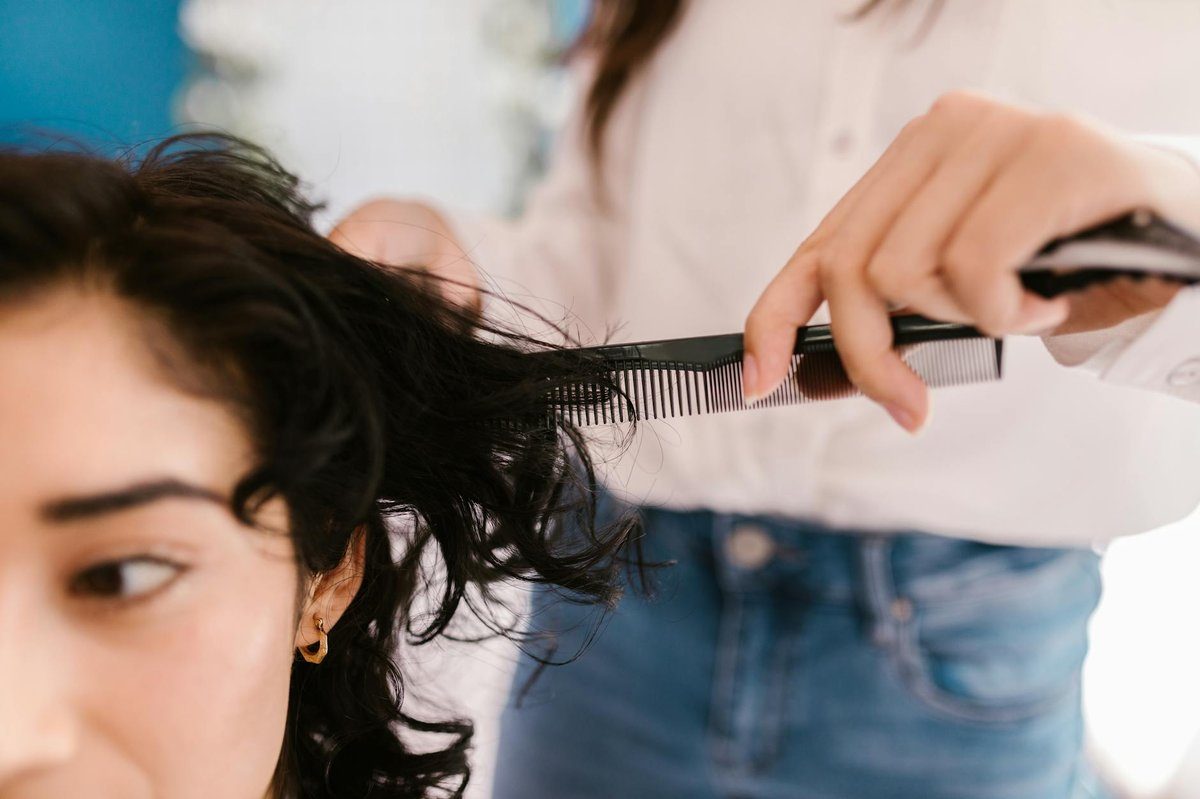
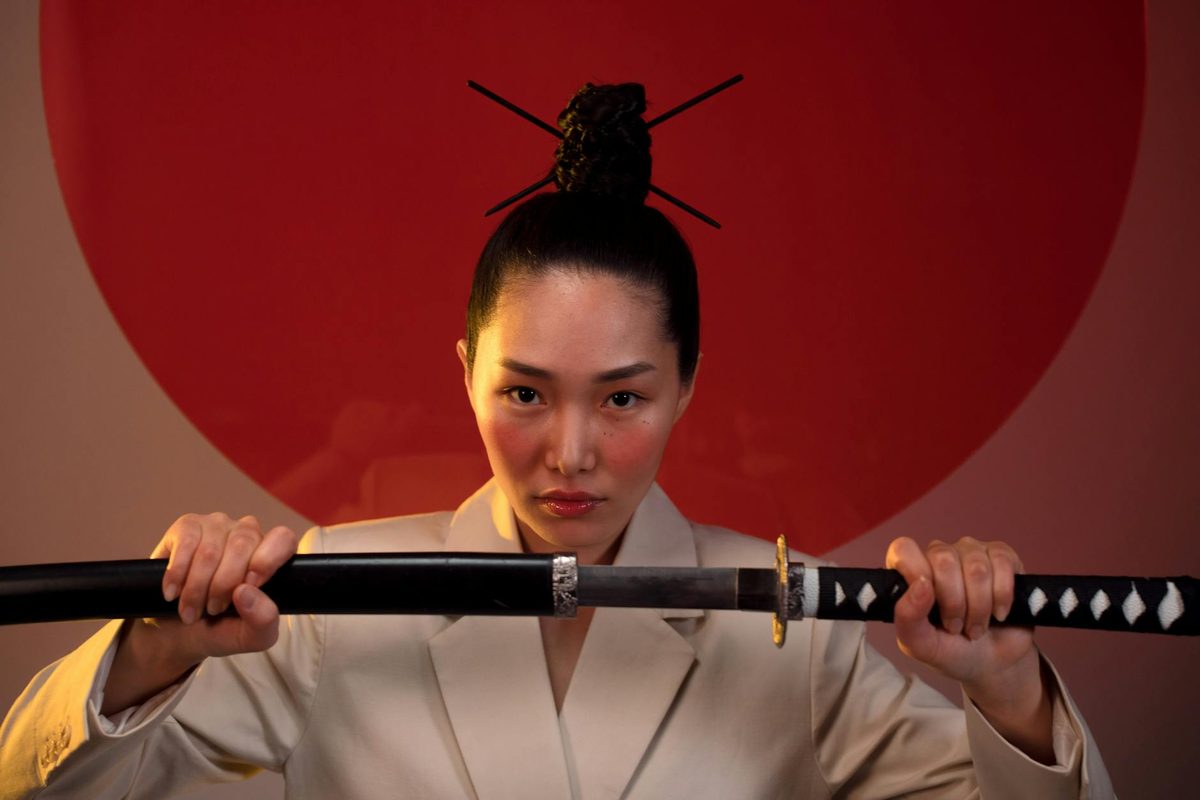 Photo by cottonbro studio via Pexels
Quality Verification: How They Know It Works
Mizutani does not rely on subjective assessment. They use two scientific verification methods that most scissor companies do not employ at all.
Vickers Hardness Testing measures the hardness of the finished blade, not just the raw steel. Many manufacturers quote hardness numbers for their steel, but the actual hardness of a finished scissor depends on heat treatment execution, grinding technique, and tempering accuracy. Mizutani tests the finished product.
Cross-Section Hair Analysis is the more unusual one. After cutting, Mizutani examines the cross-section of the cut hair under magnification. A clean cut produces a smooth, circular cross-section. A rough or tearing cut produces an irregular, damaged cross-section. This is objective, visible proof of edge quality, and it reveals problems that you cannot feel by hand.
These two methods together verify that the blade smoothness under 0.0001mm that Nano Powder Metal promises is actually being delivered in every finished pair.
The Showroom Empire
Most scissor companies sell through distributors. You see them at trade shows, maybe try a pair at your supplier’s showroom. Mizutani took a different approach: they built their own.
Current Mizutani showrooms:
- Asakusa, Tokyo. The original home
- Omotesando, Tokyo. The fashion district flagship
- Matsudo, Chiba. Near the factory
- Osaka. Western Japan presence
- Shanghai, Seoul, Hong Kong. East Asian markets
- Europe. Expanding Western presence
Across these locations, Mizutani offers over 200 models for hands-on testing. This is not a gimmick. Scissors are a tactile tool, and what works for one stylist’s hand, technique, and clientele does not work for another. Mizutani’s position is that you should try before you buy, and they have invested heavily in making that possible.
Certified Sharpening: The First to Go Global
Mizutani was the first scissor manufacturer to certify international sharpeners through a proprietary program. This matters more than it might sound.
A Mizutani scissor’s edge geometry, particularly on the Nano Powder Metal and Stellite lines, is specific and precise. Standard sharpening techniques, even competent ones, can permanently alter that geometry. Mizutani’s own documentation includes photographic evidence of irreparable damage caused by unauthorized sharpening. The designed convex edge angles, the hamaguri-ba (蛤刃, clamshell blade) contour, the micro-geometry of the cutting edge: all of these can be destroyed by a well-intentioned sharpener who does not know the Mizutani specification.
The certified sharpener program ensures that when your Mizutanis need service, the person doing the work has been trained on the exact protocols for your specific model. It is an extension of the same control-everything philosophy that governs the factory floor. We explored this craft in detail in our profile of the togishi tradition.
The Counterfeit Problem
In March 2025, Mizutani issued a public warning: fake Mizutani scissors are becoming more and more common.
This is the dark side of building a premium brand. When a pair of scissors sells for $1,500-$3,000, the incentive to counterfeit is enormous. Fake Mizutanis appear on unauthorized online marketplaces, at suspicious trade show booths, and through grey-market resellers.
The risk is not just financial. A counterfeit scissor made from inferior steel with incorrect heat treatment will not just perform poorly; it can damage hair, develop micro-chips that tear rather than cut, and potentially cause repetitive strain injuries due to incorrect ergonomics.
Mizutani recommends purchasing only through their showrooms or authorized dealers. If you are reading this and are unsure about a pair you have already bought, our post on how to spot fake scissors covers the identification process in detail.
Where Mizutani Sits in the Market
Mizutani occupies the ultra-premium tier of professional scissors. There is no way around this: they are expensive, and they are designed for professionals who cut at high volume and demand the absolute best in edge retention and cutting feel.
Here is how they compare to other premium Japanese manufacturers:
| Brand | Price Range | Key Strength | Best For |
|---|---|---|---|
| Mizutani | $800-$3,000+ | Proprietary steels, 30-step handcraft | High-volume pros who want the longest edge life |
| Hikari | $600-$2,000+ | Patented convex geometry, 20+ resharpening cycles | Stylists who prioritize cutting feel and longevity |
| Kasho | $400-$1,200 | Backed by KAI Group resources, consistent quality | Professionals wanting premium without ultra-premium prices |
For stylists who want excellent Japanese quality at more accessible price points, Juntetsu and Ichiro both deliver strong performance with Japanese steel and design principles at a fraction of Mizutani’s cost. There is no shame in starting there, or staying there. The right scissors are the ones that match your volume, technique, and budget.
The Century-Long Thread
What makes Mizutani remarkable is not any single innovation. It is that they have maintained a single philosophy (handcraft, proprietary materials, obsessive quality verification) for over a hundred years without compromise.
The samurai sword maker who walked into that Asakusa workshop in 1921 would recognize the principles at work in the Chiba factory today. The tools have changed. The steels have evolved beyond anything he could have imagined. But the core idea, that a cutting tool should be made by hand, from the best possible material, with absolute precision, has not moved an inch.
For most stylists, a Mizutani is an aspirational purchase. For high-volume professionals who have worked through several pairs of scissors and know exactly what they need, it is often the last brand they buy. Not because they cannot afford others, but because they do not need to look further.
That is what a century of handcraft gets you.
Sources: Mizutani Scissors, Mizutani Europe: Production Technology, Mizutani Sharpening Service