Ichiro vs Juntetsu: Which Japanese Scissors Brand is Right for You?
You are staring at two pairs of scissors in separate browser tabs. One says Ichiro. The other says Juntetsu. Both are Japanese. Both use VG-10 and cobalt alloy steel. Both cost somewhere between “reasonable” and “serious investment.” And the internet is absolutely no help because every review reads like it was written by someone who has never actually held a pair of scissors.
Here is the comparison you actually need. No sponsorships, no affiliate games. Just two good brands broken down by what matters: steel, handles, price, and who each one is really built for.
The Quick Answer
If you want the short version before the deep dive: Ichiro wins on value and sets. Juntetsu wins on ergonomics and premium cobalt options. Both are excellent. Neither is a bad choice. The right one depends on your budget, your hands, and whether you buy singles or sets.
Now here is the long version.
Brand Backgrounds
Ichiro: The Value King
Ichiro has built its reputation on a simple proposition: genuine Japanese steel at prices that do not require a second mortgage. Their scissors use VG-10 and cobalt alloy steel with convex edge geometry, and they have one of the widest distribution networks of any Japanese brand, shipping through authorised retailers in the US, UK, Australia, Canada, and New Zealand.
What sets Ichiro apart is their approach to sets. Where most brands sell cutting and thinning scissors separately (and charge full price for each), Ichiro offers pre-matched sets that give you a cutting shear, a thinning shear, and sometimes a texturizer in a single purchase at a genuine discount. For someone building their first professional kit or replacing a worn set, that matters.
Their range covers everything from entry VG-10 models around $200 to cobalt alloy scissors pushing $500. The sweet spot is their mid-range VG-10 line, which consistently delivers more than it costs.
Juntetsu: The Ergonomic Specialist
Juntetsu operates out of Nihonbashi in central Tokyo, and takes its name from the Japanese characters 純鉄, which translates to “Purest Steel.” That is not just marketing. Their philosophy centres on high-purity Japanese steel combined with lightweight construction that is noticeably different in the hand compared to heavier brands.
Where Ichiro leans into value and distribution, Juntetsu leans into range and ergonomics. They offer everything from entry VG-10 models to premium cobalt alloy scissors, and critically, they offer more handle configurations than almost any competing brand at this price point. That includes a swivel handle option, which makes them one of the more accessible entry points into swivel scissors without jumping to ultra-premium prices.
Their price range stretches from about $250 to $700, which means Juntetsu covers the ground from entry professional all the way to genuine premium territory in a single brand.
Head-to-Head Comparison
Here is everything in one table. Scan this first, then read the details below for context.
| Factor | Ichiro | Juntetsu |
|---|---|---|
| Steel options | VG-10, Cobalt Alloy | VG-10, Cobalt Alloy |
| Price range | $200 to $500 | $250 to $700 |
| Handle types | Offset, Crane | Offset, Crane, Swivel |
| Coatings | Black Ti, Rose Gold, Matte Black, Ash Gold | Titanium, Black Ti, Rose Gold |
| Product types | Cutting, Thinning, Texturizing, Left-Handed, Sets | Cutting, Thinning, Texturizing, Left-Handed, Sets |
| Country | Japan | Japan |
| Best for | Value, sets, wide distribution | Ergonomics, lightweight, premium cobalt |
| Distributed | US, UK, AU, CA, NZ | US, UK, AU, CA, NZ |
The table tells the surface story. Let us get into what actually matters below the spec sheet.
Steel: What You Are Actually Paying For
Both brands use VG-10 as their workhorse steel and cobalt alloy as their premium option. This is not unusual. VG-10 is the gold standard of mid-range Japanese scissors steel, and cobalt alloy is the natural step up. What matters is how each brand implements them.
VG-10 Models
VG-10 (which stands for V Gold No. 10) is a high-carbon stainless steel with a hardness of approximately 60 to 62 HRC. In practical terms, that means it holds a sharp convex edge for roughly 6 to 12 months between professional sharpenings, depending on your client volume. Both Ichiro and Juntetsu source their VG-10 from established Japanese steel mills, and the base material is essentially the same.
Where they differ slightly is weight. Juntetsu’s VG-10 models tend to run lighter, sometimes noticeably so. If you are doing 30+ clients per week and hand fatigue is a concern, that weight difference adds up by Friday afternoon.
Cobalt Alloy Models
Cobalt alloy steel adds cobalt to the mix, which increases edge retention and allows for a finer edge angle. Both brands offer cobalt options, but Juntetsu extends further into this territory. Their premium cobalt models push into the $500 to $700 range and start competing with scissors from brands like Kasho and Joewell that cost significantly more.
Ichiro’s cobalt models top out around $500 and represent some of the best value cobalt alloy scissors on the market. You are getting genuine cobalt performance without the premium brand markup.
The verdict on steel: Dead even at the VG-10 level. Juntetsu has a slight edge in premium cobalt options. If you want cobalt alloy under $350, Ichiro is hard to beat.
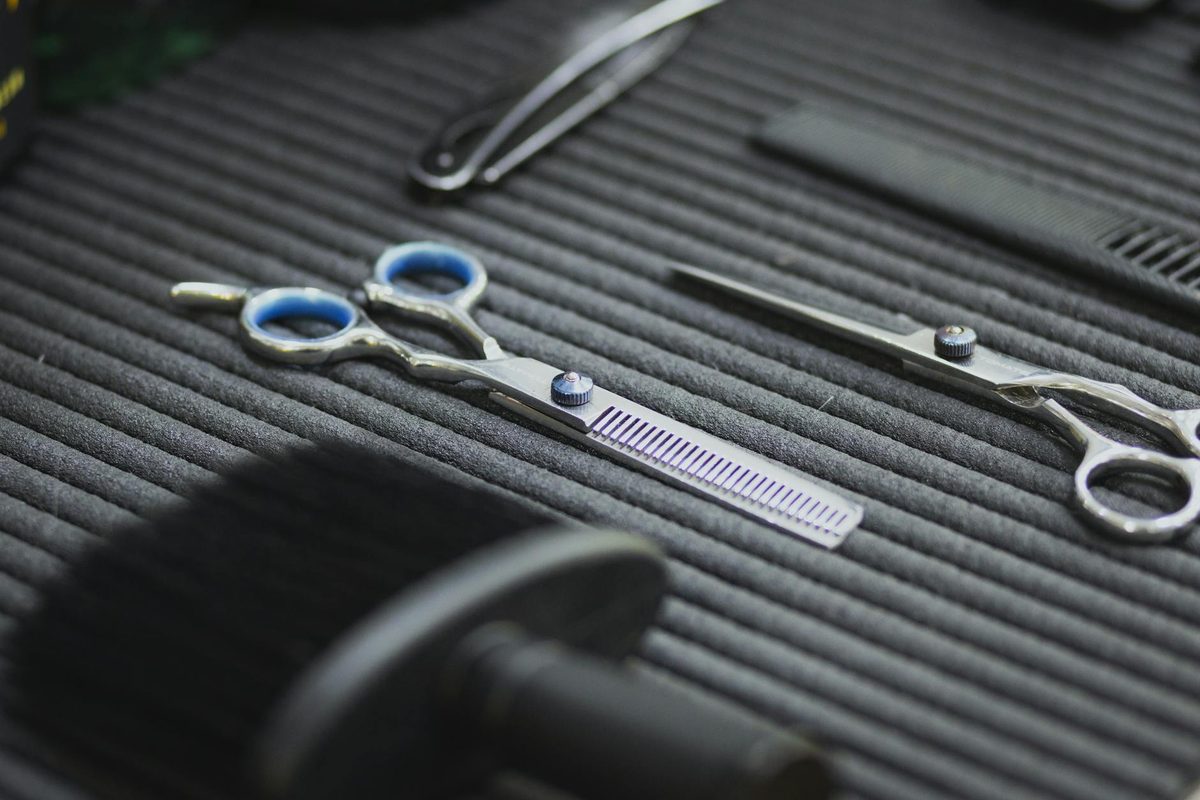 Photo by Th Gustavo Santana via Pexels
Handles and Ergonomics
This is where the brands diverge most clearly.
Ichiro’s Handle Options
Ichiro offers offset and crane handles across their range. Offset handles angle the thumb ring lower than the finger ring, reducing the elevation of your elbow and shoulder during cutting. Crane handles take this further with a more dramatic angle. Both are solid, well-constructed, and comfortable for most hand sizes.
Juntetsu’s Handle Options
Juntetsu matches Ichiro with offset and crane options, then adds swivel handles to the mix. A swivel handle allows the thumb ring to rotate freely, which means your thumb moves naturally rather than being locked into a fixed position. This dramatically reduces strain on the thumb joint and can be a game-changer for stylists dealing with repetitive strain injuries or carpal tunnel symptoms.
If you have never tried a swivel handle, Juntetsu is one of the most affordable ways to test whether it works for your cutting style. Full swivel scissors from brands like Hikari or Mizutani start at $600 or more. Juntetsu gets you into the category for significantly less.
The verdict on handles: Juntetsu wins this category outright. The swivel option alone gives them an advantage that matters for long-term hand health.
Price Tier Comparison: Who Wins Where
Let us break this down by what you are actually willing to spend.
Under $300
Winner: Ichiro. At this price point, Ichiro’s VG-10 models are hard to beat. You get genuine Japanese steel, convex edge geometry, and often enough left over to add a thinning shear from their set range. Juntetsu has options here too, but Ichiro’s depth at this level is stronger.
If $300 is still too much, Mina offers genuine Japanese 440C scissors starting around $100 that will get you through school and into your first year of professional work. They are not VG-10, but they are real professional tools. For students and apprentices, see our dedicated guide to scissors under $300.
$300 to $500
Winner: Tie. This is the battleground where both brands shine equally. You can get cobalt alloy from either brand, multiple handle options, and professional performance that genuinely rivals scissors costing twice as much. Your decision here should come down to whether you want sets (Ichiro) or swivel handles (Juntetsu).
$500 to $700
Winner: Juntetsu. Ichiro’s range tops out around $500. Juntetsu keeps going into premium cobalt territory that competes with Kasho and approaches Hikari territory at a lower price. If you want premium without going ultra-premium, this is Juntetsu’s sweet spot.
For context on whether that price jump is worth it, our analysis of 5-year cost of ownership found that the daily cost difference between a $300 and a $600 pair is roughly 25 cents.
Sets: Ichiro’s Secret Weapon
This deserves its own section because it is one of Ichiro’s strongest competitive advantages.
Buying scissors as a set rather than individually almost always saves money, but only if the set is genuinely well-matched. A cutting shear and a thinning shear made from the same steel, balanced to complement each other, and packaged at a real discount is different from two unrelated scissors thrown into a case with a “set” label.
Ichiro’s sets are the real thing. They match cutting and thinning scissors by steel type, weight class, and handle style. For a stylist building their first complete kit or replacing a worn set, this approach saves money and ensures consistency across your tools.
Juntetsu offers sets as well, but this is Ichiro’s bread and butter. If you know you need both a cutting shear and a thinner, price out the Ichiro set before buying anything else.
Who Should Buy Which
Buy Ichiro If:
- You are building your first professional kit and want maximum value
- You want pre-matched sets rather than individual scissors
- Your budget is under $350
- You need reliable availability through local authorised retailers
- You want VG-10 or cobalt performance without premium pricing
Buy Juntetsu If:
- Hand fatigue or repetitive strain is a concern and you want the lightest possible tool
- You want to try swivel handles without the premium brand price tag
- Your budget extends to $500 to $700 and you want premium cobalt
- You want the widest range of handle options from a single brand
- You are upgrading from budget scissors and want something that will last 7 to 10 years
Consider Something Else If:
- Budget under $200: Look at Mina for genuine Japanese quality at student-friendly prices
- Budget over $700: You are entering Kasho and Hikari territory where the steel and finishing reach another level
- You want German precision: Jaguar from Solingen offers a different cutting philosophy that some stylists prefer, particularly for blunt work and scissor-over-comb
The Bottom Line
Ichiro and Juntetsu are two of the best-value Japanese scissors brands on the market. They use the same calibre of steel, they are both manufactured in Japan, and they are both distributed through legitimate authorised retailers.
The choice between them comes down to three questions. Do you value sets and maximum value per dollar? Ichiro. Do you value lightweight construction, swivel handles, and a broader premium range? Juntetsu. Can you afford both? That works too.
Both brands ship worldwide – see our country guides for local pricing in Australia, USA, UK, or Canada.
Either way, you are getting genuine Japanese steel with a convex edge that holds up to professional salon use. That is more than most scissors in this price range can honestly claim.
Featured Models: Juntetsu vs Ichiro


Prices are approximate guides. Visit retailer for current pricing and availability.
For a broader view of where these two brands sit among all Japanese manufacturers, see our complete ranking of the best Japanese scissors brands.