One $600 Pair vs Three $200 Pairs: We Did the 5-Year Math

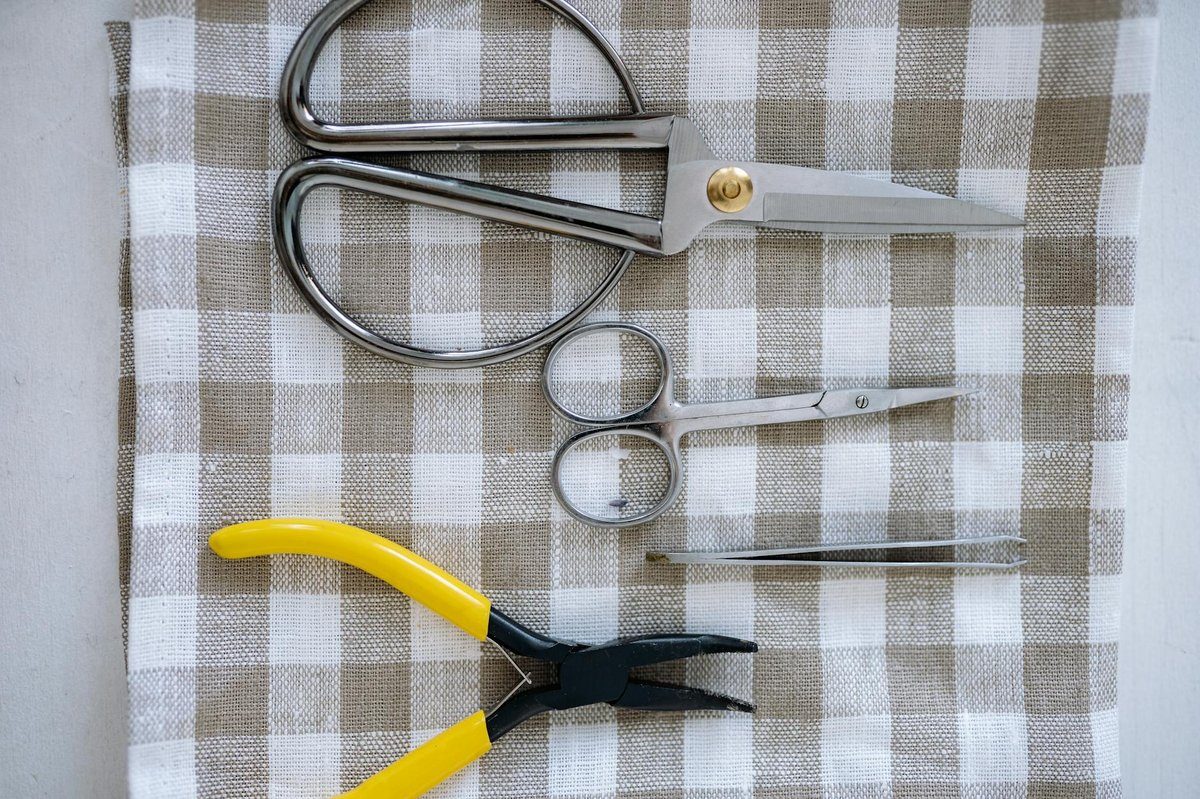
Every stylist faces this decision eventually. You have $600 to spend on scissors. Do you buy one premium pair from a brand like Kasho or Hikari? Or do you buy three solid pairs from the $200 tier and have redundancy, variety, and a spare when one goes in for sharpening?
The internet is full of opinions on this. What the internet lacks is math.
So we did the math. We calculated total cost of ownership for both approaches over five years, including purchase price, sharpening, repairs, replacement costs, and the hidden cost that nobody talks about: edge degradation and its impact on your time per client.
The answer surprised us.
The Ground Rules
To make this comparison fair, we needed consistent assumptions. Here is what we used:
- Time period: 5 years of full-time professional use (25+ clients per week)
- Budget scenarios: One $600 pair vs three $200 pairs (same $600 total spend)
- Sharpening costs: Professional convex sharpening at $30-$60 per session depending on steel type
- Repair costs: Average repair rates based on industry data
- Replacement timing: Based on steel degradation curves, not just edge dullness
- Brands used as reference points: $200 tier = quality 440C like Mina; $600 tier = premium cobalt alloy
We also calculated a third scenario that emerged from the data as the most interesting option: the mid-range approach.
The 5-Year Cost Breakdown
Here is everything in one table. We will break down each line below.
| Cost Factor | One $600 Pair | Three $200 Pairs | Two $350 Pairs |
|---|---|---|---|
| Initial purchase | $600 | $600 | $700 |
| Sharpenings (5 years) | $400 (8 sessions at $50) | $630 (18 sessions at $35) | $490 (12 sessions at $40) |
| Repairs (estimated) | $75 | $120 | $80 |
| Replacement cost | $0 (still functional) | $200 (one replacement at year 3-4) | $0 (still functional) |
| Total 5-year cost | $1,075 | $1,550 | $1,270 |
| Cost per year | $215 | $310 | $254 |
| Cost per working day | $0.82 | $1.19 | $0.97 |
The premium pair wins on pure cost. But the story is more nuanced than the table suggests.
Breaking Down Each Scenario
Scenario 1: One $600 Premium Pair
The purchase: A single pair of premium scissors using cobalt alloy or high-grade Japanese steel, typically from brands in the Kasho, Joewell, or premium Juntetsu range.
Sharpening schedule: Premium steel holds its edge approximately 8 to 12 months between sharpenings under full-time use. Over 5 years, that is approximately 6 to 10 sharpening sessions. We used 8 as the median. Sharpening cost is higher ($40-$60) because convex edges on premium steel require specialist sharpeners.
Edge degradation: This is where premium steel justifies its cost. Each sharpening removes a tiny amount of metal, and over years, the blade geometry changes. Premium cobalt alloy steel maintains its structure through more sharpening cycles than budget steel. A well-maintained $600 pair is still performing near its original standard at year 5.
Repair costs: Premium scissors break less often because the steel, pivot mechanisms, and handles are built to tighter tolerances. When they do need repair, parts are typically available from the manufacturer. We estimated $75 over 5 years, covering one bumper replacement and one pivot adjustment.
Replacement: Not needed within 5 years. Premium Japanese scissors last 10 to 15 years with proper care. See our analysis of how long professional scissors actually last.
The downside: When your one pair goes in for sharpening (allow 1-2 weeks if shipped), you have nothing to cut with. Many stylists solve this by keeping an old pair as backup, but cutting with a significantly inferior backup tool for two weeks affects your work.
Scenario 2: Three $200 Pairs
The purchase: Three pairs of quality budget scissors using 440C steel, like those from Mina. These are genuine professional tools (not consumer-grade scissors), but they use a steel grade that is a step below VG-10 in edge retention and hardness.
Sharpening schedule: 440C steel holds its edge approximately 4 to 8 months under full-time use, depending on your client volume and hair types. Over 5 years, each pair needs approximately 8 to 12 sharpenings. Across three pairs, that is 18 to 36 sessions total (we used 18, assuming you rotate use). The per-session cost is lower ($30-$40) because 440C is easier to sharpen.
Edge degradation: Here is where the math starts to shift. 440C steel has a coarser grain structure than VG-10 or cobalt alloy, which means each sharpening removes slightly more material and the blade geometry degrades faster. By year 3 to 4, one of your three pairs will likely have degraded enough to warrant replacement.
Repair costs: Budget scissors can be more repair-prone, particularly at the pivot point and tension adjustment. Replacement bumpers, tension screws, and occasional blade alignment add up. We estimated $120 over 5 years across three pairs.
Replacement: One pair replaced around year 3-4 at $200.
The upside: You always have a sharp pair available. While one is being sharpened, you rotate to another. You can dedicate different pairs to different uses: one for cutting, one for detail work, one for the rougher jobs. Redundancy has genuine practical value.
Scenario 3: Two $350 Pairs (The Sweet Spot)
This scenario emerged from the data as the most interesting option, and it is the one we would personally recommend for most working stylists.
The purchase: Two pairs of mid-range scissors using VG-10 steel, from the range where brands like Ichiro, Yasaka, and mid-range Juntetsu live. Total investment: $700 (slightly more than the other scenarios, but the value proposition holds).
Sharpening schedule: VG-10 steel holds its edge approximately 6 to 12 months under full-time use. Over 5 years, each pair needs approximately 5 to 8 sharpenings. Across two pairs, that is 10 to 16 sessions. Sharpening cost is moderate ($35-$45) because VG-10 is well-understood by most professional sharpeners.
Edge degradation: VG-10’s finer grain structure means each sharpening removes less material than 440C. The blade geometry holds its original profile through more cycles. Both pairs should still be performing well at year 5, with several more years of service life remaining.
Repair costs: Mid-range scissors from established brands tend to have good build quality and available parts. Estimated $80 over 5 years.
Replacement: Not needed within 5 years. VG-10 scissors last 7 to 10 years with proper maintenance.
Why this wins: You get the redundancy of multiple pairs (one cutting while the other is being sharpened), the durability of quality steel (no replacement needed), and a total cost that falls between the other two scenarios while delivering cutting performance much closer to the premium tier.
The sweet spot is often the $300 to $500 range where brands like Ichiro, Yasaka, and mid-range Juntetsu live. You are getting 80 to 90 percent of premium performance at 40 to 60 percent of the price.
The Edge Retention Curve: What the Numbers Hide
The cost table above does not capture the most important difference between these scenarios: how the scissors perform between sharpenings.
How Premium Steel Degrades
A $600 cobalt alloy pair starts sharp and stays sharp for months. The edge degrades slowly and gradually; you might not notice the difference between month 1 and month 6. By month 8 to 10, you feel the difference and book a sharpening. The degradation curve is gentle.
How Budget Steel Degrades
A $200 440C pair starts sharp, but the edge drops off more noticeably after the first few months. The degradation curve is steeper, meaning you spend a larger proportion of your time cutting with scissors that are approaching their sharpening threshold. The cuts still work, but you may find yourself compensating with more passes, more pressure, or more finishing work.
How Mid-Range Steel Degrades
VG-10 sits comfortably between these two curves. It does not hold its edge quite as long as premium cobalt, but its degradation is significantly more gradual than 440C. This means you spend more of your working time with scissors that are performing near their peak.
The Time-Per-Client Impact
This is the hidden cost that almost no analysis includes. When your scissors are approaching their sharpening threshold, you work slightly slower. More passes, more checking, more finishing. The difference might be 2 to 5 minutes per client. Over 25 clients per week, that is 50 to 125 minutes of lost time per week.
At $50 per hour (a conservative rate for an experienced stylist), that 2 hours per week of lost efficiency costs you $100 per week, or $5,200 per year. Even if the actual impact is half that, the edge retention of premium or mid-range steel pays for itself through faster cutting.
The Rotation Strategy
There is a practical approach that combines the best elements of each scenario, and it is what many experienced stylists settle on over time.
How It Works
Buy two quality scissors in the $300 to $500 range. Use one as your primary cutting shear. Use the second as your backup and for different techniques (different blade length, thinning shear, or a different handle style for variety).
When your primary pair needs sharpening, rotate to the backup as your primary. Send the first pair out. When it comes back sharp, it becomes the backup until the current primary needs sharpening. Repeat.
Why It Works
You always have a sharp pair available. Both pairs last 7 to 10 years because VG-10 and cobalt alloy steel maintain their integrity through years of professional use. Your total cost of ownership is lower than the three-budget approach and comparable to the single-premium approach. And you never have to cut with an inferior backup tool.
What the Premium Price Actually Buys
Let us be honest about where the money goes when you move above $500.
Real Improvements
- Edge retention: Genuinely longer intervals between sharpenings
- Steel purity: Finer grain structure that sharpens more cleanly
- Fit and finish: Tighter tolerances, smoother action, better balance
- Longevity: 10-15+ year lifespan versus 7-10 years for mid-range
- Ergonomics: More handle options, lighter weight, better pivot mechanisms
Diminishing Returns
- The jump from $200 to $400 buys you a significant performance improvement (440C to VG-10)
- The jump from $400 to $600 buys you a noticeable but smaller improvement (VG-10 to premium cobalt)
- The jump from $600 to $1,000 buys you refinements that most stylists cannot distinguish in blind testing
- The jump above $1,000 is largely about brand prestige, hand-finishing details, and collectibility
This is not to say $1,000 scissors are not better. They are. But the performance gap between $400 and $1,000 is much smaller than the gap between $150 and $400.
Recommendations by Career Stage
Students and Apprentices
Buy one pair of Mina 440C scissors ($100-$200). You will drop them. You will overtighten the tension screw. You will make maintenance mistakes. Make those mistakes on a tool that teaches you proper technique without punishing your bank account. When you qualify, you will know your cutting style well enough to choose your first real investment.
See our complete student scissors guide for specific models.
Newly Qualified Stylists (Years 1-3)
Two pairs of VG-10 scissors in the $250 to $400 range. Ichiro sets are particularly good value here because they match a cutting shear with a thinning shear at a genuine discount. This gives you your core professional kit at a reasonable investment, with steel that will last well into your established career.
Established Stylists (Years 3+)
If you are seeing 25+ clients per week and know your cutting style, this is when upgrading to premium makes sense. A Juntetsu VG-10 at around $350 to $450 is a smart choice that delivers premium-adjacent performance. Their cobalt alloy range pushes into the $500 to $700 territory and genuinely competes with scissors costing considerably more.
The financially optimal approach: keep your mid-range pair as a rotation backup and add one premium pair as your primary cutting tool.
High-Volume or Specialist Stylists
If you are doing 35+ clients per week or specialising in techniques that demand the absolute best edge (razor work, slide cutting, precision bobs), the premium tier earns its premium through daily performance differences that matter at your volume. Budget $600 to $800 for your primary tool and maintain a quality backup.
The Real Answer
Here is what five years of cost data actually tells us:
One $600 pair costs less over 5 years than three $200 pairs. That is the math.
But two $350 pairs cost nearly the same as one $600 pair while giving you redundancy, variety, and no downtime during sharpening. That is the strategy.
And a $200 pair from Mina is still the smartest first step for anyone who is not yet sure what they need. That is the starting point.
The mistake most stylists make is not buying the wrong price tier; it is buying the wrong price tier for their current career stage. A student does not need $600 scissors. An established stylist with 30 clients per week should not be cutting with $150 scissors. Match the tool to the stage.
For a broader perspective on where these price tiers fit among all available brands, see our best scissors at every price point and our Japanese brands ranking.
Where to Buy
All price tiers are available through authorised retailers with full warranty coverage:
- USA: JPScissors.com: carries budget through premium, free shipping
- Australia / Global: JapanScissors.com.au: authorised for all major Japanese brands
- Canada: JapanScissorShop.com: Canadian-based, full range
Buying from authorised retailers ensures your warranty is valid and your scissors are genuine. For more on why this matters, see our authorised retailer guide.