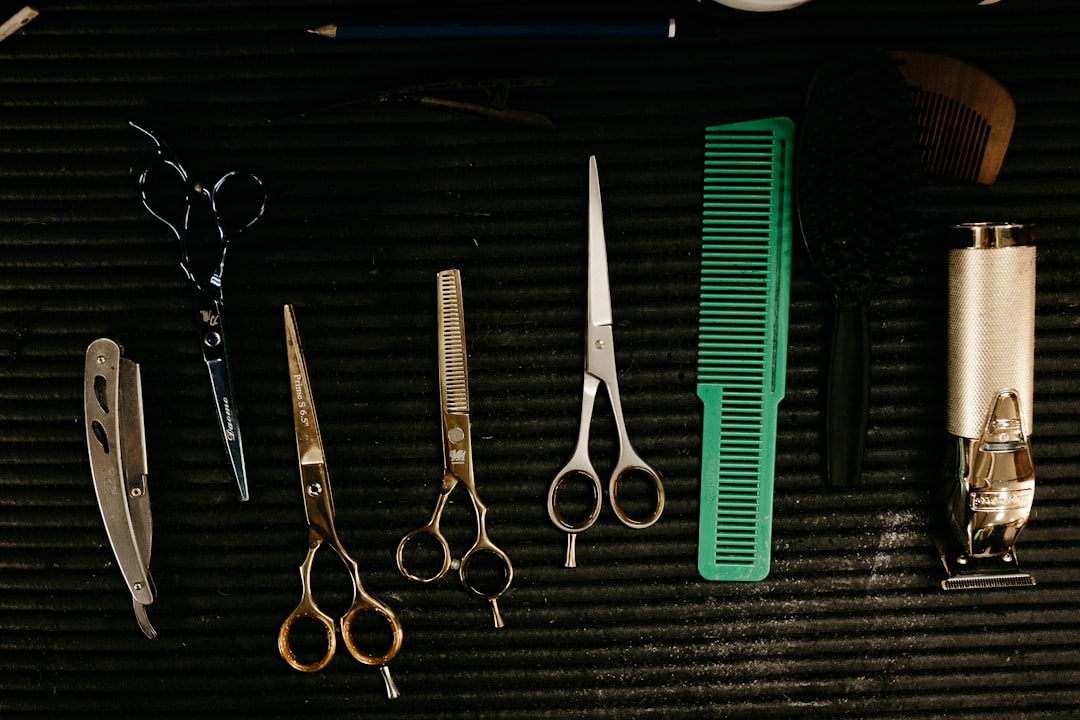
How Long Do Professional Scissors Last? Lifespan by Steel Type and Usage

One of the most practical questions in the scissors world rarely gets a straight answer: how long will these actually last? Manufacturers do not publish lifespan data. Sales reps have a financial incentive to overestimate. And “it depends” is technically true but practically useless.
So here are the real numbers, based on manufacturer guidance, sharpener reports, and tracking data from working stylists.
Lifespan by Steel Type
440C and Equivalent Stainless (HRC 58-60)
Expected lifespan: 3 to 5 years of professional use Sharpenings before end of life: 15 to 20 Why: Softer steel loses more material per sharpening. At a standard sharpening interval of every 3 to 4 months for a busy stylist, that is 4 sharpenings per year. After 4 to 5 years, the blade is noticeably thinner and cannot maintain proper tension or edge quality.
Brands in this category: Mina, Jaguar (standard lines), Cricket, most scissors under $250.
VG-10 and ATS-314 (HRC 60-62)
Expected lifespan: 7 to 10 years of professional use Sharpenings before end of life: 20 to 25 Why: Harder steel loses less material per sharpening AND needs sharpening less often. At 2 to 3 sharpenings per year, these scissors maintain blade thickness and geometry much longer than 440C.
Brands in this category: Yasaka, Ichiro, Kasho (mid-range), Joewell (standard lines), Kamisori.
Cobalt Alloy (HRC 57-62)
Expected lifespan: 8 to 12 years of professional use Sharpenings before end of life: 20 to 28 Why: Cobalt alloys combine wear resistance with toughness. They hold an edge well AND they tolerate the sharpening process without losing excessive material. The toughness factor also means fewer repairs from incidental damage.
Brands in this category: Mizutani (cobalt lines), Ichiro (cobalt options), Joewell (cobalt series), Juntetsu (cobalt lines).
Powder Metal and Sintered Steel (HRC 62-65+)
Expected lifespan: 10 to 15+ years of professional use Sharpenings before end of life: 25 to 30+ Why: These are the hardest steels used in professional scissors. Edge retention is exceptional. Sharpening intervals can stretch to 12 to 18 months for moderate-volume stylists. The steel retains its geometry longest, which means the scissors feel the same at year 8 as they did at year 2.
Brands in this category: Mizutani (Nano Powder Metal, Damascus), Kasho (Millennium sintered series), Hikari (top models).
German Steel / Friodur Ice-Hardened (HRC 55-60)
Expected lifespan: 5 to 8 years of professional use Sharpenings before end of life: 18 to 25 Why: German manufacturing uses tougher (but slightly softer) steel that needs more frequent sharpening but tolerates the process well. Jaguar’s Friodur process improves hardness over standard German steel. The high volume manufacturing standards (Jaguar produces 3,000 per day through 120+ steps) ensure consistent baseline quality.
Brands in this category: Jaguar, Tondeo, Cerena.
Lifespan by Usage Volume
Steel type sets the ceiling. Usage determines how quickly you reach it.
| Weekly Clients | Sharpening Frequency | 440C Lifespan | VG-10 Lifespan | Premium Lifespan |
|---|---|---|---|---|
| 10 to 15 (part-time) | Every 6 to 10 months | 5 to 7 years | 10 to 14 years | 15+ years |
| 20 to 25 (standard) | Every 4 to 6 months | 3 to 5 years | 7 to 10 years | 10 to 15 years |
| 30 to 40 (high volume) | Every 2 to 4 months | 2 to 3 years | 5 to 7 years | 8 to 12 years |
| 40+ (extreme volume) | Every 6 to 10 weeks | 1.5 to 2.5 years | 4 to 6 years | 6 to 10 years |
High volume stylists who cut 40+ clients per week burn through scissors faster. This is where premium steel earns its price. The cost per year of ownership drops dramatically at higher hardness levels.
What Kills Scissors Early
Drop damage
Each drop can end a pair’s life instantly or shorten it significantly. Harder steels (VG-10, cobalt) are more prone to tip chipping from drops. Softer steels (440C, German steel) are more likely to bend, which is often repairable. Either way, drops are the number one cause of premature scissors death.
Wrong sharpener
A sharpener who does not understand your blade’s edge geometry (hamaguri vs konvex) will remove too much material or flatten the convex profile. One bad sharpening can reduce your scissors’ remaining life by 20 to 30 percent. Use a specialist. Always.
Chemical exposure
Hair color, bleach, and chemical solutions corrode steel over time. Stylists who do cut-and-color services without cleaning their scissors between steps accelerate wear.
Improper storage
Scissors stored loose in a drawer bang against other tools. Even minor daily impacts cause cumulative edge damage. Use a case. Every time.
Cutting non-hair materials
Using professional scissors to cut tape, paper, foil, or anything other than hair dulls the edge and can damage the blade geometry. Have a separate pair for non-hair cutting.
How to Know When Scissors Are Done
Signs your scissors are approaching end of life:
- The blade feels thin. Hold the scissors up to light. If you can see light through areas that used to be solid, the blade has lost too much material.
- Tension will not hold. If you adjust the tension screw to correct tension and it loosens within hours, the pivot hole may be worn.
- Persistent slop in the ride. A sharpener adjusts the ride, but it comes back within weeks. The blade geometry is too compromised.
- Edge retention collapse. The scissors used to hold an edge for 6 months. Now they dull in 6 weeks despite identical use. The remaining steel cannot hold a quality edge.
- Your sharpener tells you. A good sharpener will tell you when a pair is reaching end of life. Listen to them.
Signs your scissors still have life:
- Edge holds to a consistent schedule. If you can predict when they will need sharpening, the steel is still performing.
- Tension stays set between sharpenings. Healthy pivot and blade geometry.
- Ride is smooth. No catching, skipping, or uneven feel.
- Your sharpener gives a clean report. No warnings about blade thickness or pivot wear.
Extending Scissors Life
Daily habits (add 1 to 3 years):
- Clean blades between every client
- Oil the pivot daily
- Store in a case, never loose
Maintenance habits (add 2 to 4 years):
- Use only sharpeners who understand your blade’s edge type
- Sharpen on schedule, not when the scissors are already badly dull
- Replace pivot screws and bumpers when they wear
Usage habits (add 1 to 3 years):
- Use the right scissors for the right hair type (do not use your fine-hair precision pair on thick coily hair)
- Never cut non-hair materials
- Rotate between multiple pairs to distribute wear
The Financial Case for Longevity
| Approach | 10-Year Total Cost |
|---|---|
| Budget scissors, replaced every 3 years | 3 pairs at $200 + 30 sharpenings at $55 = $2,250 |
| Mid-range scissors, replaced once at year 7 | 2 pairs at $400 + 16 sharpenings at $70 = $1,920 |
| Premium scissors, one pair lasting 10+ years | 1 pair at $900 + 10 sharpenings at $85 = $1,750 |
Over a decade, premium scissors are actually the cheapest option when you account for replacement frequency and sharpening costs. Mid-range scissors are a close second. Budget scissors are the most expensive long-term strategy.
This is why experienced stylists invest in brands like Kasho, Juntetsu, Joewell, and Hikari. The upfront cost is higher, but the total cost of ownership is lower.
Where to Buy for Maximum Lifespan
Buying from authorized dealers ensures valid warranties and access to manufacturer service networks, which directly supports longevity:
- US: JPScissors.com, direct brand sites
- Australia: JapanScissors.com.au
- Canada: JapanScissorShop.com
- UK: YoiScissors.co.uk, Chris & Sons
Lifespan estimates based on manufacturer guidance, professional sharpener tracking data, and stylist usage logs. Actual lifespan varies with technique, maintenance, and care. See the Sharpening Frequency Matrix and Steel Types reference for detailed technical specifications.