Stainless Steel vs Carbon Steel vs Damascus: Scissor Steel Types Explained Simply
Walk into any scissor shop or browse any professional tool website and you will encounter steel type names that sound like they belong in a chemistry lecture. VG-10. ATS-314. 440C. Cobalt alloy. Damascus. Powdered steel.
It can be overwhelming. But here is the good news: every scissor steel falls into one of three broad categories, and understanding those three categories tells you almost everything you need to know about how the scissors will perform, what maintenance they need, and what they should cost.
No metallurgy degree required.
The Three Categories
| Category | Maintenance | Edge Performance | Corrosion Resistance | Price Range | Salon Suitability |
|---|---|---|---|---|---|
| Stainless steel | Low | Good to excellent | Excellent | $80-$800+ | Excellent |
| Carbon steel | High | Excellent to exceptional | Poor | $200-$600+ | Poor to moderate |
| Damascus (layered) | Low to moderate | Very good to excellent | Good to excellent | $500-$2,000+ | Good to excellent |
That table is the executive summary. Now let us break each one down.
Stainless Steel: The Workhorse
Stainless steel is the dominant material in professional hair scissors worldwide, and for good reason. It offers the best balance of cutting performance, corrosion resistance, and maintenance ease for salon environments.
What Makes Steel “Stainless”
Steel becomes “stainless” when it contains at least 10.5% chromium. The chromium reacts with oxygen to form an invisible protective layer (chromium oxide) on the surface that prevents rust. More chromium means better corrosion resistance, but too much chromium can reduce hardness. Professional scissor steels balance chromium content against carbon and other elements to achieve both corrosion resistance and edge performance.
The Stainless Steel Grades You Will Encounter
Not all stainless steel is equal. Here are the grades used in professional scissors, from entry level to premium.
440C – The Entry Professional Standard
440C is the most common steel in professional scissors under $250. It contains approximately 1.0% carbon and 16-18% chromium, achieving a Rockwell hardness of 58-60 HRC.
What it means for your cutting: 440C gets sharp enough for all standard cutting techniques and holds its edge for 4-8 months under full-time use. It is the baseline of professional performance – everything it does is adequate to good, and nothing it does is exceptional.
What it means for maintenance: Low maintenance. 440C resists salon chemicals, water exposure, and humidity well. Sharpen it 2-3 times per year and oil the pivot weekly. That is about it.
Who it suits: Students, apprentices, budget-conscious stylists, and anyone who wants reliable professional performance without a significant investment. Also excellent as a backup pair.
VG-10 – The Mid-Range Standard
VG-10 (V Gold No. 10) is produced by Takefu Special Steel in Japan and has become the global standard for mid-range professional scissors. It contains approximately 1.0% carbon, 15% chromium, plus additions of cobalt, molybdenum, and vanadium that improve edge performance.
What it means for your cutting: VG-10 gets sharper than 440C and holds its edge longer – typically 6-12 months between sharpenings. The finer grain structure allows a more acute edge angle, which translates to smoother slide cutting and cleaner blunt cuts. Most working professionals find VG-10 delivers everything they need.
What it means for maintenance: Very low maintenance. Excellent corrosion resistance. Sharpen 1-2 times per year. Standard cleaning and oiling routine.
Who it suits: Working professionals at all levels. VG-10 is the sweet spot of the scissors world – good enough for the most demanding techniques, durable enough for high-volume use, and priced accessibly in the $200-$500 range. Brands like Kasho and Yasaka offer well-regarded VG-10 models.
ATS-314 – The Alternative Mid-Range
ATS-314, produced by Hitachi Metals, is an alternative to VG-10 that some manufacturers prefer. It achieves similar hardness (60-61 HRC) with slightly different characteristics – some users report it holds a working edge fractionally longer than VG-10, while others prefer VG-10’s ease of sharpening.
What it means for your cutting: Virtually identical to VG-10 in daily use. The differences between ATS-314 and VG-10 are smaller than the differences between individual scissors of the same steel that were heat-treated or finished differently.
Who it suits: The same stylists who would choose VG-10. Steel choice at this level matters less than manufacturing quality.
Cobalt Alloy – The Premium Stainless
Cobalt alloy scissors contain significantly more cobalt (8-15%) than standard stainless steels. The elevated cobalt content, often combined with tungsten, creates a harder steel (62-65 HRC) that holds its edge considerably longer.
What it means for your cutting: Cobalt alloy delivers the longest edge retention of any stainless steel used in scissors. Expect 9-18 months between sharpenings under full-time use. The steel can support very acute edge angles, producing an exceptionally smooth cut. The trade-off is that cobalt alloy is harder to sharpen – you need a sharpener experienced with high-hardness steels.
What it means for maintenance: Low maintenance for corrosion (good to excellent resistance), but sharpening requires a specialist. Standard daily care routine. The longer intervals between sharpenings partially offset the higher per-sharpening cost.
Who it suits: High-volume stylists who want maximum time between sharpenings, and experienced stylists who can appreciate the performance difference over VG-10. Premium brands like Mizutani and Hikari produce renowned cobalt alloy models.
Stainless Steel Comparison
| Grade | Hardness (HRC) | Edge Retention | Sharpening Ease | Corrosion Resistance | Price Range |
|---|---|---|---|---|---|
| 440C | 58-60 | 4-8 months | Easy | Excellent | $80-$250 |
| VG-10 | 60-62 | 6-12 months | Moderate | Excellent | $200-$500 |
| ATS-314 | 60-61 | 6-12 months | Moderate | Excellent | $200-$500 |
| Cobalt alloy | 62-65 | 9-18 months | Difficult | Good-Excellent | $350-$800+ |
Carbon Steel: The Purist’s Choice
Carbon steel scissors are rare in the professional hair industry, but they exist and they have passionate advocates. Understanding why they are rare – and why some makers still produce them – helps you understand what steel does in a scissor.
What Makes Carbon Steel Different
Carbon steel contains higher carbon content (typically 1.0-1.5%) and lower chromium content (below 10.5%) than stainless steel. Without sufficient chromium to form a protective oxide layer, carbon steel rusts when exposed to moisture.
The advantage of carbon steel is hardness. Without the chromium that makes stainless steel corrosion-resistant, carbon steel can achieve higher hardness (up to 67+ HRC) and a finer grain structure. This means it can be sharpened to a keener edge than any stainless steel.
Carbon Steel in Scissors: The Reality
There is a reason you almost never see carbon steel in professional hair scissors.
The rust problem: A hair salon is one of the worst environments for carbon steel. Constant water exposure, chemical solutions (colour, bleach, perm solutions), and humidity mean the scissors are in contact with corrosive elements dozens of times per day. Carbon steel scissors would need to be dried and oiled after every single use – not every few clients, every single use. Most working stylists find this impractical.
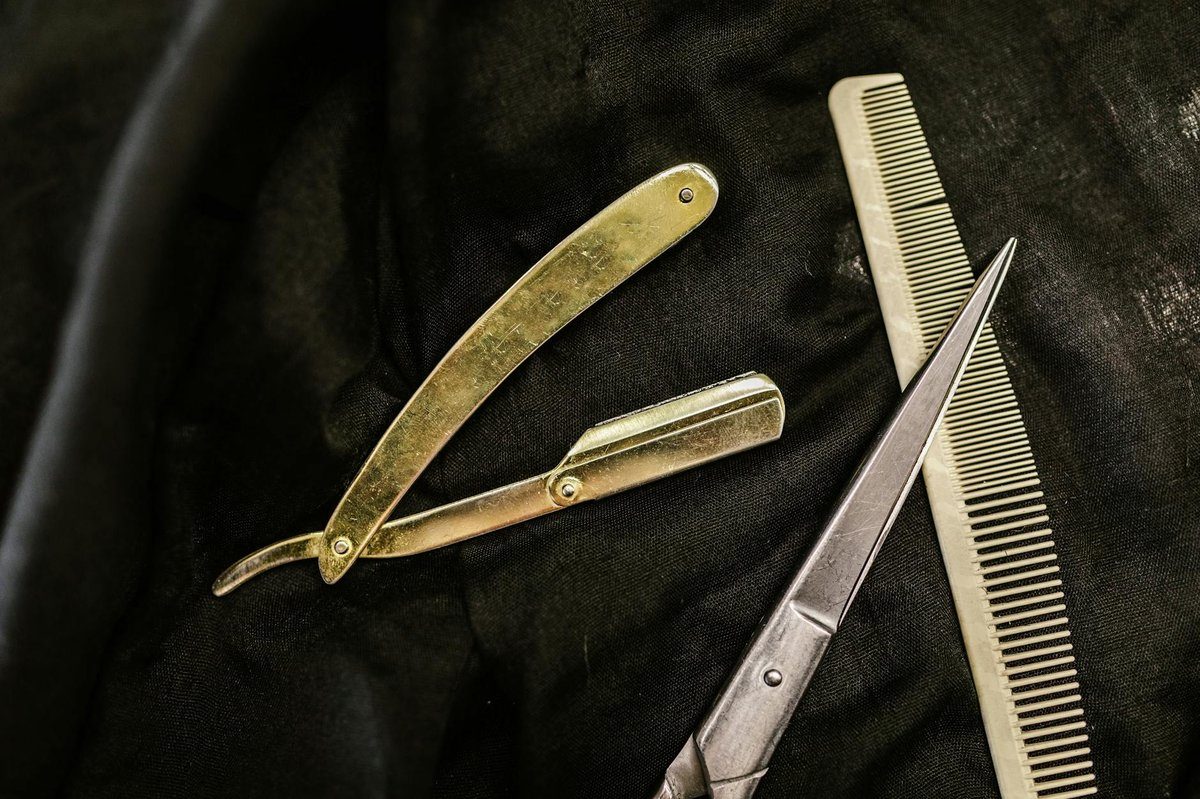
Where carbon steel works: Carbon steel is more common in straight razors, Japanese kitchen knives, and woodworking tools – all applications where the tool can be dried immediately after use and stored in a controlled environment. Some Japanese scissor makers produce limited carbon steel models intended for dry cutting only, where water exposure is minimal.
The performance argument: Advocates of carbon steel scissors argue that the superior edge compensates for the maintenance burden. There is some truth to this – a properly maintained carbon steel edge is measurably sharper than even the best stainless steel edge. But in practice, the difference is noticeable only to the most experienced users, and the risk of corrosion damage is constant.
Should You Consider Carbon Steel?
For the vast majority of stylists, no. The maintenance requirements are impractical for salon work, and modern stainless steels like cobalt alloy come close to carbon steel’s edge performance without the corrosion risk.
Carbon steel scissors make sense only if you:
- Work exclusively with dry cutting techniques
- Are willing to maintain a rigorous drying and oiling routine
- Want the absolute keenest edge possible
- Understand that any lapse in maintenance causes permanent damage
If that sounds like you, you are in a very small minority of professionals.
Damascus Steel: The Artisan’s Choice
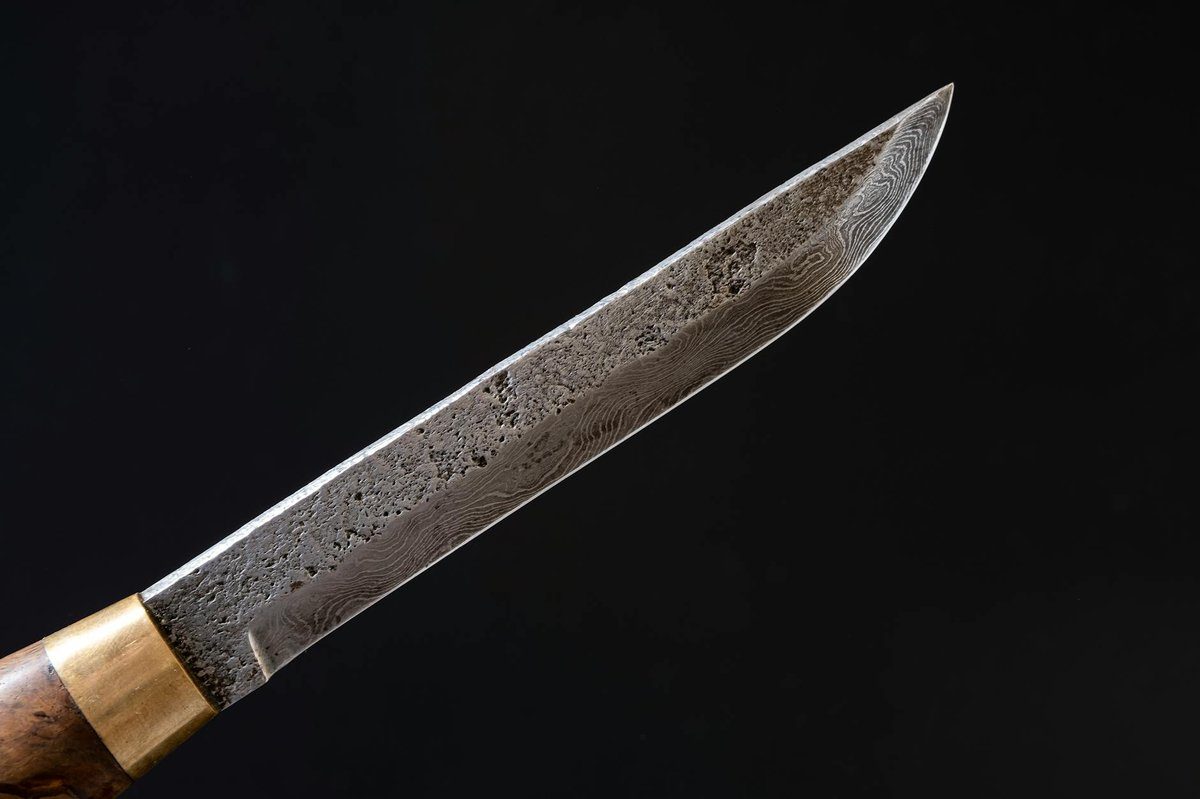
Damascus steel is the most visually distinctive and widely misunderstood steel type in the scissors world. The characteristic wavy, patterned surface of Damascus steel is immediately recognisable – but what it actually is, and what it does for cutting performance, is poorly understood.
What Damascus Steel Actually Is
Modern Damascus steel is made by forge-welding multiple layers of different steel types together, then folding, twisting, and re-welding them to create a layered structure. The distinctive pattern appears when the steel is etched with acid, which reacts differently with the different steel layers to create visible contrast.
A typical Damascus scissor blade might contain 33 to 67 layers of alternating hard and soft steel. The hard layers provide edge retention. The soft layers provide flexibility and shock absorption. Together, they create a blade that combines the best properties of both.
Damascus vs Pattern-Welded: A Quick Clarification
Strictly speaking, “Damascus steel” refers to a historical steel from the Middle East whose production method has been lost to history. What modern manufacturers call Damascus is technically “pattern-welded steel.” However, the industry universally uses “Damascus” and we will follow that convention here.
How Damascus Affects Cutting Performance
The layered structure of Damascus steel creates three performance advantages:
1. Micro-serration at the edge. Where the harder and softer layers meet at the cutting edge, the softer layers wear slightly faster, creating microscopic serrations. These micro-serrations help grip hair during cutting, which some stylists report improves slide cutting control.
2. Stress distribution. The alternating layers distribute impact stress across the blade rather than concentrating it at any single point. This makes Damascus blades more resistant to chipping from accidental impacts, which is a meaningful advantage for an expensive tool.
3. Edge stability. The hard layers at the edge maintain sharpness while the softer layers behind them provide support, creating an edge that is both sharp and structurally sound. This can result in slightly longer edge retention compared to a single-steel blade of equivalent hardness.
The Aesthetic Factor
Let us be honest: a significant portion of the Damascus premium is aesthetic. The layered pattern is beautiful, and each pair is unique because the folding and forging process creates unrepeatable patterns. For many buyers, owning a Damascus scissor is about appreciating fine craftsmanship as much as functional performance.
There is nothing wrong with this. A tool that you take pride in is a tool you take care of, and a well-cared-for scissor performs better and lasts longer than a neglected one.
Damascus Pricing and Value
Damascus scissors occupy the premium tier of the market:
| Type | Typical Price | What You Get |
|---|---|---|
| Machine-produced Damascus | $300-$600 | Genuine layered steel, less handwork, consistent pattern |
| Hand-forged Damascus | $600-$1,500+ | Individually forged, unique patterns, maximum craftsmanship |
| Premium maker Damascus | $1,000-$2,000+ | Master craftsperson forging, proprietary steel combinations, collector appeal |
Mizutani is perhaps the best-known Damascus scissor specialist, producing hand-forged Damascus models that are widely regarded as some of the finest cutting tools in the industry. Jaguar offers machine-produced Damascus models at more accessible prices, bringing the layered steel construction to a broader market through German precision manufacturing.
Damascus Maintenance
Damascus scissors require slightly more care than standard stainless steel:
- The layered structure can trap moisture between layers at the edge if not dried properly
- Acid from skin oils can affect the Damascus pattern over time if not cleaned regularly
- Professional sharpening requires a sharpener experienced with Damascus steel – improper sharpening can damage the layer structure at the edge
Standard daily cleaning, drying, and oiling keeps Damascus scissors in excellent condition. The maintenance burden is closer to stainless steel than to carbon steel.
The Maintenance Comparison
Here is what daily and periodic maintenance looks like for each steel type.
| Maintenance Task | Stainless Steel | Carbon Steel | Damascus |
|---|---|---|---|
| Dry after each client | Recommended | Mandatory | Recommended |
| Oil pivot (daily) | Yes | Yes | Yes |
| Oil blade surface | Weekly | After every use | Weekly |
| Clean with chamois | End of day | After every use | End of day |
| Professional sharpening | Every 6-18 months | Every 4-8 months | Every 6-14 months |
| Sharpening cost | $30-$60 | $35-$60 | $50-$80 |
| Risk if maintenance lapsed | Minimal (slight dullness) | Severe (rust, pitting) | Moderate (pattern dulling) |
For more on maintenance routines, see our daily maintenance guide and our sharpening frequency guide.
Which Steel to Avoid in a Salon
Certain steels are poorly suited to professional salon use:
- Ungraded stainless steel: If the manufacturer cannot or will not specify the steel grade, assume it is consumer-grade material that will not hold a professional edge
- Carbon steel in wet environments: Unless you exclusively dry-cut, the maintenance burden is unsustainable
- Unknown Damascus: Some cheap “Damascus” scissors use cosmetic etching on single-steel blades to simulate the pattern without actual layered construction. If Damascus scissors are priced below $300, question whether the layering is real
- Extremely high-hardness steel (67+ HRC): While technically impressive, steel this hard is extremely brittle and can chip or crack from normal salon use. The sweet spot for hair scissors is 58-65 HRC
The Decision Framework
Choosing your steel type comes down to three practical questions.
Question 1: What Is Your Budget?
| Budget | Recommended Steel | Why |
|---|---|---|
| Under $200 | 440C stainless | Best value, reliable performance, easy maintenance |
| $200-$500 | VG-10 or ATS-314 stainless | Sweet spot of performance and price |
| $400-$800 | Cobalt alloy stainless | Maximum edge retention, premium performance |
| $600+ | Damascus or cobalt alloy | Choice between aesthetic craftsmanship and pure performance |
Question 2: How Many Clients Do You See Per Week?
High-volume stylists (25+ clients per week) benefit most from harder steels with longer edge retention. If you are sharpening every four months, upgrading from 440C to VG-10 or cobalt alloy reduces your sharpening frequency and maintains better cutting performance between sessions.
Lower-volume stylists or home users get diminishing returns from premium steel. If you are cutting 5-10 times per week, even 440C will hold its edge well.
Question 3: What Is Your Cutting Style?
| Cutting Style | Best Steel Choice | Why |
|---|---|---|
| Primarily slide cutting | VG-10 (or Damascus for premium) | Needs a keen, smooth edge; VG-10’s fine grain excels here |
| Primarily blunt cutting | Cobalt alloy | Benefits from maximum edge retention under repetitive stress |
| Mixed techniques | VG-10 or cobalt alloy | Both handle varied techniques well |
| Dry cutting only | Any stainless (or carbon if you prefer) | No corrosion concerns from water exposure |
| Texturising and point cutting | VG-10 | Benefits from the acute edge VG-10 supports |
The Bottom Line
For 90% of professional stylists, the choice is simple: stainless steel, specifically VG-10 or cobalt alloy depending on your budget and volume.
- 440C stainless gets you into the professional game at $80-$200
- VG-10 stainless is the global standard for working professionals at $200-$500
- Cobalt alloy stainless is the premium choice for maximum edge retention at $350-$800+
- Damascus is for stylists who want exceptional craftsmanship and are willing to pay for it at $500-$2,000+
- Carbon steel is for purists and dry-cutting specialists who accept the maintenance trade-off
Do not let anyone tell you that you need Damascus or cobalt alloy to be a good stylist. The steel matters, but technique matters more. A skilled stylist with 440C scissors will outcut a beginner with $1,500 Damascus every time.
Start with the best stainless steel your budget allows, learn to maintain it properly, and upgrade when your skills and your budget align.
Steel Types in Practice


Prices are approximate guides. Visit retailer for current pricing and availability.
For a deeper dive into specific steel grades, see our complete steel types reference. For help choosing scissors by price point, see our pricing guide.