Germany buying guide
Best Professional Scissors in Germany: Buying Guide
Start with the cutting job and fit, then compare the complete German purchase. Jaguar PRE STYLE P, Tondeo SUPRA and Kasho Blue Offset show three different model routes; none is a national-quality verdict.
See the three model examplesAt a glance
- Use ‘in Germany’ for the buyer’s market; check manufacture separately for the exact model.
- Read the official Solingen regulation when that name matters, without treating it as a performance score.
- Compare the chosen configuration in euros and identify the return and service recipients before paying.
https://www.scissorpedia.com/best-professional-hair-scissors-germany/
Three exact models for a German shortlist
Compare Jaguar PRE STYLE P for a classic everyday pair, Tondeo SUPRA for offset length choices, and Kasho Blue Offset for a compact Japanese option. These are starting points for different jobs, not first, second and third place.
Here, “in Germany” describes where the buyer receives and maintains the pair. It does not by itself establish where the exact model was made. The cited pages were checked on 9 September 2026; no hands-on test or market-wide stock and price survey was performed.
Scroll to explore all 3 examples
-
Jaguar

Jaguar Pre Style Ergo P
Request a current local quote.
Classic everyday reference
PRE STYLE P gives a classic-handle, coin-adjustable VARIO reference from Jaguar's current maker shop. Compare the exact item number and edge option on the offer.
Photo: Scissor Hub Australia
View sizes & specifications -
Tondeo

Tondeo Supra Offset Conblade
Request a current local quote.
Offset reach choices
The current SUPRA page offers right-handed offset choices at 5.5, 6.0 and 7.0 inches. Compare the length you can control rather than treating the longest option as an upgrade.
Photo: Tondeo (brand official)
View sizes & specifications -
Kasho

Kasho Blue Offset
Request a current local quote.
Compact Japanese option
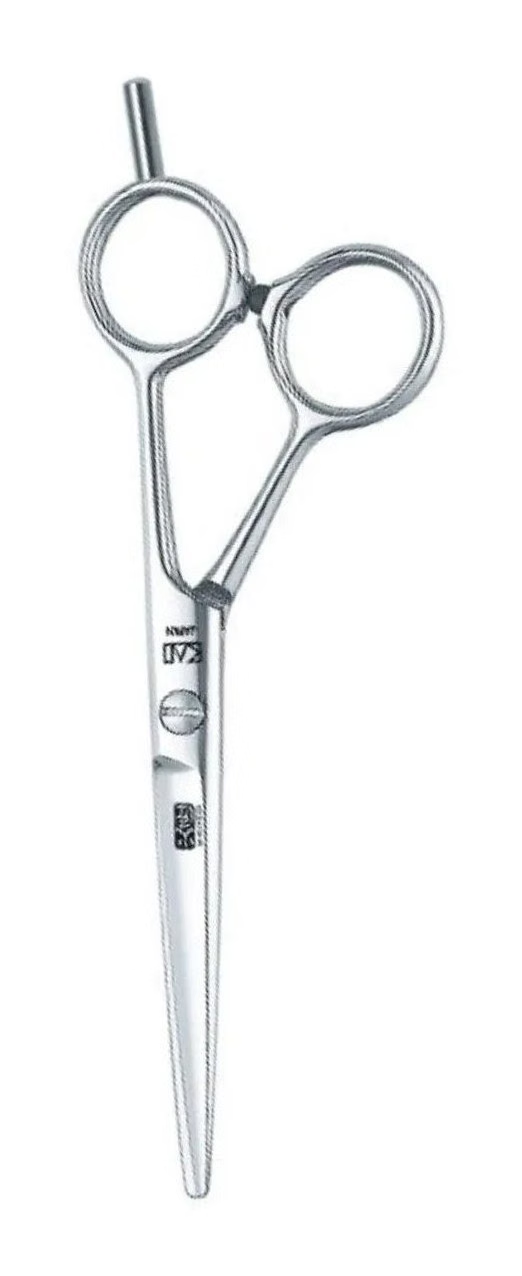
Kasho lists Blue Offset at 4.5, 5.0 and 5.5 inches with VG-10W convex blades and a flat-head screw. Confirm the Germany-market seller and support route separately.
Photo: Scissor Hub Australia
View sizes & specifications


Any displayed price is a dated guide in the labeled currency and market, not a live quote. Where that context is incomplete, we omit the amount. Compare the same size and included pieces, with local tax, delivery and service costs.
Brands in this guide
The three examples lead to Jaguar, Tondeo and Kasho. Those profiles are useful for widening a search, but the purchase still needs an exact model page and a current German offer.
Cerena is another German-brand discovery route. Joewell, Yasaka and Mizutani widen the Japanese field. A brand page is not proof that a selected model is available from a German seller today.
The Solingen name: use the official text
Germany’s official Solingen regulation is the authoritative text for use of that name on covered cutlery. It defines a geographic area, includes scissors in the covered categories and states manufacturing conditions. For a purchase or dispute, read the German text itself and obtain qualified advice when needed; this article is not a legal interpretation.
On the shortlist, copy the maker’s exact origin wording beside the exact model and source date. Keep these facts separate:
- the brand’s office or history;
- the seller’s address and fulfillment point;
- the origin wording for the exact model; and
- the place that will receive the pair for service.
That prevents a Solingen address, a Japanese brand name or a euro storefront from silently becoming an unsupported manufacture claim.
German brands: compare current model pages
Jaguar
Jaguar’s current PRE STYLE P page names item 82655, a classic handle and a VARIO screw that can be adjusted with a coin. The shop also exposes dealer, delivery, return and sharpening navigation. Confirm the exact edge, size, engraving choice and current terms before checkout; a customized item can have different exit terms.
Tondeo
Tondeo’s current SUPRA page lists a right-handed offset model in 5.5, 6.0 and 7.0 inches, with CONBLADE and vanadium/molybdenum alloy wording. It also provides direct product advice and service navigation. Treat its promotional durability and comfort claims as marketing, not as test results from this guide.
Cerena
Use the Cerena profile to find candidate names, then locate a current first-party page for the exact model. Until the model code, handed build, size, origin wording and support route are documented, leave those fields unknown rather than borrowing them from another Cerena line.
Japanese ranges in the German market
Kasho Blue Offset supplies a useful contrast because its maker page documents compact sizes, convex VG-10W blades and a flat-head screw. It does not show that a German retailer has the chosen model in stock or that a local sharpener accepts it. Ask the seller and intended service provider those questions directly.
The same rule applies to any Joewell, Yasaka, Mizutani or other imported model: first-party specifications answer what the maker describes; the German offer must answer who supplies, receives a return and supports that exact pair.
Everyday and versatile salon work
PRE STYLE P is the everyday comparison here because its classic handle and adjustable VARIO pivot are clear on the maker page. Decide whether its handle and edge option match the work you actually repeat, within the seller’s permitted fit conditions.
Compact detail and flexible sizing
Kasho Blue Offset provides 4.5, 5.0 and 5.5-inch nominal choices. Use those as size references, not proof that a shorter pair is automatically more precise or comfortable.
Compare reach without losing control
SUPRA spans 5.5 to 7.0 inches on the current page. A 7-inch option may suit a buyer who already knows why more reach helps; it is not a default upgrade. Compare tip visibility and control against the pair you use now.
Compare exact models, not national averages
| Field | What belongs in the record |
|---|---|
| Exact pair | Maker, model code, size, handedness, edge option and condition |
| Origin | Exact maker wording and dated source, not a conclusion from the brand name |
| Euro offer | Item, delivery and every separately charged cost |
| Exit | Permitted trial, return deadline, condition rules and destination |
| Support | Warranty contact, service recipient, accepted work and expected downtime |
Use the product cards to identify the models. Request current euro quotes for the same configuration before comparing costs; a historical reference amount or a quote-request label is not a German offer.
Where to buy in Germany
Maker shop or maker contact: Jaguar and Tondeo publish direct product and support routes. Recheck the selected model, current availability, seller entity and service instructions on the day you order.
German specialist retailer: match its listing to the maker’s code and configuration. Ask who fulfills the parcel and who receives a return or warranty inquiry.
EU or overseas seller: record the charging currency, fulfillment location, delivered commitment and return destination. This guide does not calculate tax, import charges or legal entitlements.
Factory shop, showroom or event: confirm opening, appointment, trial and exact-model availability before traveling. A general venue page is not a reservation.

Maintenance: the critical difference
Before buying, ask the receiving provider whether it accepts the exact model and preserves its documented edge and pivot. Separate inspection, tension adjustment, sharpening, repair, parts and warranty; they may use different routes.
Keep shipping instructions, insurance, expected time away and a usable backup beside the invoice. “Local sharpening available” is not enough until the provider confirms the pair and the work.
Who should buy what
Student or Auszubildende: start with the school’s written tool requirements and an instructor-supervised fit check. Compare a single cutter before paying for a set or specialist geometry.
Working stylist: name the problem the new pair must solve—reach, fit, task or service downtime—and reject options that do not answer it.
Barber or long-blade user: compare longer sizes only when you can maintain control and tip visibility in the intended task.
Second-pair buyer: give the second pair a distinct role or a clear backup purpose. A different flag or finish alone does not add capability.
The bottom line
Choose the exact pair whose job, fit, origin wording, euro transaction and service route can all be stated together. Jaguar PRE STYLE P, Tondeo SUPRA and Kasho Blue Offset provide three concrete comparisons; the final decision belongs to the documented configuration and your permitted fit check, not to a national story.
A few final questions
Frequently asked questions
What are the best professional scissors in Germany?
There is no universal winner. Jaguar PRE STYLE P is a classic-handle everyday reference, Tondeo SUPRA adds offset length choices, and Kasho Blue Offset is a compact Japanese option. The best purchase is the one that fits the work and has a clear euro offer, return route and suitable service.
Are Solingen scissors better than Japanese scissors?
Neither place name decides fit or performance for every model. Compare the exact handle, blade length, maker-published geometry, permitted fit check and service route. Use origin wording as one verified fact, not as a substitute for those checks.
What does 'Solingen' mean on scissors?
Germany’s federal regulation protects use of the Solingen name for covered cutlery and includes scissors in its scope. Read the official text for the rule and the maker’s exact model wording; this guide does not make a legal determination for an individual offer.
Are the prices in the product cards current German prices?
No live German offer is promised here. Read the date and market beside any displayed reference amount; when the evidence is insufficient, the card asks for a quote. Request the selected model and size in euros, with delivery and separately charged costs, then compare return and service terms.
Read the original information
Sources and further checks
Evidence status: Selected official regulation, maker and product pages reviewed 9 September 2026. This is not a cutting test, German stock survey, live-price ranking or legal opinion.
The federal regulation and maker pages support the narrow claims shown here. They do not establish current stock, a complete euro quote, personal fit or service eligibility for an individual pair.
- Federal Ministry of Justice — Solingen name-protection regulationOfficial consolidated federal text for the Solingen name, including its defined industrial area and inclusion of scissors among covered cutlery. Used to direct readers to the governing text, not to provide a legal determination for an individual product.Checked 9 Sep 2026
- Jaguar Solingen — PRE STYLE PCurrent maker shop page for PRE STYLE P, item 82655, classic handle, VARIO coin-adjustable screw and Solingen manufacture wording. Live price, stock, delivery and return messages are volatile and are not reproduced as a standing offer.Checked 9 Sep 2026
- Tondeo — SUPRACurrent maker shop page for the right-handed offset SUPRA, 5.5, 6.0 and 7.0-inch selectors, vanadium/molybdenum alloy wording, CONBLADE and Solingen manufacture. No marketing cycle, force, durability, comfort, stock or live-price claim is adopted.Checked 9 Sep 2026
- Kasho — Blue Series specificationsBlue offset sizes and KCB model codes, VG-10W convex blades, and flat-head screw. No price or comparative performance verification.Checked 9 Sep 2026
Discussion