France buying guide
Best Professional Scissors in France: Buying Guide
Compare a compact Kasho Blue with a longer-format Mizutani Crossover, then match the chosen pair to French supply and aftercare. The exact handle, complete euro offer and receiving workshop matter more than a national brand label.
See French buying contactsAt a glance
- Kasho’s French dealer page gives a commercial contact; do not assume its office is a walk-in shop or repair address.
- Mizutani France directs maintenance requests through Kaizen Edge before sending scissors to Alixan.
- On a Crossover offer, confirm both the model and thumb-ring option instead of relying on a shared catalog photograph.
https://www.scissorpedia.com/best-professional-hair-scissors-france/
Compare a compact cutter with the reach your work needs
Start with Kasho Blue Offset when you want a compact pair. Compare Mizutani Crossover CR-2 when you need more reach and can assess its handle and thumb-ring fit. If you need a left-handed cutter, use a specifically named left-handed model rather than treating these examples as a complete shortlist.
“In France” refers to the buyer’s supply and maintenance needs, not French manufacture. The selected regional pages were checked on 9 September 2026. There was no cutting test, nationwide stock survey or current-price ranking.
Scroll to explore all 2 examples
-
Kasho

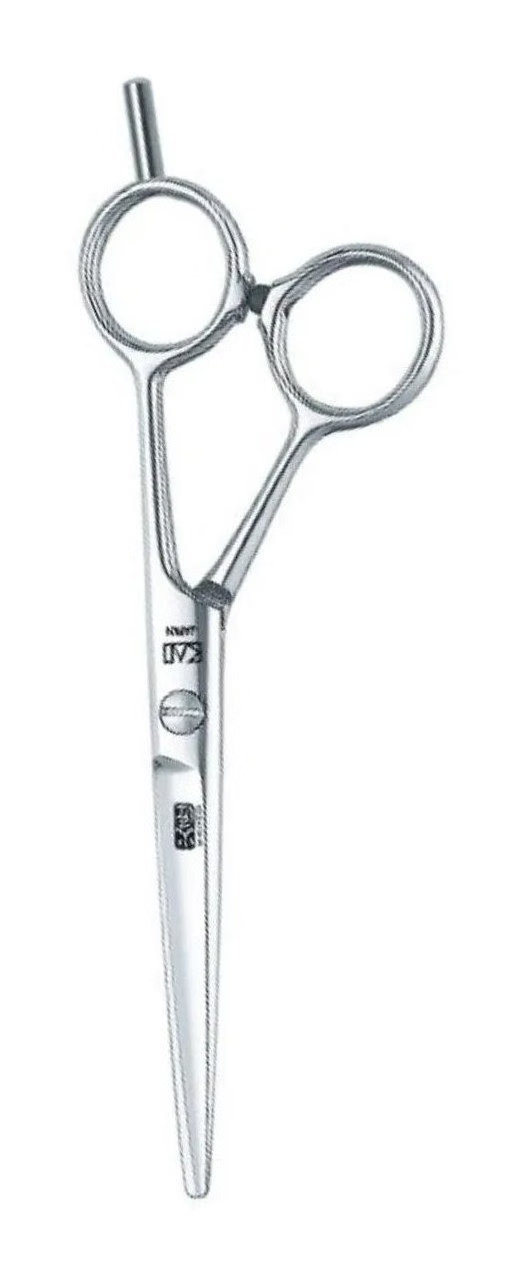
Kasho Blue Offset
Request a current local quote.
Compact offset cutter
Blue's 4.5, 5 and 5.5-inch offset sizes give a compact comparison. Ask the maker's French contact for the supplier serving your area and specify the KCB code.
Maker evidence 1 · Maker evidence 2
Photo: Scissor Hub Australia
View sizes & specifications -
Mizutani

Mizutani Acro Crossover CR-2
Request a current local quote.
More reach to compare
The French Crossover listing discusses CR-2 and offers 5.7, 6.2 and 6.7-inch choices. Confirm the exact model and thumb-ring selection before comparing fit or accepting a quote.
Photo: Mizutani Canada
View sizes & specifications

Any displayed price is a dated guide in the labeled currency and market, not a live quote. Where that context is incomplete, we omit the amount. Compare the same size and included pieces, with local tax, delivery and service costs.
Match the French listing to the pair you mean
| Detail to settle | Kasho Blue Offset | Mizutani Crossover CR-2 |
|---|---|---|
| Published nominal sizes | 4.5, 5 and 5.5 inches | 5.7, 6.2 and 6.7 inches |
| Important ordering detail | Offset versus straight handle; exact KCB code | CR-2 identity and selected thumb-ring option |
| Why compare it? | You want a compact offset format | Your work calls for more reach than the Blue examples |
| Source | Blue maker specification | French Crossover listing |
The Crossover listing combines CR-1 and CR-2 imagery and offers Small/Large ring selections while discussing CR-2. Ask for the full model and ring choice on the written offer. A shared family name or photograph is not enough to settle that configuration.
Replace the tool that is limiting your work
If your main cutter no longer suits the job, describe the specific problem: reach, tip access, ring contact or time away for servicing. That gives the supplier something useful to answer. A premium model is not an upgrade simply because it sits above your present pair in a catalog.
Keep compact length separate from blade features
Blue’s documented mechanism is a flat-head screw. Its size range, offset handle and screw design are distinct facts; none proves that it will feel better than your existing pair. Use the size reference to distinguish the seller’s nominal size from usable blade reach.
More length needs a fit check, not a national story
For barbering or longer sections, compare control over your usual comb and visibility at the tip. A longer tool may answer a reach problem while creating a different handling problem. Ask to assess the selected length under the seller’s trial rules.
These examples concern Kasho and Mizutani. For a specifically left-handed brief, the French catalog separately names FIT V1 Lefty. Confirm the selected hand and size before widening the search by brand.
Start with the French contact that can answer the purchase
Kasho France: the maker’s dealer page publishes a Paris commercial contact and links to KAI France. Ask which supplier serves your location, whether it can provide your exact Blue code, and who receives warranty or paid-service inquiries. Do not travel to the listed office expecting a shop or send scissors there for repair without instructions.
Mizutani Scissors France: the Crossover listing provides a French-facing product inquiry and purchase starting point. Use the exact option name when discussing the offer. The site’s maintenance page is a separate destination with its own intake workflow.
Another French or EU retailer: compare its complete offer with those contacts, not just the product title. Ask who ships the pair, where a return goes and whether the maker’s regional support accepts that purchase route. An EU seller does not automatically use the same service arrangements as a French storefront.
For an event or social-media offer, keep the seller’s legal name and written terms after the conversation. A demonstration can help you assess a tool; it does not identify every party responsible for the sale.
Read the whole euro offer
The cards above are model-discovery routes, not live French quotations. The French Crossover page displays both HT and TTC figures. Have the seller state the complete amount you will actually pay for the chosen configuration, including delivery and any costs charged separately. This guide does not calculate taxes or determine your legal position.
A useful two-offer comparison is short:
| Ask both sellers | Why it matters |
|---|---|
| Which model, hand, length and ring option? | Stops similar catalog names concealing different pairs |
| What is the complete euro charge? | Keeps price presentation and delivery on the same basis |
| What handling or trial is permitted? | Lets you plan a fit check without guessing about returns |
| Who receives a return, warranty inquiry and service request? | Separates three responsibilities that may have different addresses |
If one offer includes a texturizer and the other does not, first decide whether you need that second tool. Do not let a bundle turn a one-cutter purchase into a different buying decision.
Arrange Mizutani servicing before posting the pair
Mizutani France’s maintenance and repair page says requests moved to Kaizen Edge on 1 July 2025. Its current instructions direct the buyer to create an online request and send the pair with the intake document to its Alixan receiving location.
That is a practical reason to revisit the service page before shipping. An old email exchange or purchase address may no longer describe the intake process. Open the provider’s linked workflow for the current form and shipping instructions, and confirm acceptance of the exact model and work needed.
For a different brand, ask its responsible contact where the pair should go; the Mizutani workflow is not a general French repair service promise. Plan a usable backup and ask about expected time away rather than assuming a published estimate will fit your diary.

Let the task and handedness settle the shortlist
French catalog terms can help you navigate: the Crossover listing labels its hand as droitier, while the separate FIT V1 Lefty page uses gaucher. Select the appropriate construction before comparing material or price. Crossover listing; Lefty listing.
Then assess ring contact, thumb movement, balance and control under permitted conditions. Students should ask their educator to confirm the course’s requirements before buying a specialist or second tool. Stop a trial if control reduces or discomfort develops.
Use the edge comparison when a technique question remains. “Japanese”, “German”, “Seki” and “Solingen” do not replace a model’s actual geometry or choose the fit for you.
Choose the pair and the ownership arrangement together
Keep the candidate only if it answers your cutting brief, the selected hand and handle can be assessed, and the supplier can give you a complete euro offer with workable return and service arrangements. A clear local contact is useful only when it can support the exact purchase.
Update, 9 September 2026: replaced the generic six-product list with two focused examples and selected French dealer and service checks. The earlier correction is retained: Kasho Blue uses a flat-head screw, not the Disc Operation System. No comprehensive product fact-check, price survey or cutting test is claimed.
A few final questions
Frequently asked questions
What are the best professional scissors to buy in France?
Choose for the work and support you need. Kasho Blue is a compact offset example; Mizutani Crossover offers longer nominal sizes to compare. They are not a first-and-second-place ranking. Settle fit, the exact configuration and the complete euro offer before choosing.
Where can I ask about Kasho scissors in France?
Kasho’s French dealer page publishes a Paris commercial contact and a KAI France link. Ask that contact which supplier serves your area and who handles aftercare. The listed office is not evidence of walk-in retail access or a repair drop-off service.
How do I arrange Mizutani servicing in France?
Start with Mizutani France’s current maintenance page. It directs requests through Kaizen Edge and gives an Alixan receiving address. Create the request and follow the current intake instructions before posting; do not treat an advertised turnaround as a guaranteed date.
Is there a left-handed option in the French listings?
Yes. Mizutani France separately lists FIT V1 Lefty in 5.5 and 6-inch sizes. That is a named left-handed alternative to investigate, not a claim that a right-handed Crossover can simply be turned over or that one model fits every left-handed stylist.
Are the product-card prices current euro prices?
The cards do not promise a current French offer. Read any amount’s date, currency and market, or request a quote when none is published. Ask the seller for the exact option’s complete euro charge; where HT and TTC figures appear, confirm which total the quote and checkout use.
Read the original information
Sources and further checks
Evidence status: Selected French-facing product, dealer and service pages checked 9 September 2026. No national price survey, hands-on comparison or comprehensive product review. The earlier Kasho Blue screw correction is retained.
These sources document the selected models and French-facing contacts. A listing is not confirmation of the exact option's stock, delivery date, fit or service eligibility; the Crossover page needs particular care over model and ring selection.
- Kasho — Blue Series specificationsBlue offset sizes and KCB model codes, VG-10W convex blades, and flat-head screw. No price or comparative performance verification.Checked 9 Sep 2026
- Kasho France — Dealer contactMaker-published French commercial contact in Paris and link to KAI France. A contact route, not proof of walk-in showroom access, exact-model stock, a sales appointment or the receiving address for servicing.Checked 9 Sep 2026
- Mizutani Scissors France — Crossover CR-2 listingFrench Crossover listing discusses CR-2, right-handed build, 5.7/6.2/6.7-inch sizes, Nano Powder Metal and Small/Large ring selections, with HT and TTC price presentation. Mixed CR-1/CR-2 imagery and selectors require confirmation of the exact ring and model on an offer. No comfort, injury, trend, durability, stock or live-price claims adopted.Checked 9 Sep 2026
- Mizutani Scissors France — Maintenance and repairRegional service page states requests moved to Kaizen Edge on 1 July 2025, provides the linked intake workflow and names Alixan as the receiving location. No completed booking, guaranteed turnaround, acceptance of every model or independently verified service performance claimed.Checked 9 Sep 2026
- Mizutani Scissors France — FIT V1 LeftyNamed French-market left-handed cutter and 5.5/6.0-inch nominal sizes. Used as an alternative for a left-handed brief, not evidence of universal fit, injury prevention, comparative manufacturing rarity, market popularity or current stock.Checked 9 Sep 2026
Discussion