Japanese vs German Hair Scissors: Compare the Exact Tool
A practical Japanese-vs-German scissor guide based on exact blade, handle, fit, task, seller, care, service, and model-specific origin evidence.

Japanese and German scissors are not two uniform tool types. Each market contains different materials, edges, handles, pivots, price points, and production routes. The useful comparison starts only after you name two exact models and one intended task. A written side-by-side record keeps heritage separate from product evidence.
Quick answer
Choose Japanese or German scissors by the documented features of the exact tool, individual fit, and available service, not by a national winner. If both candidates meet the brief, trial them under the same conditions and keep the one you can control more consistently.
Six Japanese configurations and one German cutter
-

-

-

-

-

-

-


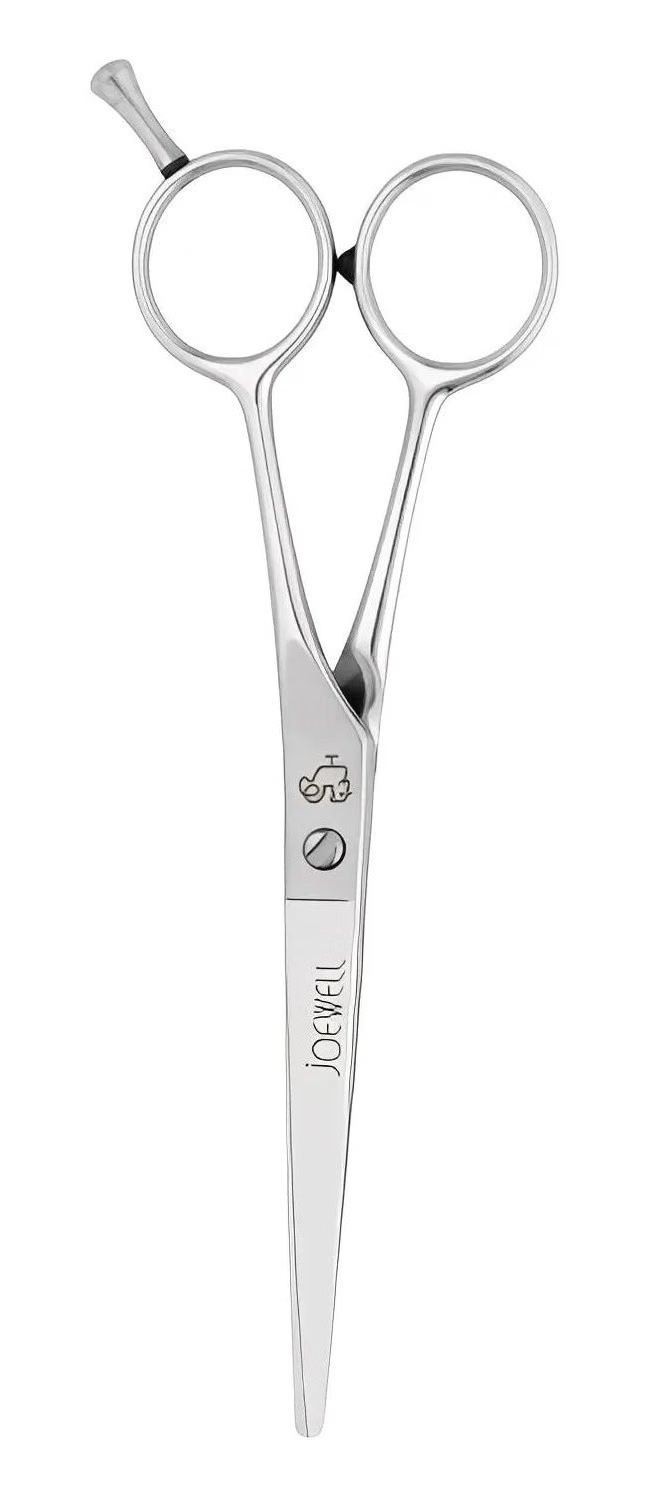


Product photos from the ScissorPedia catalog; see each product page for provenance.
- Yasaka Offset: a Japanese-brand offset cutter; confirm the exact model code for its edge, steel and origin.
- Ichiro Taiyo Set: a VG-10 cutter and 15-tooth texturizer set.
- KASHO Design Master Offset: a Japanese-made VG-10W offset cutter with a semi-convex edge.
- Mina Sakura II: a Japanese-brand offset cutter offered across five lengths.
- Joewell Classic: a Japanese-made classic-handle cutter with Joewell’s standard blade, offered from 4.5 to 7.0 inches.
- Juntetsu Mastersmith Set: a matched 7.0-inch cutter and texturizer set.
- Jaguar Pre Style Ergo P: a German-made cutter with a micro-serrated blade and classic handle.
The visual difference is useful; it does not prove which tool cuts better for an individual.
Start with six exact fields
| Field | Compare this, not the country |
|---|---|
| Product identity | Maker, model code, handedness, size, and condition |
| Blade | Length, width, line, tip, edge, and maker-stated task |
| Material | Exact maker wording and any model-specific hardness evidence |
| Handle | Position, rings, inserts, rest, pivot, and balance |
| Purchase | Seller, delivered total, clean trial, returns, and warranty |
| Ownership | Care, inspection, sharpening, repair, parts, and downtime |
If a field is unknown, leave it unresolved. Do not fill it with “Japanese quality,” “German toughness,” a steel hierarchy, or a seller’s country badge.
What origin can tell you
Country-of-manufacture evidence can help trace a product and understand the maker’s stated production route. It cannot, by itself, establish:
- the material or hardness of a named model;
- edge retention, toughness, or corrosion behavior;
- the amount of hand finishing;
- comfort or fit;
- suitability for slide, blunt, dry, or comb work; or
- warranty and service access in the buyer’s market.
“Japanese steel,” “Japanese style,” and “designed in Germany” are not the same claim as manufacture in that country. Record the maker’s exact wording and scope.
Blade and edge: compare what is actually supplied
Japanese scissors are often discussed alongside convex edges, while German catalogs include well-known bevelled, micro-serrated, and convex options. Those associations are useful discovery cues only. The exact blade may differ within one brand or product family.
For each candidate, capture:
- the maker’s edge and blade-line terminology;
- whether one blade is serrated or otherwise patterned;
- intended cutting methods and prohibited uses;
- the delivered condition and prior service history; and
- a provider who can preserve that geometry.
A convex label does not guarantee a smooth slide-cut result, and a micro-serrated label does not prescribe blunt cutting. Technique, setup, condition, and fit still matter.
Compare material and hardness
Material names and HRC figures need model-specific sources. Even when both are verified, they do not alone predict finished-tool performance. Heat treatment, geometry, assembly, surface condition, workload, incidents, care, and sharpening all affect the result.
Compare the exact material wording and source date. Avoid assuming that a higher number means longer life, or that one national tradition is inherently harder, tougher, or easier to service.
Match the tool to the task
Write one sentence before trialling: “I need this scissor for __ under __ conditions.” Then compare both candidates on the same approved practice material.
Useful observations include:
- sight line and tip control;
- hair holding and release;
- opening effort and closing stability;
- reach through the intended section;
- balance and thumb release; and
- any pushing, folding, catching, noise, or unwanted movement.
Do not choose a country for a technique. Choose the exact model whose documented design and observed control fit that technique.
Model configurations within the Japanese examples
Yasaka Offset, Ichiro Taiyo, KASHO Design Master Offset, Mina Sakura II, Joewell Classic, and Juntetsu Mastersmith illustrate different handles, edge descriptions, tension systems, size ranges, and kit formats. Ichiro Taiyo and Juntetsu Mastersmith add dedicated texturizing companions. Compare those configuration differences directly.
German makers also offer varied configurations. Compare the Jaguar example or another named German model with a Japanese model that covers the same task and handed setup.
Service may decide the purchase
Before buying, give the intended service provider both model codes. Ask whether it accepts each tool, can preserve the documented geometry, has access to parts, and will inspect before removing material. Record shipping, insurance, cost, and expected downtime.
The better purchase may be the model with clearer local support, even if the other has a more appealing origin story.
The practical takeaway
Japanese-vs-German is a starting filter. The final decision is exact model vs exact model: verified build, fit, controlled task trial, transaction terms, and a service route that can maintain what you bought.
For a broader Japanese maker view, see the Best Japanese Scissors Brands guide. For purchase verification, use Where to Buy Professional Scissors.
Verify current specifications, stock, price, origin wording, and seller terms with the responsible maker and seller.
Frequently Asked Questions
3 answers you can open one at a timeHow should I compare Japanese and German scissors?
Neither origin is universally better. Compare two exact models for handedness, blade and edge, handle, fit, intended task, condition, returns, warranty, care, and available service. Country alone does not establish performance.
Are Japanese scissors always convex and German scissors beveled?
No. Makers in both markets offer multiple blade and edge designs. Use the current exact-model specification rather than assigning geometry from country or brand.
Do Japanese scissors need a Japanese-scissor specialist for sharpening?
Choose a service provider who confirms it can preserve the exact model’s documented blade and edge geometry. That requirement belongs to the tool, not to a broad national label.
Contents
Discussion