440C vs VG-10 vs ATS-314: A Practical Scissor Steel Guide
Compare common professional-scissor steel labels through six Japanese product examples, then check fit, geometry, care, and service.

440C, VG-10, and ATS-314 can help identify a scissor, but they do not tell you how the finished tool will fit, feel, or perform. The useful question is not “Which steel wins?” It is “Which exact model combines a documented material with the right geometry, configuration, support, and price for my work?”
Six Japanese product examples make the differences easier to see without turning three steel labels into a brand hierarchy. For the two-label verdict, use VG-10 vs 440C; for the evidence method behind this argument, use Why Heat Treatment Beats the Steel Name.
Six exact examples
Six Japanese product examples with different materials and configurations
-

-

-

-

-

-


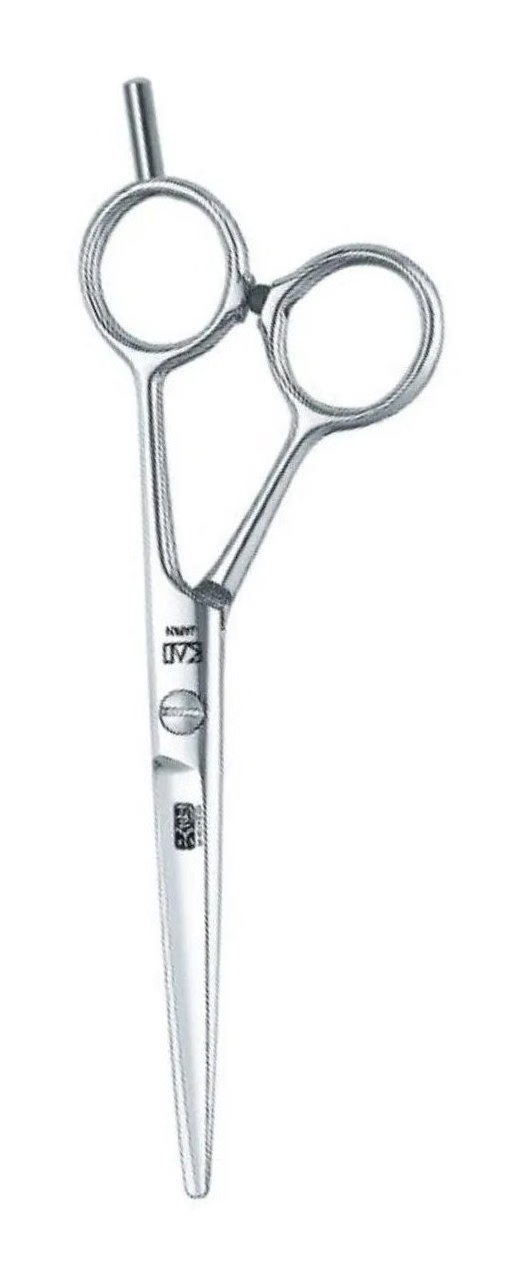

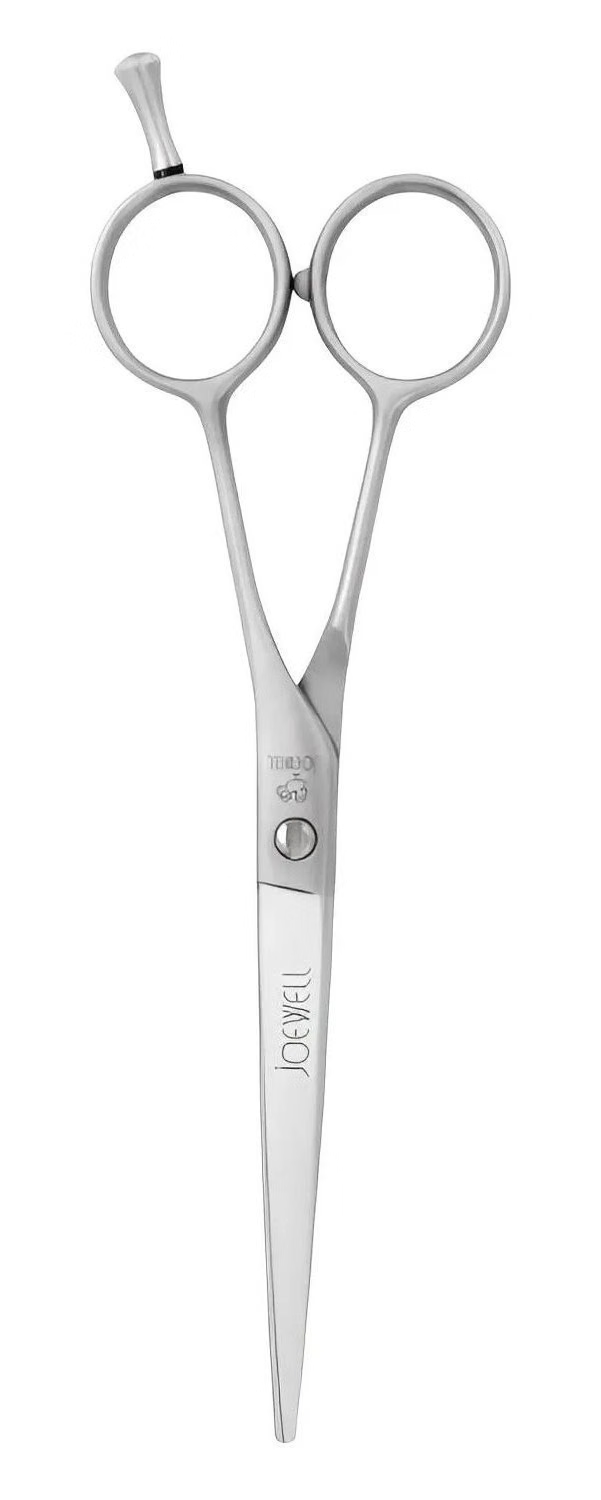

Product photos from the ScissorPedia catalog; see each product page for provenance.
| Product | Listed material | Distinctive configuration |
|---|---|---|
| Yasaka Offset | Depends on the exact model (Yasaka lists 440C, ATS314 and VG10 across its range) | Offset cutter for everyday salon and barber work |
| Ichiro Premium Taiyo set | VG-10 | Size-selectable cutter plus 6.0-inch, 15-tooth texturizer |
| KASHO Blue Offset | VG-10W | Compact convex cutter with a flat-head screw |
| Mina Sakura II | Not published for this model | Offset cutter in five lengths from 5.0 to 7.0 inches |
| Joewell Classic PRO | Supreme Stainless Alloy (PRO 450, 500 and 550) | Classic handle and convex blades |
| Juntetsu Mastersmith set | ATS-314 cobalt | Matched 7.0-inch cutter and texturizer with selectable removal ratios |
Material wording applies to the named product, not automatically to every model carrying the brand name. Check the current brand and retailer pages for the exact model, size, stock, and specification before buying.
Quick answer
- Start with a documented 440C model when accessible pricing, familiar service, and a straightforward everyday configuration matter most.
- Compare VG-10 models when you want a step-up range and can verify the exact blade, heat-treatment, fit, and service details.
- Compare ATS-314 models when a premium tool’s complete configuration, not the alloy name alone, solves a specific professional need.
The strongest option is the one you can identify, trial where permitted, maintain correctly, and support through a qualified service route.
What each label contributes
Yasaka Offset: complete-tool context first
The Yasaka Offset is a useful reminder that a product can be worth comparing even when the alloy label is not its leading feature. Its offset handle makes blade line, control, reach, and personal fit the practical starting points; ask the seller for the exact model code to learn its steel and edge.
Ichiro Taiyo: a VG-10 matched set
The Ichiro Premium Taiyo pairs a convex-edge VG-10 cutter, available in several lengths, with a 6.0-inch, 15-tooth texturizer. Its useful distinction is the complete matched configuration and cutter-size choice.
KASHO Blue Offset: a VG-10W cutter
The KASHO Blue Offset combines VG-10W with a full convex edge, compact sizing, an offset handle, and a flat-head screw. It gives buyers a single-cutter alternative to a matched set.
Mina Sakura II: a five-size offset cutter
440C is a specific stainless-steel grade family label. In scissors, it appears across a wide range of prices and manufacturing routes. That broad use is a strength for buyers because it provides many configurations to compare, but it also means the label cannot guarantee one level of finishing or performance.
The Mina Sakura II combines an offset handle, a polished cherry-blossom design, and five lengths. Mina does not publish its steel grade, so ask the seller before treating it as a 440C example. That size range gives students, first-kit buyers, working stylists, and backup-tool shoppers something more useful to compare than the steel name: the exact reach and handle they need.
Joewell Classic PRO: another alloy and handle route
The Joewell Classic PRO uses Supreme Stainless Alloy (listed for the 450, 500 and 550) in a classic-handle convex cutter. Its different handle position and compact size range reinforce why material comparisons should stay connected to the complete tool.
Juntetsu Mastersmith: ATS-314 in a long-blade set
The Juntetsu Mastersmith is a matched 7.0-inch ATS-314 cutter and texturizer, with 15%, 20%, or 30% removal-ratio choices for the texturizing partner. That is a distinctive system for a barber or long-blade user who already knows the length and texture result they need.
What the steel label cannot decide
Do not use 440C, VG-10, or ATS-314 alone to predict:
- comfort or fatigue;
- months between sharpening;
- sharpness or cutting feel;
- drop resistance or corrosion behavior;
- suitability for slide, blunt, over-comb, or texture work;
- country of manufacture; or
- total value over the life of the tool.
Those outcomes depend on the complete scissor, its condition, the user, and the service history.
A five-minute comparison checklist
1. Confirm the exact identity
Record the brand, model, size, handed build, condition, seller, and date. Copy the material wording exactly. “Japanese steel,” “cobalt,” and “premium alloy” are too broad to substitute for an exact grade.
2. Compare the finished tool
Check the blade line, edge, tip, handle, finger rings, rest, pivot, weight, and intended work. A great material in the wrong size or handle is still the wrong purchase.
3. Trial within the written rules
If a seller permits a trial, compare ring contact, thumb travel, opening span, balance, visibility, reach, and control in one defined task. Stop if control reduces or discomfort develops.
4. Verify the ownership route
Capture the complete delivered price, return destination, warranty issuer, care guidance, qualified sharpening route, likely shipping, downtime plan, and replacement availability. Do not invent a sharpening interval to make one steel look cheaper.
Which route should you shortlist?
Shortlist the Yasaka Offset for an everyday offset cutter, the Ichiro Taiyo for a VG-10 cutter-and-texturizer set, and the KASHO Blue Offset for a compact VG-10W cutter with a flat-head screw.
Compare the Mina Sakura II when a broad size range fits the brief, the Joewell Classic PRO when a classic handle and convex edge appeal, and the Juntetsu Mastersmith when a matched 7.0-inch ATS-314 system fits established work.
Bottom line
The steel labels are useful, but the complete products tell the better story. Across Yasaka, Ichiro, KASHO, Mina, Joewell, and Juntetsu, size, edge, handle, set format, fit, and service remain part of the decision.
Verify the current range, then let exact fit, geometry, seller terms, and service decide. For wider pricing context, continue to the professional scissors price-tier guide.
Frequently Asked Questions
4 answers you can open one at a timeIs VG-10 automatically better than 440C for hair scissors?
No. A steel name is one part of an exact finished tool. Heat treatment, blade geometry, edge, pivot, assembly, condition, fit, care, and sharpening quality can matter as much as the grade label. Compare documented models rather than treating the names as a universal ladder.
Is ATS-314 always a premium scissor steel?
ATS-314 is the listed material for the Juntetsu Mastersmith set featured here. As with any steel, compare the complete model, finished specification, fit, and service route instead of judging the tool by its alloy name alone.
Which steel is best for a first professional pair?
Start with the exact tool that meets the course or salon requirement, fits the user’s hand, has clear return terms, and can be serviced locally. The Yasaka, Ichiro, KASHO, Mina, Joewell, and Juntetsu examples below show several useful configurations, but none replaces an individual fit check.
How often will these steels need sharpening?
There is no defensible universal interval by steel name. Workload, hair, technique, adjustment, care, incidents, edge geometry, and the service provider all affect the interval. Follow maker guidance and seek qualified inspection when cutting behavior changes.
Contents
Discussion