Ride / Half-Moon Surface
Scissor anatomyTurn a symptom or feature into a precise service brief
Locate the broad part family, use maker wording, record the observation, and ask a scoped service question. Apply to Ride / Half-Moon Surface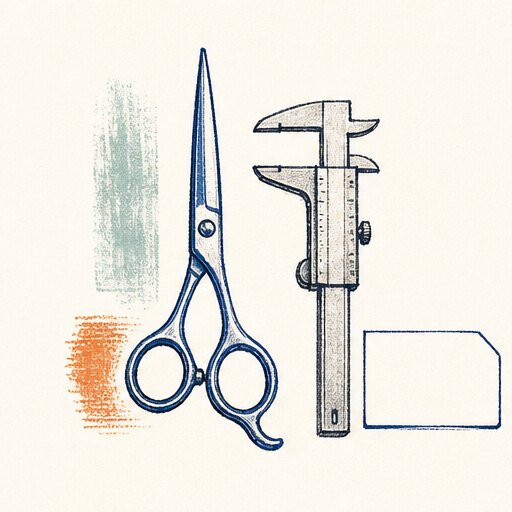
- 01 Locate Start with tip, blade, pivot, shank, rings, rest, or contact area.
- 02 Name Match the exact model's diagram and terminology.
- 03 Describe Record visible condition, sound, resistance, incident, and baseline change.
- 04 Brief Ask what is in scope, what work is proposed, and how return is verified.
Do not inferOne photograph, sound, feel, pull, fold, or visible mark cannot identify a cause or authorise adjustment or repair.
Description
The ride, or half-moon, is the small polished surface near the pivot where the two blades guide each other during the cut. Its condition controls blade alignment, closing feel, and how long an edge actually lasts.
The ride (乗り, nori), sometimes called the half-moon, is the small polished contact surface near the pivot where the two blades guide each other. It is the second working surface on a pair of shears — the cutting edge does the slicing, the ride line keeps the blades in alignment while they do it.
Why It Matters
Every open-and-close stroke puts the ride surfaces against each other. If they are smooth, mated, and oiled, the blades glide past in perfect parallel and the cutting edge meets hair at a consistent angle. If the ride is dry, gritty, or worn, the blades wobble laterally — and that wobble travels down the length of the blade, disrupting the hit point and dulling the edge faster than normal use would. Stylists routinely misdiagnose ride-surface damage as sharpening work: they send the shears out, the edge comes back polished, and the cut still feels loose because nothing was done to the real problem.
Trade-offs and Failure Signs
- Healthy ride — Upside: the blades feel tight and precise at any tension setting; the edge holds its working life. No downside in normal use.
- Worn ride — Upside: none. Downside: the closing stroke feels gritty or imprecise, tension adjustment stops helping, and every sharpening cycle wears through the edge more quickly because the blades aren’t riding cleanly against each other.
- Over-ground ride — Upside: none. Downside: an inexperienced sharpener grinds the half-moon flat to remove pitting, which kills the guiding geometry permanently. The shear may cut sharply in a quick test but drifts out of alignment within days.
Maintenance Considerations
Daily care is the single biggest factor in ride-surface longevity. Wipe the pivot side of the blades clean after every client, apply a drop of specialist shear oil, and open-and-close the blades several times to draw oil across the half-moon. Never let hair fragments accumulate in the pivot area — they score the ride line and the damage compounds fast. If the shear starts feeling gritty during the close, inspect the ride surface before assuming the edge is the problem. True restoration belongs to a specialist trained on the shear’s original geometry.
Context and comparison
The ride surface condition is one of the first things a skilled sharpener checks because it is the most common hidden cause of apparent edge problems. A shear that drags, pushes hair rather than cutting it, or requires excessive hand pressure even immediately after a resharpening often has a ride surface that is either damaged or misregistered — and no amount of edge work will fix a ride surface problem. Conversely, a shear with a correctly maintained ride surface and properly shaped hollow-grind back face will feel light in the hand and require minimal closing force, which reduces hand fatigue over a full professional day.
See Also
Key Characteristics
- Small polished contact area near the pivot on both blades
- Guides the blades into alignment during every open and close
- Dry or gritty ride line increases friction regardless of edge sharpness
- Distinct from the cutting edge — wear here cannot be fixed with sharpening alone
Best For
- Diagnosing loose-feeling shears that don't respond to tension adjustment
- Understanding why a freshly sharpened edge can still feel wrong
- Evaluating pivot-area wear on second-hand scissors
Sources Reviewed
2 scoped sources behind this entry- Tertiary Bold Barber — Terminology of Scissors (education reference)
- Secondary Japan Scissors USA (direct sales)
Frequently Asked Questions
3 answers you can open one at a timeWhat is the ride line on a pair of scissors?
The ride (乗り, nori) is the small curved bearing area near the pivot where the two blades touch each other as they open and close. On a correctly made shear it is polished smooth and carries a thin film of oil; on a worn shear it gets pitted, dry, or scored. Japanese training treats the ride line as a working surface in its own right, separate from the cutting edge.
How is a damaged ride surface different from a dull blade?
A dull blade fails at the tip — it stops slicing hair cleanly even when everything else is in order. A damaged ride fails at the pivot — the blades wobble laterally or feel loose during the cut regardless of how tight the tension screw is set. If a freshly sharpened edge still cuts unevenly or feels imprecise, the ride line is the next place to look.
Can a worn ride surface be restored?
Yes, but only by a specialist. Restoration requires re-polishing the half-moon to the original radius while keeping the blade curvature untouched — fractions of a millimeter matter. A general sharpener without Japanese-convex training can make the problem worse by grinding the ride flat, which kills the guiding action entirely. Ask any sharpener explicitly whether they service the ride surface before handing over a premium shear.
Comments & questions
Questions or feedback on this topic? Add a comment below.