Joewell, From Medical Scissors to Urushi Lacquer: Inside Japan's Oldest Scissor Factory
In 1917, a small workshop in Japan started making medical scissors. Today, Tokosha’s Joewell brand ships to 50 countries, and their latest innovation involves 400-year-old Japanese lacquer.
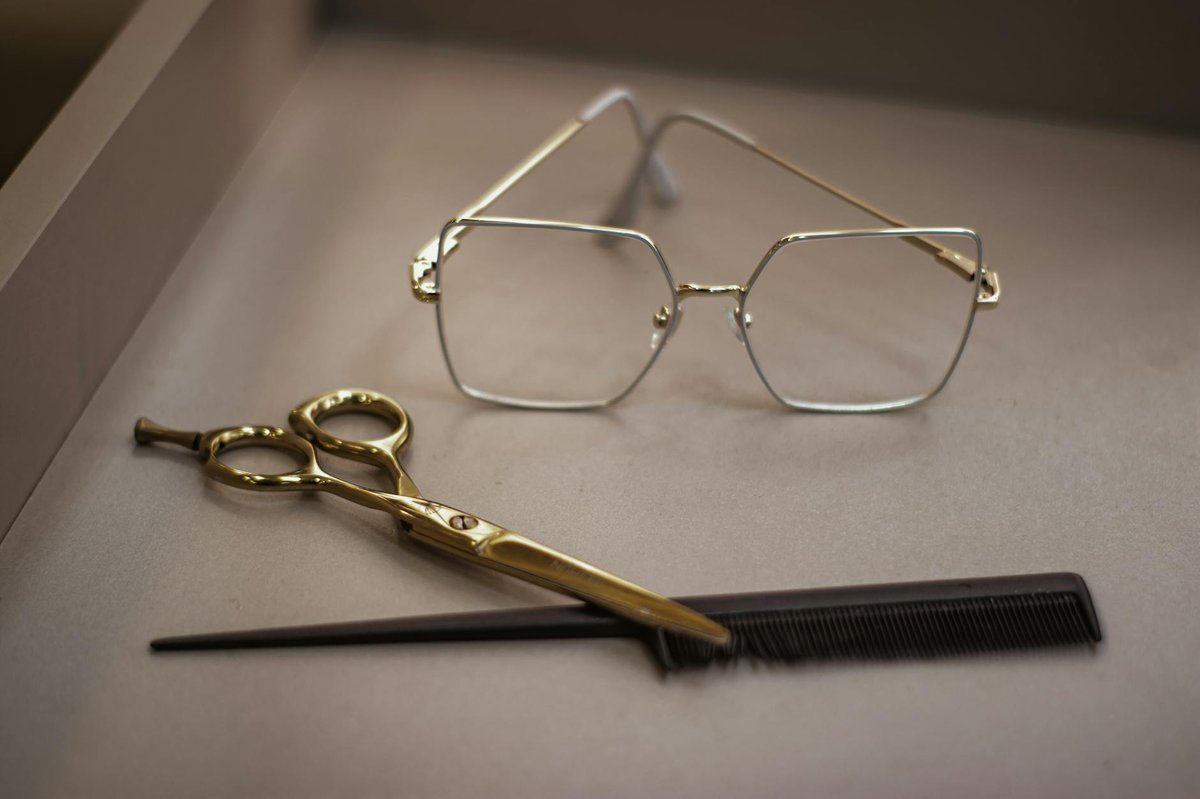
That arc, from surgical instruments to urushi-coated styling shears, tells you everything about Joewell. This is a company that has spent over a century accumulating knowledge about how to cut things precisely, and they have applied that knowledge to hairdressing with a depth of engineering that few competitors can match.
From Surgery to the Salon: 1917-1921
Tokosha Co., Ltd. was founded in 1917 to manufacture medical scissors. Surgical instruments demand tolerances that consumer products never approach. The steel must be perfectly consistent. The edges must be flawless. The pivot must operate smoothly thousands of times without play or drift. Failure means something far worse than a bad haircut.
By 1921, Tokosha recognized that the same precision manufacturing could serve barbers and hairdressers. They launched the Joewell brand to target professional styling tools, carrying over everything they had learned from medical-grade production.
That four-year head start in surgical manufacturing gave Joewell a foundation that purpose-built scissor companies simply did not have. When other manufacturers were figuring out basic heat treatment consistency, Tokosha had already solved it for surgical use.
Today, Tokosha operates the largest dedicated scissor factory in Japan. Not the largest cutlery factory, or the largest tool factory; the largest scissor factory, specifically. That specialization is their advantage.
CBA-1: The Cobalt Alloy That Won Design Awards
Joewell’s most significant material innovation is CBA-1, their proprietary Cobalt Base Alloy. This is not cobalt-added stainless steel; it is a fundamentally different alloy where cobalt alloy forms the base of the material rather than being a minor additive.
What makes CBA-1 important goes beyond marketing. Here are the practical differences:
Nickel content under 0.6%. Standard stainless steel used in scissors contains significantly more nickel. For the estimated 10-20% of the population with nickel sensitivity, this matters enormously. Stylists who develop contact dermatitis from standard scissors often find that CBA-1 eliminates the problem entirely.
Thin, narrow blade designs. Cobalt alloys have a different strength-to-weight ratio than stainless steel. CBA-1 allows Joewell to create blades that are thinner and narrower than what stainless steel permits at equivalent strength. Thinner blades mean less resistance during cutting, less hair compression, and more precise sectioning.
Different wear characteristics. Cobalt does not lose its edge the same way stainless steel does. The wear mechanism is completely different; cobalt’s extreme abrasion resistance means the edge degrades more slowly and more uniformly. The practical result is longer periods between sharpenings and a more consistent cutting feel as the edge ages.
CBA-1 scissors won the Good Design Award in 2017, recognizing not just the aesthetics but the functional innovation of the alloy and the blade designs it enables.
For context on how cobalt alloys compare across brands, Mizutani uses Stellite with 50%+ cobalt content, while Kikui pioneered 70% cobalt alloys in 1973. Joewell’s CBA-1 occupies a specific point in the cobalt spectrum, optimized for the thin-blade designs that define their range.
SG2/R2 and the FX PRO Series
While CBA-1 is Joewell’s signature material, their FX PRO series uses SG2/R2 powder metallurgy steel, one of the most respected steels in the Japanese blade industry.
SG2 (also known as R2) is a Super Gold steel developed by Takefu Special Steel in Fukui Prefecture. It achieves HRC 63-64 and contains high levels of carbon, chromium, molybdenum, and vanadium. The powder metallurgy manufacturing process produces an ultra-fine, uniform grain structure that holds an edge exceptionally well.
The FX PRO series represents Joewell’s maximum-performance stainless line. These scissors complement the CBA-1 range by offering an alternative for stylists who prefer the characteristics of hardened stainless steel, particularly the higher HRC hardness that stainless achieves compared to cobalt alloys.
Ice-Hardening Heat Treatment
Joewell’s heat treatment process is one of the more dramatic in the industry.
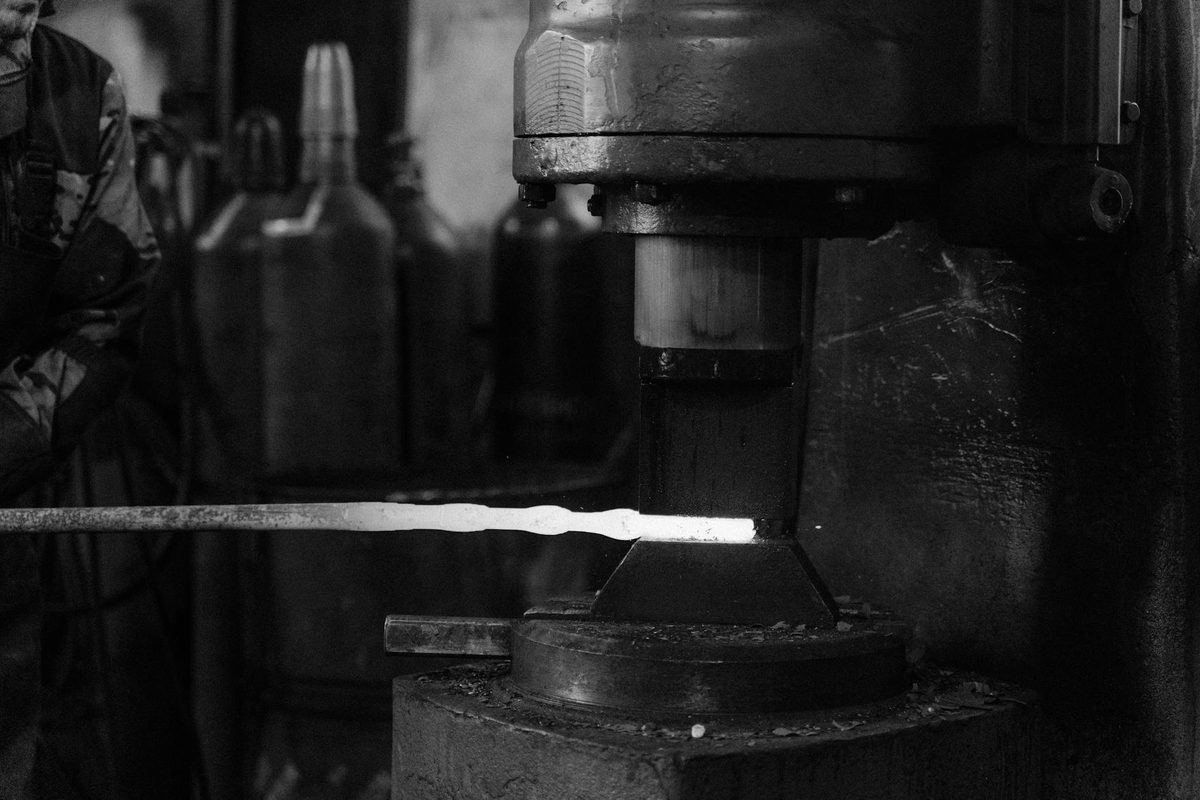
The steel is first heated to above 1,000 degrees Celsius. It is then rapidly cooled (quenched) to lock in the desired grain structure. So far, this is standard.
What is not standard is the next step: the steel is cooled further to -80 degrees Celsius. This sub-zero treatment, sometimes called ice-hardening or cryogenic treatment, transforms any remaining soft austenite in the steel into hard martensite. The result is a more complete and uniform hardening throughout the blade.
Many manufacturers skip cryogenic treatment because it adds time and complexity. Joewell considers it essential, particularly for their stainless steel lines where maximizing hardness and uniformity directly translates to edge performance. We cover this and other cryogenic approaches in Degrees Below Zero.
Urushi Lacquer: 400-Year-Old Technology Meets Modern Scissors
This is the project that makes Joewell unlike any other scissor manufacturer.
漆 (urushi) is traditional Japanese lacquer, harvested from the sap of the urushi tree. It has been used in Japanese craft for over 9,000 years, but the refined lacquerwork tradition that Joewell draws from dates to the Edo period, roughly 400 years ago.
Joewell collaborated with urushi craftsmen in Iwate Prefecture, one of Japan’s historic centers for lacquerwork, to apply traditional urushi finishing to their scissors. This is not spray-on lacquer or a synthetic coating. It is hand-applied natural lacquer, built up in multiple layers by artisans who trained for years in the craft.
The result is a scissor that is simultaneously a professional tool and a piece of Japanese craft art. But the urushi is not purely decorative. Natural lacquer creates an extremely durable, moisture-resistant surface with antibacterial properties. It provides a warm, organic feel in the hand that metal alone cannot achieve. And it ages beautifully; urushi deepens and develops character over years of use rather than degrading.
This collaboration represents something that only a company with Joewell’s history and Japanese manufacturing roots could pull off. Connecting Iwate Prefecture lacquer artisans with precision scissor manufacturing requires deep cultural networks that foreign-owned or recently established companies simply do not have.
Ungezahnt: All Smooth Blades
Every Joewell model is ungezahnt, a German term meaning non-serrated or smooth-blade. This is significant enough to warrant explanation.
Many scissors, particularly those made in Germany and sold at lower price points, have micro-serrations on one or both blades. These tiny teeth grip hair and prevent it from sliding along the blade during cutting. For blunt cutting, serrations work fine. But they make slide-cutting and texturizing techniques difficult or impossible, because the teeth catch the hair instead of letting it pass.
Joewell’s commitment to smooth blades across their entire range means every model supports the full spectrum of Japanese cutting techniques: slide-cutting, point-cutting, channel-cutting, and blunt cutting. The smooth blade, combined with the convex edge geometry, allows hair to be cut without resistance, compression, or tearing.
This is part of Joewell’s German connection as well. Their European distribution is handled through Haaro.de, and the ungezahnt designation is an acknowledgment that smooth-blade design is a specific technical choice, not a default.
1,000 Scissors Repaired Monthly
Here is a number that tells you something about both Joewell’s market presence and their manufacturing philosophy: they repair approximately 1,000 scissors per month.
That repair volume means Joewell has an enormous dataset on how their scissors age, fail, and perform under real-world conditions. Every scissor that comes back for service provides information. Which steel grades show which wear patterns. Which models develop which issues at which usage levels. How different salon environments affect different coatings and alloys.
This feedback loop, from chair to factory and back, is something that newer or smaller manufacturers cannot replicate. It takes decades of market presence and thousands of repairs to build the kind of empirical knowledge that Joewell now possesses.
Award Recognition
Joewell’s design and engineering work has received recognition from three of the world’s most respected industrial design awards:
| Award | Year | Recognized For |
|---|---|---|
| Good Design Award (Japan) | 2017 | CBA-1 cobalt alloy scissors |
| Red Dot Design Award (Germany) | Multiple years | Overall design excellence |
| iF Gold Award (Germany) | Received | Premium product design |
Winning Japanese and German design awards is particularly meaningful for a scissor company, because Japan and Germany are the two global centers of scissor manufacturing. Recognition from both countries validates Joewell’s work on both sides of the traditional “East vs. West” divide in blade-making.
Where Joewell Fits
Joewell occupies the premium tier with specific strengths in cobalt alloys, nickel sensitivity solutions, and traditional Japanese craft integration.
For stylists choosing between premium Japanese manufacturers:
- Joewell excels if you need nickel-free options, prefer thin/narrow blade profiles, or want the unique urushi lacquer finish
- Kasho offers comparable premium quality with broader KAI Group distribution and availability
- Hikari is the choice for stylists focused specifically on convex blade geometry and slide-cutting technique
- Mizutani sits above in the ultra-premium tier with proprietary steels and the 30-step handcraft process
For stylists who want excellent Japanese scissors at more accessible prices, Mina and Ichiro deliver genuine Japanese design principles and steel quality without the premium-tier pricing.
A Century of Cutting
Joewell’s story is ultimately about accumulation. One hundred years of making scissors. Fifty countries served. Thousands of repairs completed and lessons learned. A cobalt alloy that won design awards. A collaboration with lacquer artisans carrying their own centuries of craft tradition.
No single innovation defines Joewell. What defines them is the depth: the century-long accumulation of knowledge, technique, and manufacturing precision that started with surgical instruments and now produces some of the most refined styling tools on earth.
The medical scissors are long gone. But the surgical standard of precision lives on in every pair that leaves the factory.
Sources: Joewell Official, Haaro.de: Joewell Product Knowledge, HairArt Products: Joewell US Distributor