First-pair comparison
Student and Apprentice Scissors: 3 First-Pair Candidates
Compare Joewell Classic for broad size choice, Kasho Blue for a compact offset option, and the Ichiro Taiyo set only when both tools are required. Your written school or salon brief decides which candidates survive.
Compare the three candidatesAt a glance
- Broad size choice: Joewell Classic spans six nominal sizes with separate blade-length and weight figures.
- Compact offset choice: Kasho Blue Offset covers 4.5 to 5.5 inches with a documented flat-head screw.
- Two-tool choice: Ichiro Taiyo is relevant only when the brief calls for both a cutter and a 15-tooth texturizer.
https://www.scissorpedia.com/best-scissors-for-hairdressing-students-and-apprentices/
Three configurations to compare
If you already have a written tool brief, start with these three different decisions. The maker lists the Joewell Classic cutter in six nominal sizes with separate blade-length and weight figures. The Kasho Blue Offset is a compact offset cutter in three sizes. The Ichiro Taiyo set adds a separate texturizer and should stay on the list only when both tools are required.
They are comparison candidates, not first, second and third place. None is automatically suitable because the buyer is a student or apprentice.
Scroll to explore all 3 examples
-
Joewell

Joewell Classic
USD 269 observed guide · 2026-09-09 · USA · 5.5-inch Classic; seller SKU jss55; variant 45772175147266
Broad size comparison
Compare Classic when a wide choice of nominal sizes helps you match the brief. Joewell publishes separate blade length and weight figures for each size, so choose by the exact model rather than the family name.
Maker specification 1 · Maker specification 2
Photo: Scissor Hub Australia
View sizes & specifications -
Kasho

Kasho Blue Offset
Request a current local quote.
Compact offset comparison
Compare Blue Offset when a 4.5, 5 or 5.5-inch nominal size and an offset handle fit the brief. The maker identifies the KCB codes, VG-10W blades and flat-head screw; fit still belongs to the trial.
Photo: Scissor Hub Australia
View sizes & specifications -
Ichiro

Ichiro Premium Series Taiyo VG10 Cutting and Texturizing Scissor Set
Request a current local quote.
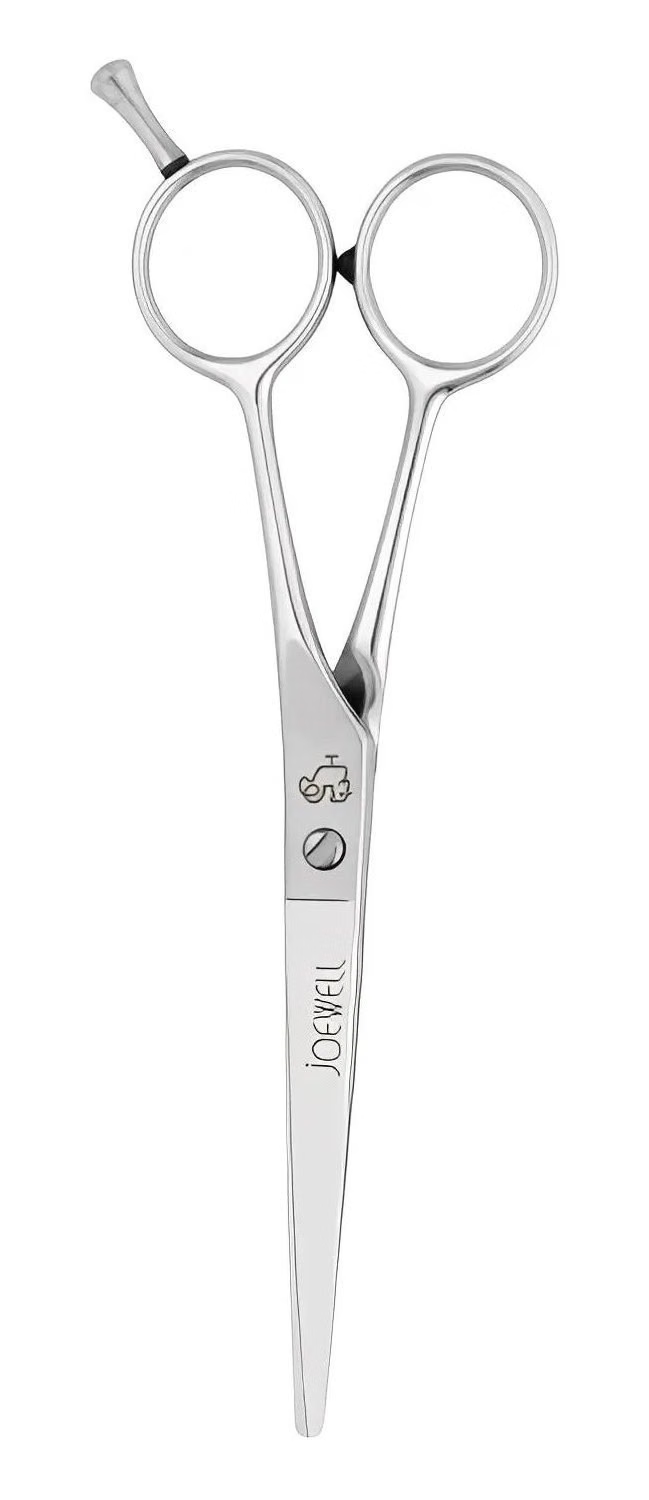
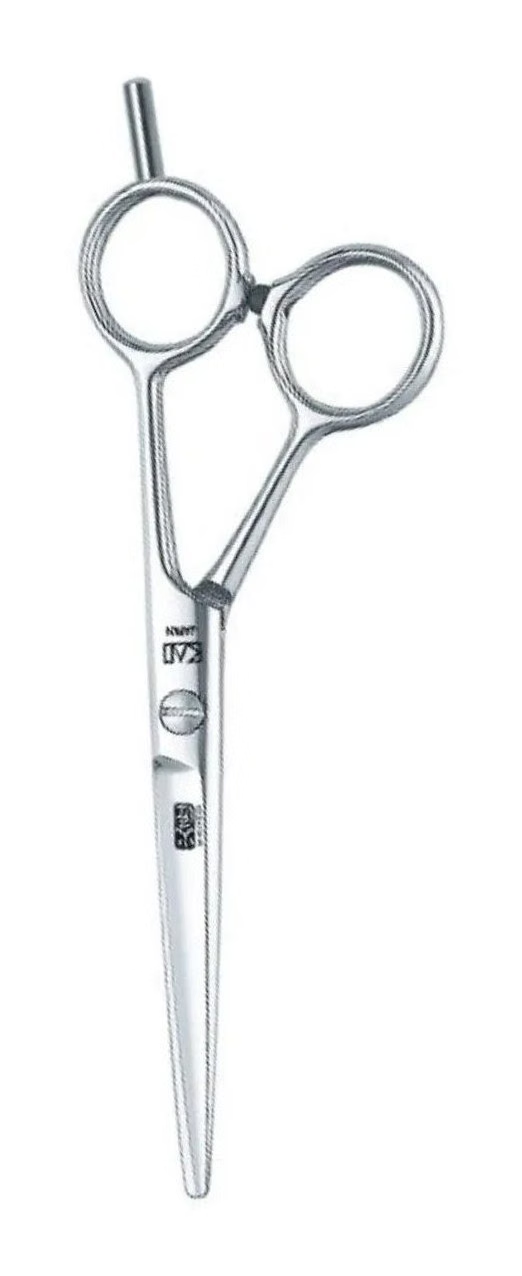

Any displayed price is a dated guide in the labeled currency and market, not a live quote. Where that context is incomplete, we omit the amount. Compare the same size and included pieces, with local tax, delivery and service costs.
The product photographs identify catalog examples. Match the selected model, code, size, handedness and included pieces to the offer before ordering.
Turn the course or workplace brief into pass-or-fail gates
Ask the school or salon for the current requirements in writing. A useful brief says what must be bought now, what can wait, and who can approve a substitute.
| Requirement | Decision it controls | What rules a candidate out |
|---|---|---|
| Required tools | One cutter, or a cutter plus texture tool | A required tool is missing, a supplied tool has an unsuitable configuration, or a paid extra has no current job |
| Handed construction | Right- or left-handed model | The exact model is not documented for the required hand |
| Length or size limit | The permitted nominal size and usable reach | The offered size falls outside the brief |
| Handle or pivot restrictions | Features the program can teach and maintain | The configuration is prohibited or unsupported |
| Trial conditions | Where, how and on what material fit may be checked | The return terms do not permit the planned evaluation |
| Care and service | Approved maintenance and a usable repair route | No acceptable provider will handle the exact pair |
| Deadline | When each tool is actually needed | Delivery or exchange timing misses the training stage |
If the school has not answered those points, use the first-scissors student guide to prepare the request before choosing a product.
Compare what changes the decision
| Candidate | Documented configuration | Put it on the shortlist when | Leave it off when |
|---|---|---|---|
| Joewell Classic | 4.5 to 7-inch options; Joewell publishes blade length and weight for each model; precision flat screw and removable rest | A permitted nominal size is available and you need published blade-length or weight figures to compare candidates | The exact offered handle, handed build or local purchase route cannot be confirmed for the brief |
| Kasho Blue Offset | 4.5, 5 and 5.5-inch KCB offset models; maker-listed VG-10W convex blades and flat-head screw | The brief calls for a compact offset cutter | The required length is larger or the school does not support its adjustment system |
| Ichiro Taiyo set | 5.5 to 7-inch cutter choices plus a 6-inch, 15-tooth texturizer; retailer-listed offset handles and VG-10 | The cutter and texture tool are both required and both can be assessed | You need only a cutter, a different texture configuration or a different handed build |
Joewell and Kasho details come from maker pages. Taiyo details come from the named regional retailer and need confirmation for the exact market and set offered. The material names distinguish the listings; they do not predict which tool will fit or cut better.
Make a two-candidate sheet
Compare the strongest two candidates on the same page. Write unknown when a field cannot be verified.
| Field | Candidate A | Candidate B |
|---|---|---|
| Maker, exact model and code | ||
| Required hand and size | ||
| Cutter, texturizer or set | ||
| Published blade length and weight | ||
| Handle, finger holes, rest and pivot | ||
| Task this tool must cover | ||
| Permitted trial and return deadline | ||
| Seller, warranty and service contact | ||
| Delivered total and currency |
Do not complete one candidate from another model’s page. Joewell’s product table, for example, shows why nominal size, blade length and weight need separate entries.
Run one return-safe fit trial
Read the seller’s rules before removing tags, adjusting tension or cutting any material. Ask an educator or experienced workplace supervisor to keep the task and practice material consistent between candidates.
Record ring contact, thumb movement, balance, tip visibility, reach, opening and closing control, and the ability to stop and reposition. Note any catching, folding, unexpected movement or loss of control. Stop the trial if the tool’s condition changes or the user cannot control it safely.
The result applies to that user, model, setup and task. It is more useful than a generic claim that every beginner needs one handle or length.
Compare the seller and complete order
Ask each seller for a written offer identifying the exact model, size, handedness, included pieces, condition and fulfillment party. Save the trial, return, restocking, warranty and service terms that apply to that offer.
For service, confirm who accepts the exact pair, what work they perform, where it must be sent and how long it may be away. Joewell asks owners to contact it before sending scissors; Kasho publishes a specific US mail-in process. Those examples show why the route must be checked brand by brand and market by market.
Separate the order total from the ownership reserve
Calculate what must be paid now:
required tools + tax + delivery + required fitting or care items = amount payable now
| Purchase amount | Candidate A | Candidate B |
|---|---|---|
| Required cutter | ||
| Required texturizer, if any | ||
| Tax and delivery | ||
| Approved inserts, case or care supplies | ||
| Amount payable now |
Keep possible later costs in a separate reserve instead of presenting them as seller charges:
| Reserve question | Candidate A | Candidate B |
|---|---|---|
| Return postage or restocking exposure | ||
| First inspection or service shipment | ||
| Loan or backup during service | ||
| Reserve you choose to keep available |
Use dated quotes in the buyer’s currency. Historical card amounts are discovery context, not checkout totals. A candidate is affordable only when its amount payable now and the chosen reserve fit the money available. Free extras add no value to this comparison unless they satisfy the brief.
Keep the care record with the pair
Save the maker’s current instructions, receipt, warranty, service contact and model details together. Follow the exact maker and school or workplace process for cleaning, drying, lubrication, adjustment, storage and transport.
After a drop, hard contact, contamination, unusual sound or change in movement, take the pair out of client use and follow the approved inspection route. Keep a suitable loan or backup plan if service would interrupt training or work.
Add another tool only when its job is clear
Revisit the shortlist when the learner gains a permitted task the current kit cannot cover, the fit requirement changes, or inspection shows that service will not restore reliable use. Write the new job before browsing.
A texture tool, longer cutter or premium range is not a graduation prize. It earns its place by solving a current, documented need without weakening the service and backup plan.
Choose the candidate that passes every gate
Choose the least costly complete arrangement that passes the written brief, exact-model check, supervised trial and ownership plan. For many learners that means one cutter. For others it means a required two-tool set. The difference should come from the work, not the label “student”, “professional” or “best”.
A few final questions
Frequently asked questions
Which scissors should a hairdressing student buy first?
Buy the correctly handed cutter that meets the written course brief and performs well in a permitted fit trial. Joewell Classic and Kasho Blue Offset are two different single-cutter comparisons; the Taiyo set belongs on the list only when the course requires both tools.
Should a student buy a cutting and texturizing set?
Only when both pieces are required now. Check the cutter and texturizer separately for handedness, size, task, fit, return terms and service. A set is poor value when one tool has no current job.
How much should a student or apprentice spend?
Set one maximum for the amount payable now and a separate contingency reserve for returns, service or backup. Compare dated quotes for candidates that pass the brief instead of using one universal student price band.
Is an offset handle automatically better for a beginner?
No. Handle labels help narrow the field, but the exact ring shape, pivot, blade reach, balance and user’s movement still matter. Compare the permitted candidates with an educator or experienced workplace supervisor.
Read the original information
Sources and further checks
Evidence status: Three selected specification pages checked 9 September 2026. This is a conditional shortlist, not a hands-on test, current price survey, fit assessment or complete product review.
The maker and retailer pages support the configurations attributed to the three examples. They do not establish personal fit, present stock, a delivered price or a universal student recommendation.
- Joewell — ClassicJoewell's exact Classic maker page supports the family sizes and listed configuration. It does not establish personal fit, current stock, local terms or comparative performance.Checked 9 Sep 2026
- Joewell — Product specification listJoewell's maker specification table separates nominal size, blade length and weight for the Classic models. Those catalog measurements do not prescribe a student size.Checked 9 Sep 2026
- Kasho — Blue Series specificationsBlue offset sizes and KCB model codes, VG-10W convex blades, and flat-head screw. No price or comparative performance verification.Checked 9 Sep 2026
- Japan Scissors Australia — Ichiro Premium Taiyo setRetailer-listed set configuration, cutter lengths, 6-inch 15-tooth companion, offset handles and VG-10 specification. Not independent testing, manufacture verification, or confirmation of stock for a selected variant. No current price is adopted.Checked 9 Sep 2026
- Joewell — Traveler, showroom and service contactJoewell's contact page is one maker-specific example of confirming distribution and service before purchase. It is not a service route for other brands.Checked 9 Sep 2026
- Kasho USA — Sharpening serviceKasho's US mail-in process illustrates why shipping and exact-model eligibility belong in the ownership plan. Confirm the current route in the buyer's own market.Checked 9 Sep 2026
Discussion