Best Professional Scissors in France: Japanese Precision Meets European Tradition

France has one of the most demanding salon cultures in Europe. Parisian stylists train under a system that values precision, technique, and the kind of meticulous craftsmanship that leaves no room for mediocre tools. So when a French coiffeur picks up a pair of ciseaux de coiffure, they are not making a casual purchase. They are making a statement about how they work.
What makes the French market interesting is that it sits at the crossroads of two blade-making empires. Solingen is just across the border. Seki City is on the other side of the world but increasingly present in French salons. Understanding which tradition suits your cutting style, and where to actually source the scissors, is what this guide covers.
The French Cutting Tradition
French hairdressing owes a significant debt to Vidal Sassoon, whose geometric precision cutting transformed the profession worldwide but found particularly fertile ground in France. The tradition of la coupe (the cut) as architecture, where every section and every angle matters, means French stylists tend to care deeply about their tools.
This heritage creates demand for scissors that can handle both the classic French bob, a blunt cut requiring absolute precision, and the modern effilage (texturising) techniques that have become standard in contemporary French salons.
German scissors from Solingen handle the first requirement beautifully. Japanese scissors from Seki City handle the second. The best French stylists use both.
What is Available in France
German Brands (The Established Option)
Germany’s proximity to France means Solingen scissors have been the default professional option for decades. Distribution is mature, service networks exist, and most French sharpeners understand German edge geometry. See also our Germany scissors guide for the full Solingen landscape.
Jaguar is the most widely available professional brand in France. Their European distribution means any salon supply shop worth visiting will carry the range. Entry models start at around €80, and the professional line tops out around €500. Friodur ice-hardened steel, reliable, well-made, and easy to maintain.
Tondeo occupies the step above Jaguar in most French salon supply shops. Their Supra range has a following among French stylists who want Solingen quality with more refinement. €150 to €600.
Cerena is less well known in France but available through European distributors. Good value Solingen scissors for those willing to look beyond the two major names. €100 to €400.
Japanese Brands (The Growing Alternative)
Japanese scissors have gained significant ground in France over the past decade, driven by social media exposure to Japanese cutting techniques and a growing appreciation for harder steel and convex edges.
Kasho has the smoothest path into French salons. KAI Europe handles distribution for the brand, meaning Kasho is available through the same channels that carry German scissors. Their VG-10W and sintered metal blades offer something that Solingen steel does not: hardness above 60 HRC with an edge that stays sharp significantly longer between sharpenings. €350 to €700.
Juntetsu is making inroads with French stylists who have discovered the brand through online channels. The name means “purest steel” and the VG-10 and cobalt alloy options sit at a price point that competes directly with mid-range Solingen scissors. For a French stylist spending €300-€400 on a new pair, Juntetsu offers a compelling alternative with harder steel and a hamaguri convex edge. €220 to €600.
Ichiro is the Japanese brand that works best as a first step for French stylists curious about Japanese scissors. The pricing is accessible, the VG-10 and cobalt steel is genuine, and the value is clear when compared to what you get from a European brand at the same price. €180 to €450.
Mina covers the budget end with 440C Japanese steel at €90 to €180. Useful for students at French hairdressing schools (ecoles de coiffure) who need professional-quality tools without professional-level pricing.
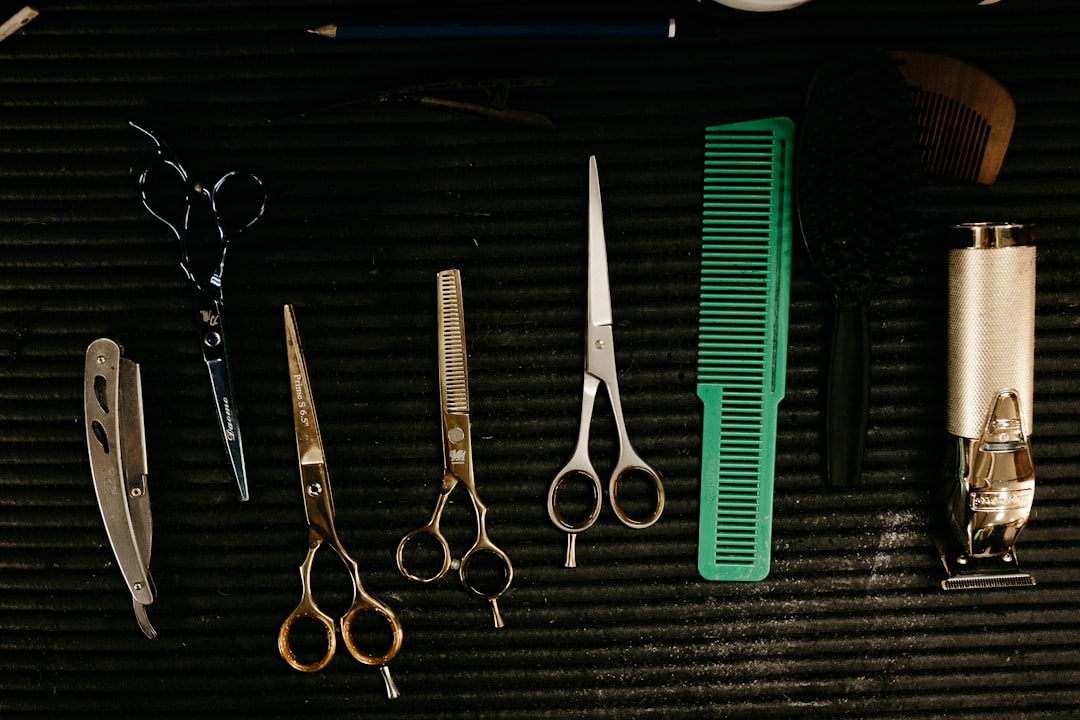
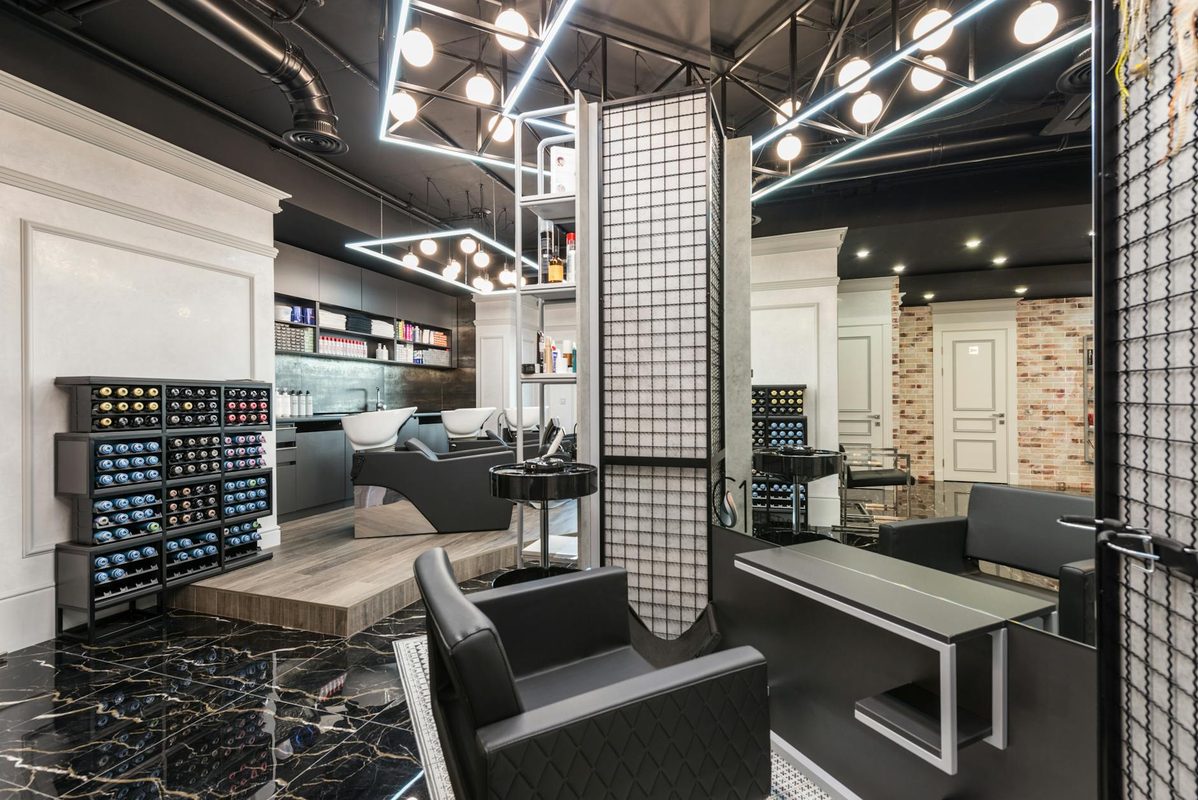 Photo by Max Vakhtbovych via Pexels
Premium and Ultra-Premium
Mizutani has European distribution and represents the pinnacle of Japanese scissors manufacturing. Their Nano Powder Metal steel is in a different league. If you have tried everything else and want to understand what a truly elite scissor feels like, Mizutani is the answer. €700 to €2,500+.
Hikari holds convex edge patents and produces in limited quantities. Difficult to source in France but worth the effort for serious professionals. €500 to €1,300.
Joewell offers nickel-less CBA-1 cobalt alloy, which is relevant for the roughly 11% of stylists who have nickel sensitivity. €350 to €800.
Price Comparison: EUR
| Brand | Origin | Budget (EUR) | Mid-Range (EUR) | Premium (EUR) | Steel Type |
|---|---|---|---|---|---|
| Mina | Japan | €90-€180 | - | - | 440C |
| Jaguar | Solingen | €80-€150 | €200-€350 | €400-€500 | Friodur |
| Cerena | Solingen | €100-€200 | €200-€300 | €300-€400 | Solingen stainless |
| Ichiro | Japan | €180-€250 | €250-€350 | €350-€450 | VG-10, cobalt |
| Tondeo | Solingen | €150-€250 | €250-€400 | €400-€600 | Solingen stainless |
| Juntetsu | Japan | €220-€300 | €300-€450 | €450-€600 | VG-10, cobalt |
| Kasho | Japan (Seki) | - | €350-€500 | €500-€700 | VG-10W, sintered metal |
| Mizutani | Japan (Seki) | - | - | €700-€2,500+ | Nano Powder Metal |
Note: French prices typically match or slightly exceed German pricing. This is a function of distribution chains, not quality differences.
Where to Buy in France
Paris Salon Supply Shops
Paris has a concentration of professional salon supply shops, particularly in the 10th and 11th arrondissements. These stock mainstream German brands as standard and some carry Japanese imports. The advantage of buying in person is the ability to feel the weight, test the action, and compare side by side.
European Online Retailers
The EU single market means German online retailers ship to France without customs complications. Specialist scissors retailers across Europe increasingly stock both German and Japanese brands with French-language support.
Direct from Japanese Brands
Some Japanese brands ship to France through their international online stores. Kasho is available through KAI Europe’s distribution. Juntetsu and Ichiro are accessible through specialist online retailers that serve the European market.
Trade Shows
Mondial Coiffure Beaute in Paris is the major French trade event where scissors manufacturers exhibit. MCB typically features both European and Japanese brands, giving you the rare opportunity to try scissors from both traditions under one roof.
Technique Match: German vs Japanese for French Cutting
| Technique | Better Suited | Why |
|---|---|---|
| Coupe carree (blunt bob) | German (Solingen) | Precise, heavier scissors with konvex edge give clean blunt lines |
| Effilage (texturising) | Japanese | Convex hamaguri edge and lighter weight enable smooth texture cuts |
| Coupe a sec (dry cutting) | Japanese | Harder steel and finer edge give cleaner dry cuts |
| Coupe au rasoir (razor cutting) | Either | Depends on razor, not scissors |
| Point cutting | Japanese | Convex edge tip precision suits delicate point work |
| Scissor-over-comb | German | Weight and konvex edge provide control in this technique |
Maintenance Considerations for French Stylists
Finding a sharpener (affuteur) in France who can handle both German and Japanese edges is not as easy as in Germany. Most French sharpeners are trained on European edge geometry. If you invest in Japanese scissors, confirm that your sharpener has experience with hamaguri convex edges before handing over your prized Kasho or Juntetsu.
Some Japanese brands maintain recommended European service partners. Ask at the point of purchase. Getting this wrong once can permanently alter the edge profile of a quality Japanese scissor.
Recommendations by Profile
Classic French stylist focused on precision bobs and geometric cuts: Jaguar or Tondeo from Solingen. Proven, locally serviceable, and built for the work you do.
Modern stylist doing texture, effilage, and creative cutting: Add a Japanese pair. Juntetsu or Ichiro at mid-range, Kasho if budget allows. The convex edge changes how texture work feels.
Student or newly qualified (jeune coiffeur): Mina at €90-€180 or entry Jaguar at €80-€150. Learn your cutting style before spending serious money.
Stylist with nickel sensitivity: Joewell CBA-1 cobalt alloy is nickel-less. Worth investigating if you have contact dermatitis from standard scissors.
No budget limit: Mizutani for Japanese, Tondeo Supra for German. Ideally, one of each.
Recommended by Price Tier


Prices are approximate guides. Visit retailer for current pricing and availability.
The Bottom Line
The French market gives you excellent access to both the Solingen and Seki City traditions. German scissors are easy to source, easy to maintain, and perfectly suited to the precision cutting that French hairdressing demands. Japanese scissors add a dimension of edge performance and lightness that modern French techniques increasingly call for.
For all Japanese brands available in Europe, see our Japanese scissors ranking.
The most capable French stylists are not loyal to one tradition. They are building a kit that covers the full range of what their clients need. Start with what matches your primary technique, and expand from there.