US price comparison
Professional Scissors by Price: 5 US Buying Examples
Five US listing snapshots run from US$131.20 for a 5-inch Mina Sakura II to a US$1,100 Mizutani ACRO Stellite reference whose seller has paused orders. Compare the exact size and purchase terms before deciding what the next price step buys.
Compare the five pricesAt a glance
- One cutter per price: no cutting-and-texturizing sets are mixed into the comparison.
- Exact listings: US dollars, US market, new items and named size or seller identifier, checked 9 September 2026.
- Separate totals: item price is the first filter; calculate the amount payable now and a later contingency reserve separately.
https://www.scissorpedia.com/best-professional-scissors-at-every-price-point-from-150-to-1500/
Five US prices, with the selected listing attached
The five item subtotals below were observed on 9 September 2026, from US$131.20 to US$1,100. They cover new single cutters in the US market. They are a small set of buying examples, not the market’s lowest prices or a ranking of cutting quality.
| Exact cutter and nominal size | Observed item subtotal | Seller and selected identifier | Listing status on 9 September |
|---|---|---|---|
| Mina Sakura II, 5.0 inches | US$131.20 | JPScissors.com · MIN-SAK-C50 · variant 48701118480690 | In stock |
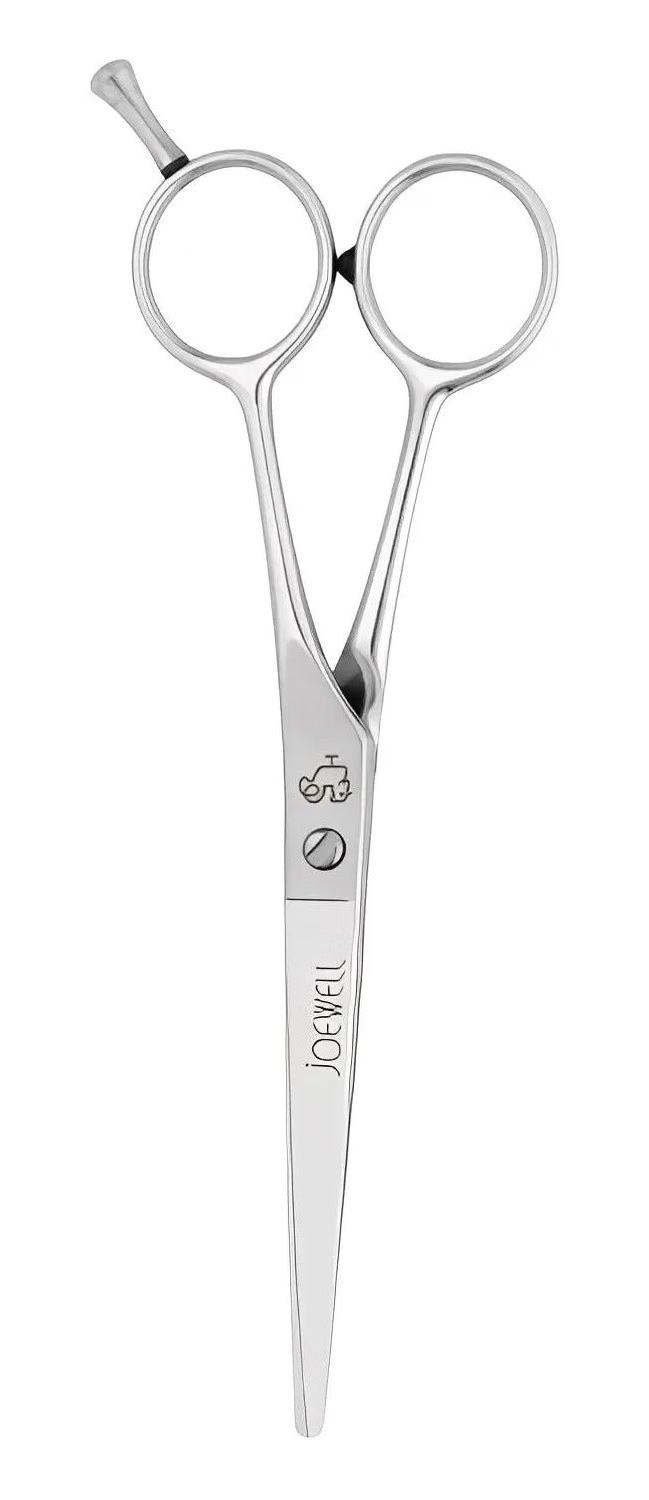
| Joewell Classic, 5.5 inches | US$269 | Shear World · jss55 · variant 45772175147266 | In stock |
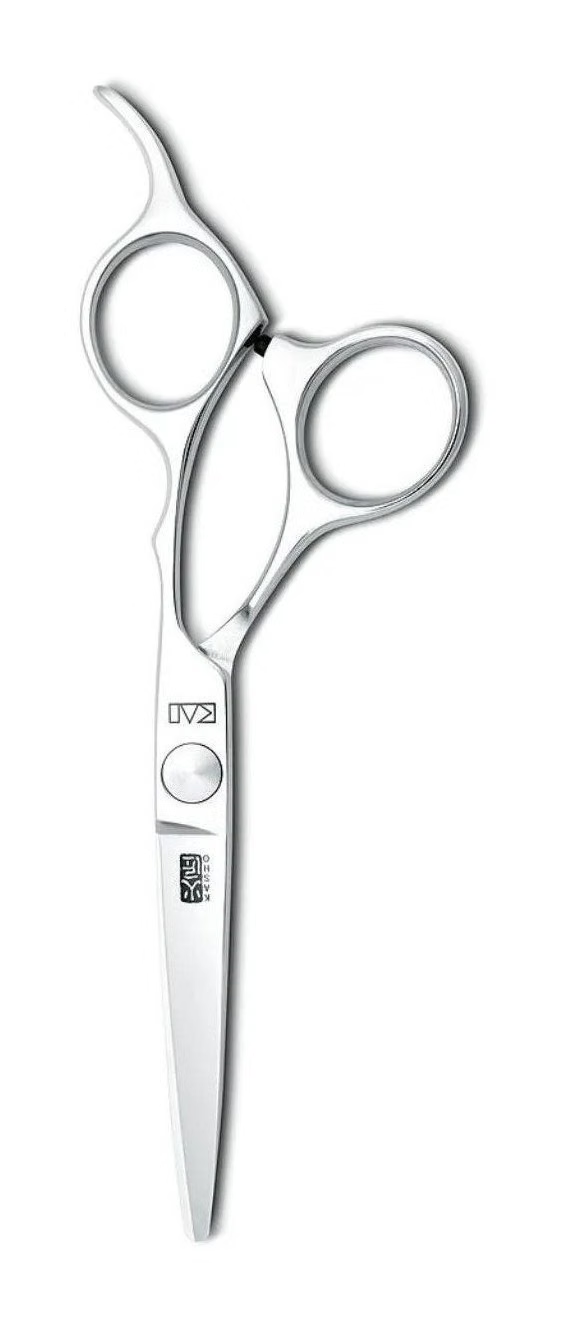
| Jaguar CJ4 Plus, 5.5 inches | US$319 | Bonika · J-SL-9255 · variant 35631094792358 | Available |
| Kasho Chrome Offset, 5.5 inches | US$470 | ProStylingTools · KAS-KCR-55-OS-DS · variant 52313436258670 | Drop ship; confirm dispatch |
| Mizutani ACRO Stellite, 5.5 inches | US$1,100 | Scissor Dude · variation 3163 | Orders paused despite InStock data |
Tax and delivery are excluded from these comparison amounts and depend on the exact order. Stock labels are historical observations, not delivery promises. Scissor Dude’s sitewide ordering pause takes precedence over its product’s InStock data: the Stellite amount is a price reference until the seller confirms orders have resumed. Its link does not lock the size. The seller identifiers above are not interchangeable with maker model codes.
The sample keeps one cutter per listing so a set’s second tool cannot inflate the apparent price step. It also keeps actual listed sizes visible: Mina’s 5-inch example is not the same nominal length as the other four. Request a different size whenever the brief requires one, and use that size’s own quote.
Scroll to explore all 5 examples
-
Mina

Mina Sakura II · 5.0-inch offer
USD 131.20 observed guide · 2026-09-09 · USA · 5.0-inch cutter; SKU MIN-SAK-C50; variant 48701118480690
Lower item price comparison
Consider the selected 5-inch listing when that nominal size meets the brief. Its price leaves more of a fixed purchase budget for separately payable essentials; it does not establish material, personal fit or a universal first pair.
Photo: Scissor Hub Australia
View sizes & specifications -
Joewell

Joewell Classic · 5.5-inch offer
USD 269 observed guide · 2026-09-09 · USA · 5.5-inch Classic; seller SKU jss55; variant 45772175147266
Published measurements
Joewell publishes a 53 mm blade length and 36.5 g weight for its 5.5-inch model. Use those measurements to prepare a comparison, then match the seller's Classic offer to the required hand and fit.
Specification and offer 1 · Specification and offer 2
Photo: Scissor Hub Australia
View sizes & specifications -
Jaguar

Jaguar CJ4 Plus · 5.5-inch offer
USD 319 observed guide · 2026-09-09 · USA · 5.5-inch cutter; SKU J-SL-9255; variant 35631094792358
Offset alternative
Compare the 5.5-inch CJ4 Plus with Classic when an offset handle is a purchase requirement. Jaguar documents the design and Smart Spin screw; the USD 319 offer belongs to this size, not the USD 329 6-inch option.
Specification and offer 1 · Specification and offer 2
Photo: Scissor Hub Australia
View sizes & specifications -
Kasho

Kasho Chrome Offset · 5.5-inch offer
USD 470 observed guide · 2026-09-09 · USA · 5.5-inch KCR-55 OS; seller SKU KAS-KCR-55-OS-DS; variant 52313436258670
Different adjustment system
The KCR-55 OS supplies another documented offset configuration with a ratchet flat-head screw. Compare that difference in a permitted trial and obtain a dispatch date for the observed drop-ship offer.
Specification and offer 1 · Specification and offer 2
Photo: Scissor Hub Australia
View sizes & specifications -
Mizutani

Mizutani ACRO Stellite · 5.5-inch price reference
USD 1100 observed guide · 2026-09-09 · USA · 5.5-inch ACRO Stellite; seller variation 3163
Higher price reference
The listing shows one 5.5-inch cutter at USD 1,100, but the seller has paused orders. Use it as a price reference until order acceptance and the exact supplied maker code are confirmed.
Listing and model scope 1 · Listing and model scope 2
Photo: Scissor Dude
View sizes & specifications



Any displayed price is a dated guide in the labeled currency and market, not a live quote. Where that context is incomplete, we omit the amount. Compare the same size and included pieces, with local tax, delivery and service costs.
The shelf photographs identify catalog examples; they do not establish the size or exact variant that will arrive. Match the listing to the product record and seller’s order confirmation.
Set an item-price ceiling before choosing a band
Start with what the purchase must accomplish: required hand, nominal size, usable reach and one current cutting task. Then reserve the amounts you must pay separately for tax, delivery and essential setup or care. What remains is the item-price ceiling you can use against the table.
Keep possible later returns, service and backup spending in a separate contingency plan. They affect affordability, but they are not automatically part of today’s seller invoice. The purchase-cost worksheet keeps those calculations separate.
The following windows group these item subtotals. A candidate can move to another window when its size, seller or price changes. The window itself says nothing about who should use the pair.
Under US$200: test the exact lower-price option
The selected Mina Sakura II offer is US$131.20 for one 5-inch cutter. Keep it on the shortlist when that size meets the brief and its written trial and return terms suit the planned evaluation. A lower item subtotal can leave room for separately payable essentials without requiring a second tool.
Mina’s current premium catalog names different models; its material and manufacture descriptions do not establish Sakura II’s specifications. Obtain the exact product documentation if a particular blade, alloy or origin is a purchase condition.
US$200 to under US$400: compare Classic and CJ4 Plus
The selected Joewell Classic and Jaguar CJ4 Plus offers are US$269 and US$319. Both are nominally 5.5 inches. Their US$50 item-price difference gives you a concrete comparison rather than a reason to assume one is better.
| Comparison | Joewell Classic 5.5 | Jaguar CJ4 Plus 5.5 |
|---|---|---|
| Maker model | Joewell 55 | 9255 |
| Published detail useful before a trial | 53 mm blade length and 36.5 g weight | Right-handed offset design |
| Maker’s blade and adjustment wording | Standard Joewell blade; precision flat screw | Semi-convex blades; Smart Spin screw |
| Decision to resolve | Do the offered configuration and measured reach meet the brief? | Does the documented offset configuration suit the required hand and trial? |
These are Joewell and Jaguar catalog details, not ScissorPedia measurements or fit results. Do not turn nominal size into blade length. Do not substitute Classic PRO for Classic. Bonika’s 6-inch CJ4 Plus was US$329, so a size change also changes this price comparison.
US$400 to under US$800: require a useful difference
The selected Kasho Chrome Offset is US$470 for a 5.5-inch cutter. The maker identifies KCR-55 OS, semi-convex hollow-ground satin blades and a ratchet flat-head screw. Those details give you something specific to compare with the other offset candidate; they do not establish a better result.
Write down the difference you intend to evaluate before accepting the extra spend. If it is the handle or adjustment system, confirm that the seller permits a suitable trial. The observed listing was drop ship, so obtain the expected dispatch date and a workable delivery or cancellation arrangement before relying on it for a deadline.
US$800 and above: identify the reason for a specialist spend
The selected Mizutani ACRO Stellite listing shows US$1,100 for one 5.5-inch cutter, with orders paused. Keep it as a price reference while confirming a usable purchase route. A higher price is worth investigating when you can name a required task or configuration that the lower-price shortlist has not met. Confirm the supplied maker code: the current global Stellite family contains several distinct numbered cutters, so a regional family name is not enough to borrow their specifications.
This sample contains no observed offer at US$1,200 or above. For a quote beyond that amount, request the exact model evidence and the same permitted trial, return and service details you would for the less expensive candidates.
Make the higher quote answer one question
Ask: what useful difference does this exact offer provide for my current work? Record the answer in one sentence, then identify how it can be checked.
| Proposed reason to spend more | Useful check |
|---|---|
| A needed size or handed construction | Exact maker model and seller variant |
| A handle or adjustment system you prefer | A trial permitted under the written purchase terms |
| A particular blade configuration | The exact maker specification and suitability for the intended task |
| A better purchase arrangement | Written delivery, return and applicable support terms for this order |
If both candidates meet the brief and no useful difference emerges, the higher subtotal has not earned its place in the budget. A steel label or brand name alone cannot settle that decision.
Turn the shortlist into an order you can check
For the strongest two candidates, obtain the selected size, handedness, condition, seller SKU, item price and included pieces in writing. Confirm the amount payable now, trial restrictions, return deadline and destination, and who will receive the pair if service is needed. Treat accessories as useful only when they fill a real gap; a free extra need not disqualify an otherwise suitable offer.
Use the seller and counterfeit checks when product identity or the seller’s connection to the maker is unclear. An inspected listing is evidence of what was offered, not certification of the seller.
Keep two candidates and one clear reason
Choose two currently purchasable listings that fit the brief and item-price ceiling. Complete their purchase totals, then resolve the one configuration or purchase-term difference that matters. Keep the Stellite amount as a reference unless Scissor Dude confirms that orders have resumed. Move to a longer ownership comparison only when future service or replacement is what could change the choice.
A few final questions
Frequently asked questions
What are the prices of these five professional scissors?
On 9 September 2026 the selected US item subtotals were US$131.20 for Mina Sakura II 5.0, US$269 for Joewell Classic 5.5, US$319 for Jaguar CJ4 Plus 5.5, US$470 for Kasho Chrome Offset 5.5 and US$1,100 for Mizutani ACRO Stellite 5.5. Each amount belongs to its named seller and variant, before offer-specific tax and delivery. Scissor Dude had paused orders, so the Stellite amount is a price reference rather than a currently purchasable offer.
Are these the best scissors at each price?
They are five conditional comparison examples, not winners from a hands-on or market-wide test. Keep only candidates that meet the task, handedness, size, fit, purchase terms and service requirements.
Does the quoted price cover every size?
No. The Jaguar example shows why: Bonika’s observed 5.5-inch CJ4 Plus was US$319, while its 6-inch option was US$329. Select the exact variant and confirm the new total when changing size, seller or configuration.
Should I use the whole budget for a higher-priced pair?
First cover the amount payable now, including separately charged tax, delivery and essential setup or care items. Keep a separate reserve for possible return, service or backup costs. A higher item price is justified only by a difference that meets the work brief.
Read the original information
Sources and further checks
Evidence status: Five exact US item-price listings and selected maker specifications checked 9 September 2026. Prices and stock labels are dated observations, excluding offer-specific tax and delivery. This small comparison is not a market survey, seller-authorization audit, hands-on test or complete product review.
Retailer sources establish the named listing, selected size, item subtotal and status at observation. Separate maker pages support only the specifications attributed to them.
- JPScissors.com — Mina Sakura II 5.0-inch US offerDirectly inspected US listing: new Mina Sakura II 5.0-inch cutter, SKU MIN-SAK-C50, variant 48701118480690, USD 131.20 item subtotal and in-stock status at observation. Tax and delivery are offer-specific and are not included in the adopted amount. No maker specification, seller authorization, fit, performance or future availability claim adopted.Checked 9 Sep 2026
- Shear World — Joewell Classic 5.5-inch US offerDirectly inspected US listing: new Joewell Classic 5.5-inch cutter, seller SKU jss55, variant 45772175147266, USD 269 item subtotal and in-stock status at observation. This is Classic, not Classic PRO. Tax and delivery are offer-specific and are not included in the adopted amount; no seller authorization or performance claim adopted.Checked 9 Sep 2026
- Bonika — Jaguar CJ4 Plus 5.5-inch US offerDirectly inspected US listing: new CJ4 Plus 5.5-inch cutter, SKU J-SL-9255, variant 35631094792358, USD 319 item subtotal and available status at observation. The separate 6.0-inch option was USD 329 and is not the quoted variant. Tax and delivery are offer-specific and are not included in the adopted amount; no performance or future-stock claim adopted.Checked 9 Sep 2026
- ProStylingTools — Kasho Chrome Offset 5.5-inch US offerDirectly inspected US listing: new Chrome Offset 5.5-inch cutter, seller SKU KAS-KCR-55-OS-DS, variant 52313436258670, USD 470 item subtotal and drop-ship status. Drop shipping does not establish a dispatch or delivery date. Tax and delivery are offer-specific and are not included in the adopted amount; no maker specification or seller-authorization claim adopted.Checked 9 Sep 2026
- Scissor Dude — Mizutani ACRO Stellite 5.5-inch US listingDirectly inspected US listing: new ACRO Stellite 5.5-inch cutter, variation 3163, USD 1100 listed item subtotal. The sitewide notice says orders are temporarily paused, despite InStock structured data; this is a price reference, not a currently purchasable offer. The URL does not lock the size. Tax and delivery are offer-specific and excluded. No exact current global-model equivalence or performance claim adopted.Checked 9 Sep 2026
- Joewell — ClassicExact maker page lists Joewell Classic 45 through 70 in 4.5 through 7.0-inch nominal sizes with standard Joewell blade, Supreme Stainless Alloy, precision flat screw, removable finger rest and Made in Japan wording. No Ireland stock, price or fit claim is established.Checked 9 Sep 2026
- Kasho — Chrome series specificationsDirect maker-page inspection: KCR-55 OS and KCR-60 OS, 5.5/6.0-inch offset models, semi-convex hollow-ground satin-finished blades, ratchet flat-head screw and forged finger rest. The page does not establish VG-10W, HRC, polished chrome plating, DOS or personal comfort. No price or comparative performance adopted.Checked 9 Sep 2026
- Jaguar — CJ4 Plus specificationsDirect maker page and its product JSON inspected: CJ4 Plus models 9250/9255/9260/9265/9270 in 5.0/5.5/6.0/6.5/7.0 inches; offset right-handed design, semi-convex blades, Smart Spin screw and SOLINOX58 stainless-steel wording. Retain the maker's material name without assigning a canonical alloy equivalence. No clinical, allergen, closing-force, lifespan or US-offer claim adopted.Checked 9 Sep 2026
- Mizutani — Current Stellite alloy model familyDirect maker-page inspection distinguishes Stellite alloy 355/360 and 555/560 cutters, alongside separate toothed models. A US listing called ACRO Stellite does not by itself select one of those current numbered models. Used to preserve that identity boundary, not to transfer specifications or Japanese prices to the US offer.Checked 9 Sep 2026
- Mina Scissors — Product rangeMaker range inspected for identity scope. Its current premium models do not verify the regional Sakura II's material or manufacture.Checked 9 Sep 2026
Discussion