Juntetsu vs Kasho: Two Premium Japanese Scissor Routes
Compare Juntetsu Mastersmith and Kasho Millennium by material, size, configuration, fit, seller terms, and service support.

Juntetsu and Kasho both deserve a place in a premium professional shortlist, but the two pictured products solve different problems. Juntetsu Mastersmith is a matched 7.0-inch cutting and texturizing system. Kasho Millennium Offset is a single cutter offered in two shorter lengths. Their useful differences begin with length, set format, and the buyer’s actual work.
That configuration difference is more useful than trying to rank cobalt, ATS-314, sintered steel, or brand heritage in the abstract.
Meet the two brands


Matched 7-inch system
Juntetsu
- Base Japan
- Origin Japan
- VG-10
- Cobalt Alloy
- 440C
Brand profile Current official range
The Mastersmith image shows the exact set discussed here; check the official range and retailer for current configurations and stock.

Compact offset cutter
Kasho
- Founded 1984
- Base Seki City / Tokyo
- Origin Japan
- VG-10W
- VG-10
- ATS-314
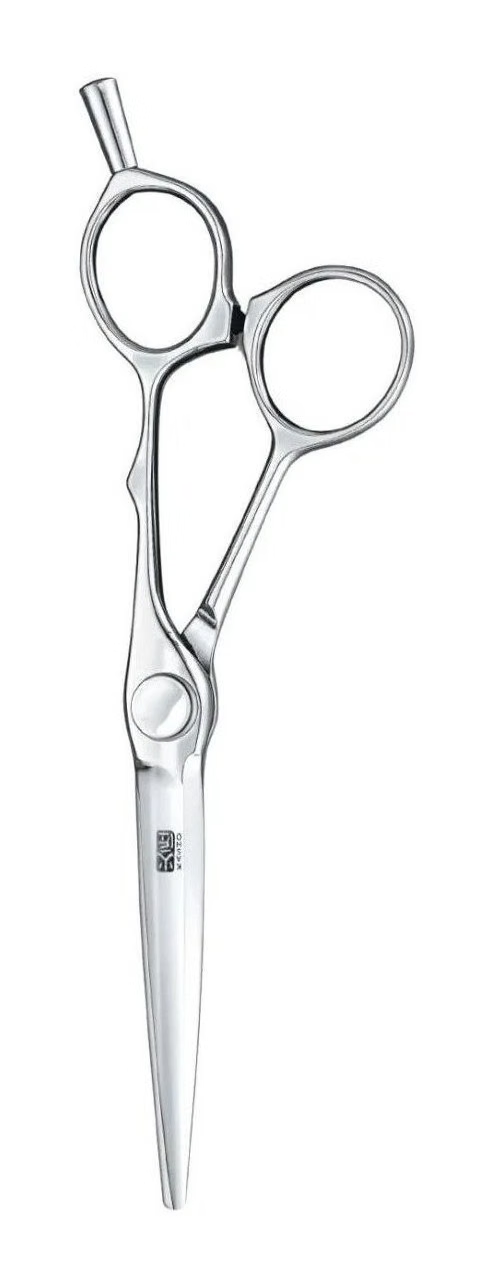
The Millennium image shows the exact product discussed here; check the current regional specification, code, and seller terms.
The two products, side by side
-

-

Product photos from the ScissorPedia catalog; see each product page for provenance.
Quick answer
- Start with Juntetsu if you already need a premium matched long-blade system and want to compare defined texturizing-ratio choices.
- Start with Kasho if you want a premium single cutter in a more compact size and prefer to build the rest of the kit separately.
- Do not choose from alloy language alone. Verify the exact model, fit, seller, returns, warranty, and qualified service route.
At a glance
| Comparison point | Juntetsu Mastersmith set | Kasho Millennium Offset |
|---|---|---|
| Product format | Cutter and texturizer | Cutting scissor |
| Size | 7.0 inches for both tools | 5.3 and 6.2 inches |
| Material | ATS-314 cobalt | Sintered steel |
| Handle | Offset | Offset |
| Distinctive choice | 15%, 20%, or 30% texturizing ratios | Two compact-to-everyday cutter lengths |
The table describes the pictured products only. Each brand offers additional models and configurations.
Juntetsu: a matched system with a specialist role
The Juntetsu Mastersmith Cobalt 7 Set has a clear purpose: a matched long-blade pair for cutting and texturizing work.
The set pairs:
- a 7.0-inch ATS-314 cutting scissor;
- a same-length texturizing scissor;
- a choice of 15%, 20%, or 30% removal ratio; and
- offset handles on both tools.
That is a distinctive proposition for barbers and long-blade specialists who already work over comb or want cutting and texture tools at the same reach. The ratio choice also lets a buyer define the kind of texture work being purchased instead of treating every texturizer as interchangeable.
Availability can vary by market and configuration. Check Juntetsu’s current official collection and the retailer listing for the exact set or the closest available configuration.
Kasho: a focused premium cutter
The Kasho Millennium Offset takes a different route. It is a single offset cutting scissor in 5.3- and 6.2-inch lengths, with sintered-steel construction and a mirror-polished finish.
This format suits a buyer who wants to select the main cutter first and does not need the matched 7.0-inch texturizing system represented by Juntetsu. The two sizes also create a useful fit discussion: compact precision versus a more general salon length.
Kasho’s broader range contains multiple collections and configurations. Verify the exact regional Millennium code because seller naming, sizes, and included support can vary.
How to compare the materials
Mastersmith uses ATS-314 cobalt, while Millennium uses sintered steel. Those materials do not decide the following points by themselves:
- sharpness or cutting feel;
- edge life or sharpening interval;
- toughness or drop response;
- corrosion behavior;
- workmanship across the whole brand; or
- value for a particular buyer.
Ask the maker or retailer for the material, finished hardness if published, blade geometry, edge, pivot, and care instructions for the exact model.
Size and set format matter more day to day
The largest practical difference is visible without a metallurgy lesson.
Juntetsu’s pictured system is 7.0 inches. It deserves a fit trial from someone comfortable controlling a longer blade and genuinely needing both tools.
Kasho’s cutter offers 5.3- and 6.2-inch options. It may suit a buyer seeking compact control or a familiar everyday length without purchasing a matched texturizer.
Within the seller’s written trial conditions, check ring contact, thumb travel, opening span, balance, blade visibility, reach, and control in the work you actually perform. Neither premium price nor offset handle guarantees comfort.
Compare the complete transaction
Before choosing, check:
- Exact model code, size, handed build, and condition
- Published material and construction details for the exact model
- Current delivered price, tax, shipping, and included items
- Trial and return window, acceptable condition, and destination
- Warranty issuer, exclusions, parts, and communication route
- A qualified provider willing to service the exact edge and pivot
- Shipping, insurance, downtime, and backup-tool needs
Prices and availability change. Confirm the exact size, configuration, and delivered price with the current seller before ordering.
Which route belongs on your shortlist?
Choose the Juntetsu route when
- you are deliberately shopping for a premium professional tool;
- a matched 7.0-inch cutter and texturizer suits established work;
- a stated removal-ratio choice helps define the texture tool; and
- you will verify today’s nearest model and local support.
Choose the Kasho route when
- a premium individual cutter is the immediate need;
- 5.3 or 6.2 inches is closer to the required reach;
- you want to select any texturizer separately; and
- the current regional seller and service route are clear.
Bottom line
Juntetsu Mastersmith is the specialist matched system in this comparison. Kasho Millennium provides the more compact, single-cutter route. Both are positive shortlist choices when their exact configurations match the buyer.
Use the product imagery to identify the models, then verify current availability. Let fit, task, seller terms, and service, rather than a broad steel claim, make the final decision.
Frequently Asked Questions
4 answers you can open one at a timeIs Juntetsu or Kasho better?
Neither brand is universally better. Juntetsu Mastersmith is a matched long-blade set, while Kasho Millennium is an individual cutter available in shorter lengths. Compare size, handedness, blade, handle, fit, trial terms, warranty, and service.
What makes the Juntetsu Mastersmith set distinctive?
It combines a 7.0-inch ATS-314 cutter with a same-length texturizer and 15%, 20%, or 30% removal-ratio choices. That focused long-blade configuration gives barbers and over-comb users a clear use case to evaluate.
What makes Kasho Millennium distinctive?
The pictured Millennium is an offset cutter in 5.3- and 6.2-inch sizes with sintered-steel construction and a mirror-polished finish. Verify the current regional model code and specification before buying.
Does the steel name decide which pair will hold an edge longer?
No. Geometry, heat treatment, use, care, incidents, and sharpening quality all affect the finished tool, so the material name alone cannot establish edge life.
Contents
Discussion