The Complete Guide to Scissors for Natural Hair: Types 2-4
Practical scissor selection for natural, textured, and coily hair — matching steel, edge type, and blade length to curl patterns from Type 2 waves through Type 4 coils.
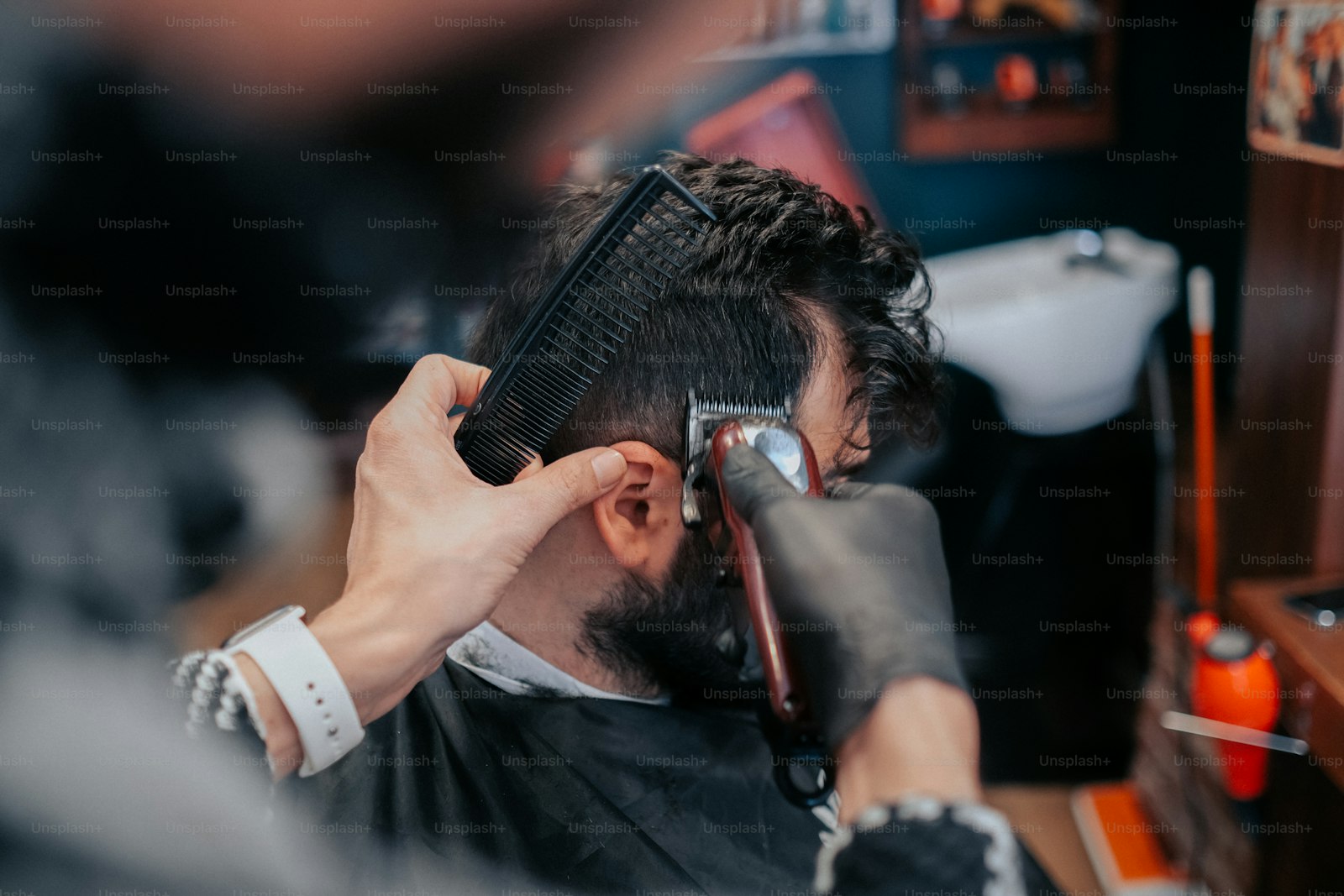
Natural hair demands dry cutting, tougher steel, and deliberate size selection. A scissor that performs well on straight wet hair may struggle on dense Type 4 coils — the forces are different, the technique is different, and the tool selection should reflect that.
Why natural hair needs different scissors
Cutting natural hair is not the same as cutting straight or lightly wavy hair with a few technique adjustments. The physical properties of textured hair — from Type 2 waves through Type 4 coils — create different mechanical demands on your scissors.
Three factors change everything:
Dry cutting is standard. Natural hair shrinks 25% to 75% when wet depending on curl pattern. A Type 4c coil can shrink to less than a quarter of its stretched length. Cutting wet means guessing at the final shape. Most natural hair specialists work on dry or blown-out hair, which means the scissors must cut cleanly without the lubrication that water provides. This puts more stress on the edge and requires a sharper initial geometry.
Density is higher. A square centimetre of Type 4 scalp can contain 20-30% more individual hair strands than the same area of Type 1 straight hair. Each cut engages more hair per stroke. This lateral load — many hairs pressing against the blade simultaneously — demands toughness over extreme hardness.
Individual strand structure is different. Curly and coily strands have an oval or flat cross-section rather than round. They are more prone to snagging on rough blade edges. A clean, sharp convex edge reduces the risk of pulling or tearing, which causes client discomfort and split ends.
Curl type reference and scissor implications
Understanding the curl classification system helps you match tools to the specific hair you will cut most often. This is the Andre Walker typing system used across the industry.
| Hair type | Pattern | Density | Shrinkage | Key scissor consideration |
|---|---|---|---|---|
| Type 2a-2c | Wavy, S-shaped | Medium | 5-15% | Standard scissors work; precision edge preferred |
| Type 3a | Loose curls, diameter of sidewalk chalk | Medium-high | 25-35% | Convex edge for clean dry cuts |
| Type 3b | Springy curls, diameter of marker | High | 35-50% | Tougher steel; 5.5-6.0” for curl-by-curl |
| Type 3c | Tight corkscrew curls, pencil diameter | High | 40-55% | VG-10 or 440C; convex edge essential |
| Type 4a | Tightly coiled, visible S-pattern | Very high | 50-65% | Maximum toughness; avoid brittle steels |
| Type 4b | Z-pattern bends, less defined coil | Very high | 60-75% | 440C recommended; durable edge geometry |
| Type 4c | Tight zig-zag, minimal coil definition | Maximum | 65-75%+ | Strongest toughness tier; 6.0-6.5” for bulk work |
Most clients have multiple curl types across their head — looser at the crown, tighter at the nape. Your scissor selection should accommodate the densest texture you will encounter on that client.
Steel recommendations by curl type
The steel in your scissors determines how the edge responds to the specific stresses of natural hair cutting. Here is the practical breakdown.
Types 2-3a: precision-focused
For wavy to loose curly hair, the cutting forces are moderate. You can prioritize edge retention and sharpness over toughness.
- VG-10 (60-62 HRC) — the best all-round choice. Holds a razor-sharp convex edge for clean dry cuts. The cobalt and vanadium content gives it excellent wear resistance.
- ATS-314 (60-62 HRC) — nitrogen-enhanced stainless with high wear resistance. Ideal if you do a lot of precision dry shaping on Type 2-3a patterns.
Types 3b-3c: balanced performance
The step up in density and shrinkage means you need a steel that balances sharpness with resilience under lateral load.
- VG-10 remains a strong choice here if you maintain it rigorously — sharpening every 500-700 haircuts rather than pushing to 1,000.
- 440C (58-60 HRC) — slightly softer, significantly tougher. Where VG-10 can develop micro-chips under heavy lateral load, 440C absorbs the stress. Easier to sharpen and more forgiving of the forces generated by dense 3b-3c curls.
Types 4a-4c: toughness first
Type 4 hair generates the highest cutting forces in routine salon work. The dense, tightly coiled strands create significant lateral pressure on the blade edge with every cut.
- 440C (58-60 HRC) — the workhorse recommendation for dedicated Type 4 specialists. The lower hardness means the edge can micro-deform without chipping. You will sharpen more frequently, but the edge stays usable between sharpenings rather than developing chips that tear hair.
- VG-1 (59-61 HRC) — a less common but effective alternative. Slightly harder than standard 440C with good toughness.
- Avoid powder metallurgy steels (SG2, ZDP-189) for heavy Type 4 work. Their extreme hardness (62-67 HRC) makes them brittle under the lateral forces of dense coily hair. A chipped edge on coily hair causes painful pulling that destroys client trust.
Edge type matters
The edge geometry affects cutting feel as much as the steel alloy.
Convex edge for dry shaping. A convex edge is the standard recommendation for natural hair work. The smooth, rounded bevel slides through dry hair with less resistance than other geometries. This reduces the pulling sensation that clients with sensitive scalps find uncomfortable. Convex edges are standard on Japanese-made scissors from brands like Mizutani, Joewell, and Hikari.
Beveled edge for client comfort on sensitive scalps. A beveled edge has a slightly wider angle that creates a softer entry into the hair. Some stylists prefer this for clients who experience tenderness during cutting. The trade-off is slightly less precision on fine detail work. Brands like Jaguar offer quality beveled options.
Avoid micro-serrated edges for natural hair. Micro-serrations grip the hair and prevent it from sliding along the blade — useful for wet cutting on straight hair, but counterproductive on textured hair where you need the hair to move freely during dry shaping. Serrated edges can also catch and snag coily strands.
Size selection
Blade length should match your technique and the hair type you are cutting.
| Purpose | Recommended length | Best for |
|---|---|---|
| Curl-by-curl detail shaping | 5.0-5.5” | Type 3c-4c precision work, temple and nape cleanup |
| All-purpose dry cutting | 5.5-6.0” | Most natural hair cutting; the primary scissor for Type 2-4 |
| Bulk removal and initial shaping | 6.0-6.5” | Dense Type 4b-4c; reducing overall length before detailing |
| Scissor-over-comb blending | 6.5-7.0” | Taper work on natural hair fades and shape-ups |
Most natural hair specialists carry at least two scissors: a 5.5” for detail work and a 6.0-6.5” for heavier cutting. If budget allows only one, a 6.0” in 440C or VG-10 with a convex edge covers the widest range of natural hair work.
Handle considerations
Natural hair cutting sessions are long. A full head of Type 4 dry cutting can take 90 minutes to two hours. Handle ergonomics matter more here than in a 30-minute blunt cut.
- Offset handles reduce thumb strain during extended cutting sessions. The angled thumb ring lowers your elbow position, which reduces shoulder fatigue.
- Crane handles provide the most extreme ergonomic angle and are worth considering if you specialise in natural hair full-time.
- Finger rests should be removable. Some stylists find them helpful for stability during curl-by-curl work; others find them restrictive when rotating the scissors for different angles.
Brand recommendations
Several brands produce scissors well-suited to natural hair work at various price points.
| Brand | Model range | Steel | Price tier | Notes |
|---|---|---|---|---|
| Juntetsu | VG-10 series | VG-10 | Mid | Strong convex edge; good toughness balance |
| Ichiro | K10 and offset models | VG-10 | Mid | Offset ergonomics; available in 5.5-6.5” |
| Jaguar | Pre Style and CJ series | 440C | Budget-mid | Durable; good for high-volume Type 4 work |
| Mina | Various | 440C | Budget | Solid starter option for students building Type 4 skills |
| Yasaka | M series | ATS-314 | Premium | Exceptional edge quality for detail-oriented specialists |
Differentiating from technique guides
This guide focuses on tool selection, not cutting technique. For the cultural context and innovative techniques emerging from Black hair care communities, see the Afro-Textured Hair Innovation guide. For broader dry versus wet cutting strategies applicable to all textures, see the Dry vs Wet Strategies guide.
Maintenance for natural hair scissors
Dry cutting generates more friction heat than wet cutting. Hair product residue — oils, butters, leave-in conditioners — also builds up faster on blades during natural hair services.
- Wipe after every client with a chamois or lint-free cloth. Do not let product residue dry on the blade.
- Oil the pivot at minimum twice daily if you are cutting natural hair full-time. The debris from dry cutting works its way into the mechanism faster.
- Sharpen more frequently. Plan for sharpening every 400-600 haircuts rather than the 800-1,000 interval typical for wet-cutting on straight hair. Dense Type 4 work accelerates edge wear measurably.
- Follow the full Daily Shear Care Protocol as your baseline.
Next steps
- Review the Steel Alloys Deep Dive to compare the specific compositions of VG-10, 440C, and ATS-314.
- Read the Dry vs Wet Cutting Strategies guide for technique foundations relevant to natural hair work.
- Check the Handle Ergonomics guide to find the offset or crane handle that fits your hand.
- Use the Sharpening Frequency Matrix to set a realistic maintenance schedule for your natural hair workload.
Frequently Asked Questions
For Type 3-4 natural hair, choose scissors with tougher steel like 440C (58-60 HRC) or VG-10 (60-62 HRC) in a 5.5-6.0 inch length for detail work. A convex edge is ideal for dry shaping, which is the standard cutting method for textured hair. Avoid ultra-hard powder steels — they can chip under the lateral stress of dense coily hair.
Most natural hair specialists cut dry or on stretched/blown-out hair. Wet cutting causes curl shrinkage of 50-75%, making it nearly impossible to judge the final length accurately. Dry cutting lets you see the actual curl pattern, density distribution, and how the shape will fall when the client leaves the chair.
Use 5.5-6.0 inch scissors for detail shaping and curl-by-curl work on Type 4 hair. For bulk removal or initial shaping on very dense 4b-4c hair, a 6.5 inch shear provides more blade coverage per cut. Shorter scissors (5.0 inch) are useful for tight temple and nape detailing.