

Ergonomic Injury Prevention for Stylists
How to protect your hands, wrists, and shoulders from repetitive strain injuries. Covers handle selection, cutting posture, ring sizing, and when to see a doctor.
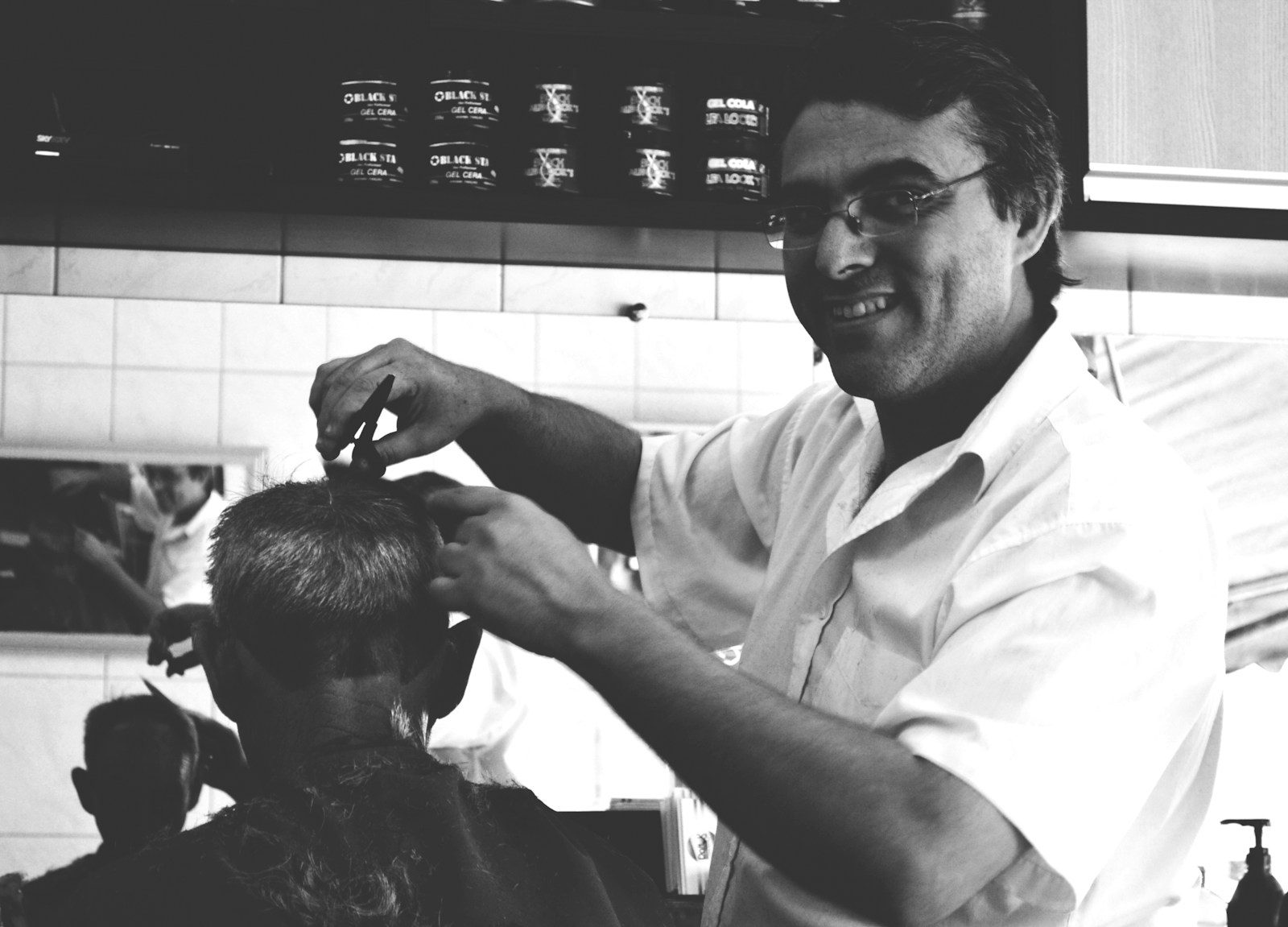
Your hands are your career
You open and close your scissors thousands of times per day. Multiply that across a 30-year career and the total number of repetitive motions is staggering. Repetitive strain injuries (RSI) are not a hypothetical risk for stylists. They are one of the most common reasons professionals leave the industry early.
In Germany, carpal tunnel syndrome has been classified as occupational disease BK 2113 since 2015, officially recognized as a workplace hazard for hairdressers. That classification did not happen because of a few isolated cases.
This guide covers what causes repetitive strain injuries behind the chair, how to choose tools and habits that reduce your risk, and when to get medical help.
Carpal tunnel syndrome: the most common threat
Carpal tunnel syndrome (手根管症候群, shukonkan shōkōgun) happens when the median nerve, which runs through a narrow passage in your wrist called the carpal tunnel, gets compressed. Symptoms include numbness, tingling, or pain in the thumb, index finger, and middle finger. Some people feel weakness in their grip or drop objects more often.
For stylists, the compression builds over time from the repeated gripping, squeezing, and wrist rotation involved in cutting. Hours of the same motion, day after day, causes the tissues around the nerve to swell and press inward.
The earlier you address the symptoms, the better the outcome. Carpal tunnel caught early can often be managed with changes to tools, technique, and habit. Left untreated, it can progress to permanent nerve damage that requires surgery.
Handle type matters more than you think
The handle design of your scissors directly affects how much strain each cut puts on your hand, wrist, and shoulder. Choosing the right handle type is one of the most impactful decisions you can make for long-term hand health.
Symmetric (megane) handles
The classic symmetric handle (メガネハンドル, megane handoru) requires the most wrist movement during cutting. Both shanks are the same length, which means your thumb and finger travel equal distances. This design offers the most versatility (you can flip and reposition the scissors easily) but provides the least ergonomic support.
If you use symmetric handles and experience no discomfort, there is no urgent reason to switch. But if you are starting to feel strain, this handle type should be the first thing you reconsider.
Offset handles
Offset handles (オフセットハンドル, ofusetto handoru) shorten the thumb shank relative to the finger shank. This lets you work with your shoulders straight and your elbow down. The reduced range of motion in the thumb means less wrist rotation per cut.
Offset handles are the most popular ergonomic choice for general cutting. They reduce strain without requiring you to relearn your technique. Most stylists who switch from symmetric to offset report immediate comfort improvement.
Crane handles
The crane handle (クレーンハンドル, kurēn handoru) drops the thumb ring significantly below the finger ring. This creates the most natural wrist position during cutting. Your thumb moves almost straight up and down rather than rotating.
Crane handles are particularly popular among stylists who already have carpal tunnel symptoms. The reduced wrist rotation can make the difference between being able to work a full day and not.
Swivel thumb handles
The swivel thumb handle (スウィベルサム, suwiberusamu) allows the thumb ring to rotate 360 degrees. Your thumb follows the cutting movement with almost zero resistance. No wrist rotation, no shoulder compensation, no hand contraction.
Swivel handles take the longest to get used to. Many stylists find them awkward for the first week or two. But for anyone dealing with serious repetitive strain, swivel designs offer the most complete reduction in harmful movement patterns.
Cutting posture
Your tool is only half the equation. How you hold your body during cutting matters just as much.
Shoulders. Keep them down and relaxed. If you notice your shoulders creeping up toward your ears during a cut, stop and reset. Raised shoulders create tension through your entire arm chain.
Elbows. Keep your cutting elbow as close to your body as possible. When your elbow lifts away from your side, your shoulder and rotator cuff take on unnecessary load. Offset and crane handles help here because they reduce the need to lift your elbow during normal cutting angles.
Wrist. A neutral wrist position means your hand is roughly in line with your forearm, not bent up, down, or to the side. Every degree of wrist bend during cutting adds strain to the carpal tunnel. If you find yourself constantly bending your wrist to reach certain cutting angles, you may need a different handle type or a different body position relative to the client.
Standing position. Move around the client rather than twisting your body to reach different sections. Stylists who plant their feet and contort their upper body to reach the far side of the head are loading their wrists, elbows, and shoulders unnecessarily. Take a step. Reposition. Your joints will thank you.
Ring sizing: the overlooked factor
Finger ring sizing (指穴サイズ, yubi ana saizu) is one of the easiest ergonomic fixes and one of the most commonly neglected.
Too loose: Your fingers work overtime gripping the rings to maintain control. This constant low-level effort fatigues the small muscles in your hand. Scissors may also slip or shift during cutting, forcing you to readjust your grip repeatedly.
Too tight: Blood circulation to your fingers gets restricted. You develop calluses or blisters. Fatigue sets in faster because the tight ring creates constant pressure even when you are not actively cutting.
Correct fit: The ring should be snug enough for control but loose enough that blood circulates freely. You should be able to remove the scissors from your hand by shaking gently, but they should not wobble or spin during cutting.
Most professional scissors come with rubber or plastic ring inserts (フィンガーリング, fingā ringu) that let you adjust the hole diameter. Use them. Test different insert sizes until you find the fit that gives you contol without restriction. Replace inserts when they wear down, because a compressed insert is the same as no insert.
Building recovery into your day
Take micro-breaks. Between clients, put down your scissors and stretch your hands, wrists, and forearms for 30 seconds. Open and close your hands. Rotate your wrists. Flex and extend your fingers. This is not a luxury. It is maintenance.
Stretch your forearms. Hold one arm straight in front of you, palm up. With your other hand, gently pull your fingers downward until you feel a stretch along your inner forearm. Hold for 15 seconds. Repeat with the palm facing down to stretch the outer forearm. Do this three to four times per day.
Alternate tasks. If you can structure your schedule so that cutting-heavy appointments alternate with consultations, color work, or other non-cutting tasks, your hands get built-in recovery periods.
When to see a doctor
Do not wait until you cannot grip your scissors. Seek medical advice if you experience:
- Persistent numbness or tingling in your fingers, especially at night
- Weakness in your thumb grip
- Pain in your wrist that does not improve with rest
- Dropping objects more frequently than normal
- Any sensation of “electric shock” shooting through your hand
A doctor (ideally one familiar with occupational hand injuries) can assess whether you have early carpal tunnel, tendinitis, or another condition. Early intervention typically means conservative treatment: splinting, activity modification, and sometimes corticosteroid injections. Delayed treatment may mean surgery.
Your hands are not replaceable. Protect them the way you protect your most expensive shears.